



Free Shipping All Orders Over $95
Most “best gummies for relaxation” guides reward the biggest milligram number on the package. That's backwards. Relaxation isn't a potency contest. A gummy that delivers a measured cannabinoid blend at the right time can feel calmer and cleaner than a much stronger edible that leaves you anxious, impaired, or foggy the next morning.
The better buying question is simple: what kind of calm do you want, and how much intensity can you tolerate? This guide ranks gummies by use case, dose response, cannabinoid mix, timing, and testing, not by raw THC totals.
The highest-dose gummy on the shelf is rarely the smartest choice for relaxation. THC can feel calming at a lower dose, but increasing the amount can push the experience toward racing thoughts, overstimulation, or unwanted intoxication. A comparison of THC gummies for anxiety and stress reported that 7.5 mg THC lowered stress, while 12.5 mg worsened mood, a useful reminder that stronger isn't automatically better for calm. Read the dose-response comparison.
That's the central buying lesson. Dose, timing, and cannabinoid balance matter more than a giant THC headline. A low-to-mid dose may take the edge off without hijacking your evening. A high single dose can overshoot the exact state you're trying to create.

A true beginner should think in small portions, not full-strength servings. Someone with prior edible experience may prefer a moderate dose, but tolerance doesn't make a poorly formulated product predictable. It only changes how strongly your body responds.
Balanced products can also create a smoother experience than THC-only formulas. CBD may soften the sharpness some people associate with THC, while terpenes and minor cannabinoids can change the character of the effect. Those ingredients don't make an excessive THC dose sensible, but they can make a carefully measured serving easier to manage.
Retail-buyer rule: If the label leads with total THC but hides the amount per gummy, put it back.
Gummies became especially important in cannabis and hemp markets because they're convenient, discreet, and pre-measured. By 2023, 61% of survey respondents had recently used gummies, compared with 38% in Q4 2020, while the hemp CBD gummy market was estimated at $731 million in annual value. See the history and market context for cannabis edibles. Popularity doesn't prove that every gummy is good, but it does make dose literacy more important.
Think of a gummy as a volume knob plus an equalizer. THC controls much of the intensity. CBD can influence how sharp or rounded that experience feels. Terpenes and minor cannabinoids help shape the tonal quality, whether the effect feels clear, heavy, bright, or sleepy.
At a lower dose, THC may help some adults loosen tension and settle into an evening. At a higher dose, the same compound can become uncomfortable, especially for people who are sensitive to altered perception or anxious thoughts. CBD isn't intoxicating, and CBD-forward formulas suit shoppers who want a gentler option without a pronounced high. Consumer data cited in the hemp market report found that gummies were the most popular hemp-derived THC format, purchased by 57% of consumers in Q3 2024. Review the hemp-derived THC market data.
CBN gets plenty of attention in sleep-focused products, but its reputation as a powerful sedative is stronger than the available evidence. Magnesium evidence for insomnia is limited and rated low to very low quality, while L-theanine has promising but inconsistent results from small studies. That makes both better viewed as supporting ingredients than guaranteed sleep solutions. Compare evidence and formulations for CBD gummies.
Myrcene, linalool, and beta-caryophyllene can contribute to the overall sensory profile, but a strain name alone doesn't confirm what's in the gummy. Look for a lab report that identifies actual terpene content when terpenes are part of the product's positioning.
A 5 mg THC and 10 mg CBD gummy with a documented linalool-rich profile may feel more rounded than a pure 10 mg THC edible, but the label still can't predict your exact response. Treat the formula as a starting point, then judge it by dose, timing, and your own tolerance.
| Compound | Role in Relaxation | What to Look For |
|---|---|---|
| THC | Provides the main intoxicating effect and may ease tension at lower doses | Clear THC per gummy, not only total package potency |
| CBD | Offers non-intoxicating support and may round out a THC formula | CBD amount, extract type, and a full cannabinoid panel |
| CBN | Commonly used in bedtime-oriented blends | Transparent CBN quantity, with no exaggerated sleep promises |
| CBG and CBC | Minor cannabinoids that may contribute to the broader formulation profile | Named amounts and verified lab results |
| Myrcene, linalool, beta-caryophyllene | Help shape the product's aromatic and experiential profile | Lab-confirmed terpene information rather than strain branding |
| L-theanine | May support perceived calm, though evidence is inconsistent | A clearly stated dose and realistic positioning |
For a deeper look at terpene selection, use this guide to the best terpenes for relaxation.
Edibles reward patience. A standard gummy commonly takes 30 to 90 minutes to begin working, reaches its strongest point around 2 to 3 hours, and can last 4 to 8 hours, depending on metabolism and dose. Those timing ranges come from the supplied product research and should be treated as planning guidance, not a promise.
A heavy meal can delay the experience. Sublingual formats and nanoemulsion products may act faster because they're designed to change absorption, but the package should explain that format clearly. If a gummy includes CBN or melatonin, expect the formula to lean more toward bedtime than casual evening calm.

Use the smallest meaningful amount that fits your experience:
The same logic applies to melatonin gummies. Evidence summarized across 19 studies found that melatonin reduced sleep latency by about 7 minutes and slightly increased total sleep time, with the most studied dose range at 0.5 to 5 mg taken 30 to 60 minutes before bed. Since many gummies contain 5 to 10 mg, splitting one may better match the studied range and reduce the chance of next-day grogginess. Review melatonin dose evidence in sleep gummies.
Wait at least two full hours before considering more. Delayed onset is one of the easiest ways to turn a manageable evening into an unnecessarily intense one.
Practical timing rule: Never stack a second gummy on top of a first gummy just because the first hour feels uneventful.
For more detail on absorption and timing, read how long gummies take to kick in.
The right category depends on the job. A gummy for daytime composure shouldn't be formulated like a bedtime product, and a sleep gummy shouldn't be judged by whether it keeps you alert through a workday.
THC-only gummies deliver the most obvious psychoactive effect. They can work for experienced shoppers who want a direct evening unwind, but they offer less room for adjustment if the dose feels too intense. Pure CBD gummies are easier to fit into daytime routines, though their effects may feel subtle.
Balanced THC and CBD formulas are the strongest general-purpose choice for evening relaxation. They provide THC's noticeable effect while using CBD as a counterweight. CBN-led blends are more appropriate when winding down is part of a sleep routine, not when you need to stay sharp. Functional gummies with melatonin or L-theanine should be judged by the added ingredient, since the cannabinoid may not be doing the main work.
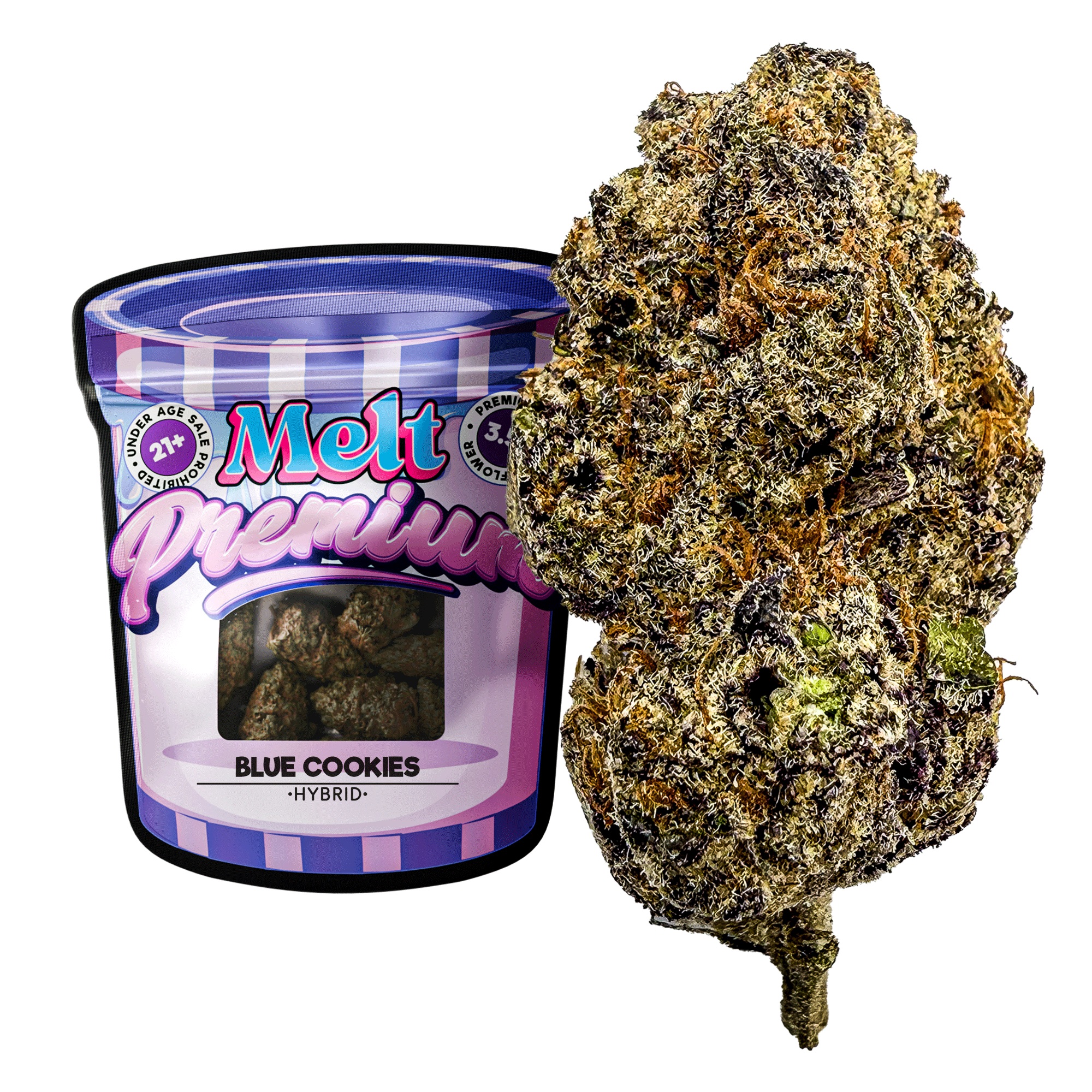
Melt's Mood and Sleep gummies are one formulation option shoppers can evaluate alongside other products, with the important comparison points being the stated cannabinoid ratio, supporting ingredients, and available batch testing.
| Type | Typical Cannabinoid Profile | Onset & Duration | Best For | Watchouts |
|---|---|---|---|---|
| THC-only | THC without a balancing cannabinoid | Edible timing, with effects lasting for several hours | Direct evening relaxation for experienced users | Easier to overshoot into impairment or anxious thoughts |
| CBD-only | CBD with no intentional intoxicating THC | Usually gentler and less pronounced | Daytime calm and shoppers avoiding a high | May feel too subtle for strong evening tension |
| Balanced THC/CBD | Measured THC paired with CBD | Edible timing with a smoother overall profile | Evening wind-down and moderate relaxation | Ratio matters, and CBD doesn't cancel excessive THC |
| CBN-led blend | CBN combined with CBD, THC, or both | Often positioned for later evening use | Sleep-oriented routines | CBN claims can exceed the strength of the evidence |
| Melatonin or L-theanine formula | Cannabinoids plus a functional sleep or calm ingredient | May shift the experience toward drowsiness or perceived calm | Sleep onset or non-THC relaxation routines | Melatonin can contribute to next-day grogginess, while L-theanine evidence is inconsistent |
My ranking is blunt: balanced formulas win for general evening relaxation, CBD-only wins when alertness and drug-test concerns dominate, and sleep formulas belong in the sleep category. THC-only products make sense only when the shopper already understands their response.
A polished label can still hide a poor product. A certificate of analysis, or COA, ties the package to a specific batch and shows whether an independent laboratory measured what the brand claims. Use this guide to reading a certificate of analysis before treating any lab document as proof of quality.
Begin with the cannabinoid potency panel. Match the batch number on the report to the package, then compare measured THC, CBD, CBN, and other listed cannabinoids with the serving label. The report must show how much is in one gummy, not only the total amount in the bag. That distinction matters when you are choosing a dose for calm rather than chasing the highest milligram total.

A useful COA answers three questions:
The CBDistillery guide to reading third-party testing explains why independent testing matters for potency and contaminant screening. Apply that standard to the exact batch you plan to buy, rather than relying on a brand-wide report.
COA red flags: A dead QR code, missing batch date, in-house report with no independent laboratory identity, or effects claim unsupported by a matching potency panel should stop the purchase.
Melt publishes QR-coded batch reports and third-party verification, giving buyers a clear transparency standard to compare. Before checkout, verify the batch number, laboratory identity, testing date, potency panel, and contaminant results. If those details are difficult to find, choose another gummy.
Hemp-derived THC status depends on more than a product description saying “legal.” The federal framework has tied hemp-derived delta-9 products to a 0.3% delta-9 THC threshold by dry weight, but that measurement doesn't guarantee availability or legality in every state. State laws can impose stricter rules on intoxicating hemp products.
That patchwork matters for online shoppers. A product may meet a federal hemp definition while remaining restricted where you live, and retailers may limit shipping based on destination rules. Check the current requirements in your state before ordering, especially if the product contains intoxicating cannabinoids beyond standard CBD.

A pending FY2026 agriculture appropriations change is expected to alter the federal hemp definition effective November 12, 2026, creating uncertainty about product formulas, availability, and compliance. Review the current legal discussion around delta-9 gummies.
That date is a projection of a proposed change, not a statement that every rule has already changed. Buyers should avoid treating old packaging or old blog posts as permanent legal guidance.
Travel creates another practical problem. Carrying any THC product across state lines can expose you to rules that differ from the state where you bought it. Workplace drug testing is also a real concern because many tests detect THC metabolites without distinguishing hemp-derived THC from marijuana-derived THC.
A COA therefore serves two purposes. It helps you evaluate product safety and potency, and it documents what the manufacturer says is in the batch. It doesn't override state law, guarantee safe travel, or protect a buyer from workplace policy.
Start with the outcome, then choose the formula. Daytime stress relief, evening wind-down, and deep sleep support are different jobs, so buying one high-potency gummy for all three is poor retail strategy.
For daytime use, a low THC microdose may suit an experienced consumer who doesn't need to drive, work around machinery, or remain completely unimpaired. CBD-only is the cleaner choice for shoppers who want to stay clear-headed or who need to avoid THC because of workplace testing. Keep the serving conservative and test it on a low-stakes day.
Evening wind-down is where a balanced product earns its place. A moderate THC amount paired with CBD can offer noticeable relaxation without making the entire night feel heavy. Take it early enough for edible onset, and don't add more before the first serving has fully declared itself.
Deep sleep support calls for greater caution, not automatically more THC. CBN and melatonin can shift a product toward bedtime, but melatonin dose discipline matters because many gummies contain more than the range most studied in trials. If the product includes multiple active ingredients, change only one variable at a time so you know what caused next-day fogginess.
| Use Case | Best Gummy Type | Typical Dose | When to Take | Watch Out For |
|---|---|---|---|---|
| Daytime stress | CBD-only or a very low THC formula | 10 to 25 mg CBD, or 1 to 2.5 mg THC | Mid-morning or before a predictable stress period | THC impairment, workplace testing, driving |
| Evening wind-down | Balanced THC/CBD | 5 to 7.5 mg THC with 10 to 20 mg CBD | About 60 to 90 minutes before the desired calm | Redosing too soon or choosing a heavy sleep formula |
| Sleep onset | CBN-led or sleep-support formula | A carefully measured THC dose with CBN, with melatonin treated separately | Before the target bedtime, allowing for delayed onset | Next-day grogginess, medication interactions, excessive THC |
| THC avoidance | CBD isolate or broad-spectrum CBD | Begin with the lowest labeled serving | Consistently timed in the evening or daytime | Trace THC in some broad-spectrum products and unverified labels |
These dose ranges are practical starting points, not guarantees. The supplied evidence supports the broader principle that the lowest effective dose is usually the better relaxation purchase, especially when the next morning matters.
Save this list before opening a product page. It keeps the purchase focused on goal first, dose second, testing third.
A tested, accurately labeled 7.5 mg THC gummy can be a more sensible relaxation purchase than a 25 mg mystery edible, but only when the buyer's tolerance and local rules support THC use. The package should make the decision easier, not force you to guess.
Melt offers cannabinoid edibles and other hemp-derived products with published lab-testing information for shoppers who want to compare doses, formulas, and batch documentation. Visit Melt to review the available gummy options, check the product details, and choose a relaxation formula that fits your intended use rather than chasing the largest number.
Your cart is currently empty.