



Free Shipping All Orders Over $95
Yes, gummies absolutely expire. But it’s not like milk or fresh fruit where it becomes a biohazard in your fridge. Think of it more like a best-by date—a guideline for peak flavor, texture, and potency.
Gummies aren’t meant to last forever. They’re made from food-grade ingredients—sugar, gelatin or pectin, flavorings, and active compounds like THCA—that are all designed to break down over time.
As the weeks and months go by, that perfect, chewy balance starts to shift. The gelatin can get tough or overly sticky, sugars might crystallize into a grainy texture, and those vibrant flavors will start to fade. It’s a lot like how a fresh-baked cookie goes from soft and delicious to hard and crumbly after a week on the counter. You could still eat it, but why would you want to?
When it comes to cannabinoid-infused gummies, this breakdown matters even more. The active ingredients, like THC or CBD, are delicate compounds. They degrade when exposed to the elements—think air, light, and heat. This means an older gummy won't just taste stale; it might not deliver the consistent effects you’re counting on.
This is exactly why reputable brands are obsessed with freshness and transparent labeling. Most quality gummies, including our Melt Bites, are best within 6-12 months when stored properly in a cool, dark place. Go much past that window, and you risk a less-than-ideal experience. The texture might be off, and for cannabis gummies, you could see a potency drop of 10-20% or more as the cannabinoids degrade. You can dive deeper into how candy shelf life is determined.
The expiration date isn't just a random suggestion. It's the manufacturer's promise that the product will live up to its quality and potency claims until that day. It’s a huge signal of a brand's commitment to delivering a reliable, enjoyable experience every single time.
Before we get into the nitty-gritty, here’s a quick overview of what you need to know.
This table breaks down the key factors at play when determining if your gummies are still good to go. It’s a simple at-a-glance reference to keep in mind.
| Factor | Typical Range / Guideline | Key Takeaway |
|---|---|---|
| Texture & Flavor | Best within 6-12 months | Degrades over time, becoming hard or sticky. |
| Cannabinoid Potency | Starts to decline after 1 year | May lose 10-20% effectiveness annually. |
| Safety | Generally safe unless moldy | The focus is on quality, not immediate health risk. |
Essentially, while an old gummy probably won't hurt you (unless it's visibly moldy), it definitely won't give you the premium experience you paid for. Let's explore these factors in more detail.
Not all gummies are created equal, and their shelf life is a perfect example of this. The base ingredients—sugar, gelatin, and flavorings—are pretty standard across the board. But when you add active compounds like cannabinoids into the mix, it changes how long they stay at their best.
For a standard candy gummy, the main worry is about texture and taste. You can generally expect them to stay fresh for about 6 to 12 months if you store them right. After that, they probably won't hurt you (unless you see mold), but they're likely to get hard, sticky, or lose that vibrant flavor they had on day one.
When you're talking about THC or CBD gummies, there's another layer to consider. Besides the candy ingredients, you have to think about the stability of the cannabinoids themselves. These active compounds degrade over time, and that process gets a serious speed boost from heat, light, and air.
Think of the potency in your gummy like the charge on a battery. When it's fresh, that battery is at 100%. But over several months, especially if it's not stored well, that charge slowly drains. An older gummy might still look and taste fine, but its effects could be a shadow of what they once were because the cannabinoids have broken down.
This timeline gives you a good visual of how a gummy’s quality shifts over its typical lifespan.
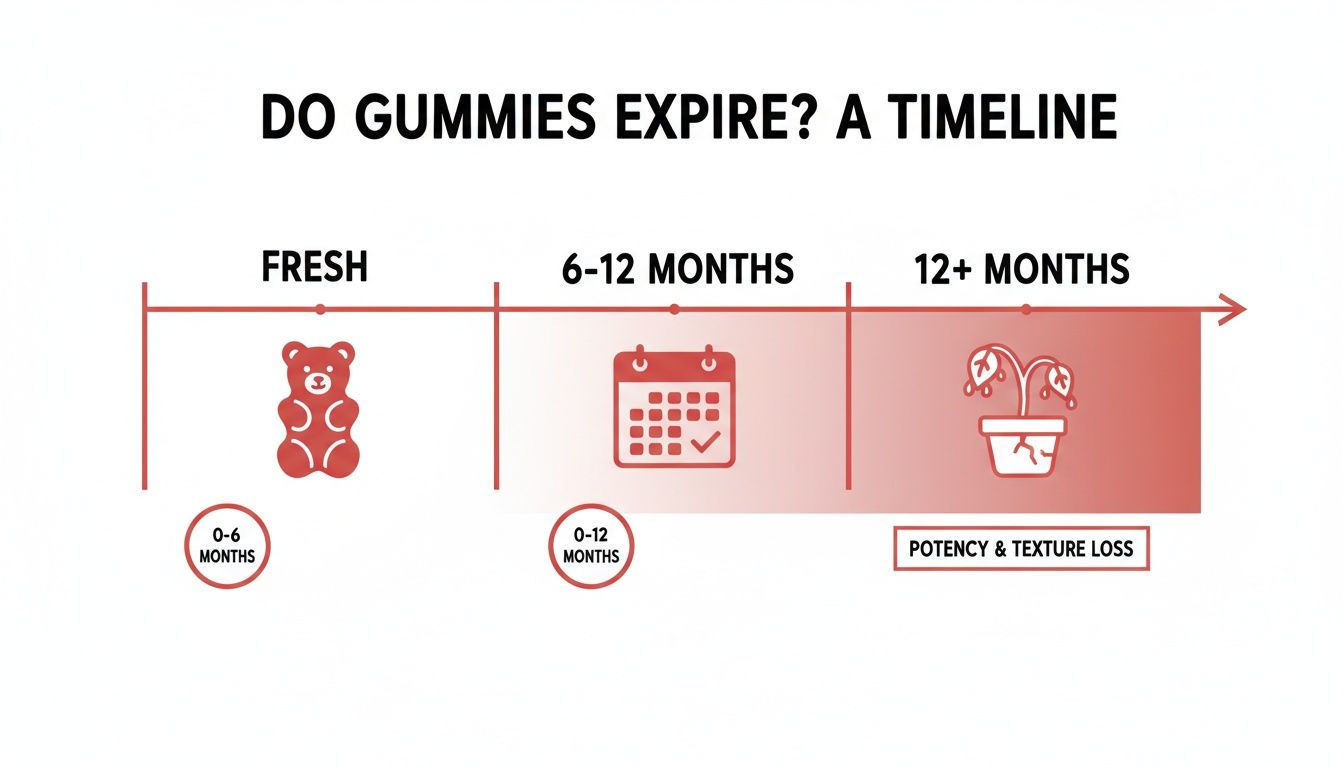
As you can see, the first year is the sweet spot for both texture and potency, but you’ll start to notice a real decline after that.
This is exactly why a clear expiration or "best by" date is so important for any cannabinoid product. A trustworthy brand that stands behind its product's freshness and potency will always provide one. It’s a signal that the manufacturer has done its homework to make sure you get the experience you’re paying for.
Without that date, you're just guessing whether the product you're taking has lost its kick. For anyone who depends on consistent dosing, that's a huge problem. It's also why many people are drawn to products with enhanced absorption, like Melt’s fast-acting THC gummies, where predictable potency is the whole point.
A reliable expiration date isn’t just about safety; it’s about ensuring the product delivers on its promise. It’s a fundamental part of quality control that separates premium brands from the rest.
At the end of the day, while most gummies last about a year, edibles need a bit more attention. Cannabinoid potency isn't infinite—it degrades. Proper storage and heeding those expiration dates are key to getting a consistent and effective experience. An old candy gummy is just a stale treat, but an old THC gummy is a product that no longer works as intended.
Ever bought a fresh bag of groceries? You wouldn't leave milk on the counter or ice cream in the sun, right? The same logic applies to your gummies. While they seem pretty resilient, they have four natural enemies constantly working to break them down: heat, light, air, and moisture.
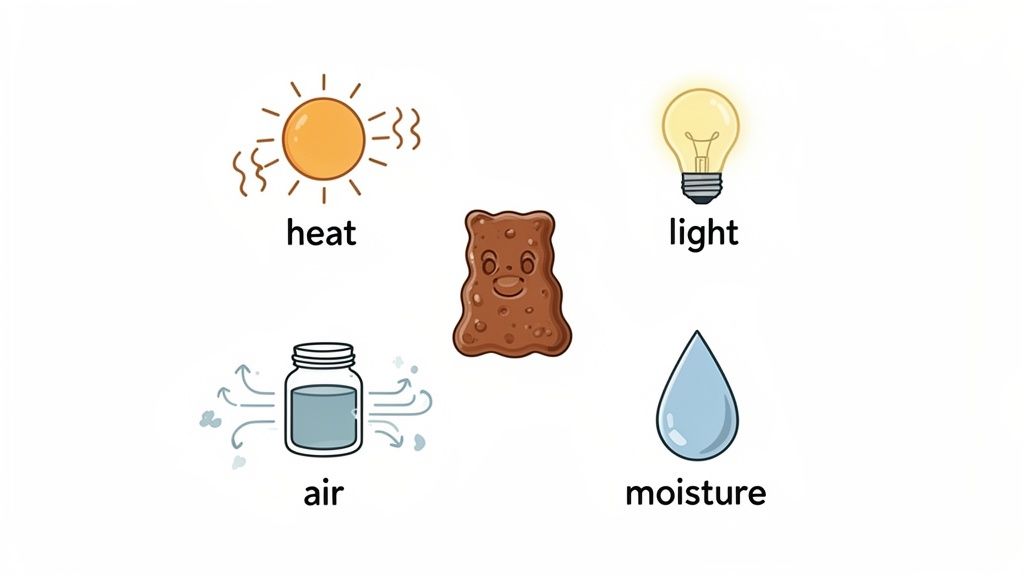
Figuring out how these elements sabotage your gummies is the key to keeping their quality, flavor, and potency intact. Each one plays its own part in the degradation process, turning a perfect gummy into a seriously disappointing experience.
Heat is arguably the number one enemy of your gummies. Think about what happens when you leave a pack of edibles in a hot car—it’s like putting an ice cube on the sidewalk in July. The breakdown happens fast.
High temperatures will cause the gelatin or pectin to melt, turning your perfectly shaped treats into a sticky, congealed blob. Even more importantly, heat degrades cannabinoids like THCA. The delicate chemical bonds that give these compounds their magic get broken down, making your gummies way less potent.
Research backs this up, showing that storage temperature has a massive impact on shelf life, with 20°C (68°F) being the sweet spot. In hot climates like Southern California, where summer days easily top 30°C (86°F), the shelf life can get cut in half without proper A/C. The color and quality can degrade 25-50% faster at these temps, pretty much ruining the product. You can learn more about how temperature affects gummy stability in a few detailed studies.
Sunlight and air are a powerful duo working against your gummies' freshness. The sun’s UV light acts as a catalyst, speeding up chemical reactions that wreck both cannabinoids and flavor compounds. This is exactly why you’ll almost never see premium cannabis products sold in clear packaging.
Exposure to the air, specifically oxygen, kicks off a process called oxidation. Just like a sliced apple turns brown when you leave it out, the ingredients in your gummies react with oxygen. This causes a few bad things to happen:
A quality, opaque, and airtight container isn't just for looks; it’s a shield. It protects your investment by blocking out the very elements that are trying to ruin your experience, ensuring every gummy is as good as the first.
Finally, let’s talk about moisture. Too much humidity is a gummy's worst nightmare. Gummies are hygroscopic, which is just a fancy way of saying they absorb moisture from the air around them. When this happens, they can get overly soft, sticky, and even slimy.
This extra moisture creates the perfect breeding ground for mold and bacteria, which is the one scenario where an expired gummy becomes truly unsafe to eat. On the flip side, an environment that’s too dry can suck the moisture out of the gummies, leaving them hard, shrunken, and brittle. The ideal storage spot is always a cool, dark, and dry place.
Think of yourself as a quality detective. Even if there’s no clear expiration date, your own senses are the best tools you have for figuring out if your gummies are past their prime. Trust what you see, feel, and smell—these clues will tell you everything you need to know.
An expired gummy is rarely a serious health risk, unless you spot actual mold. But it will definitely deliver a disappointing experience in taste, texture, and potency.
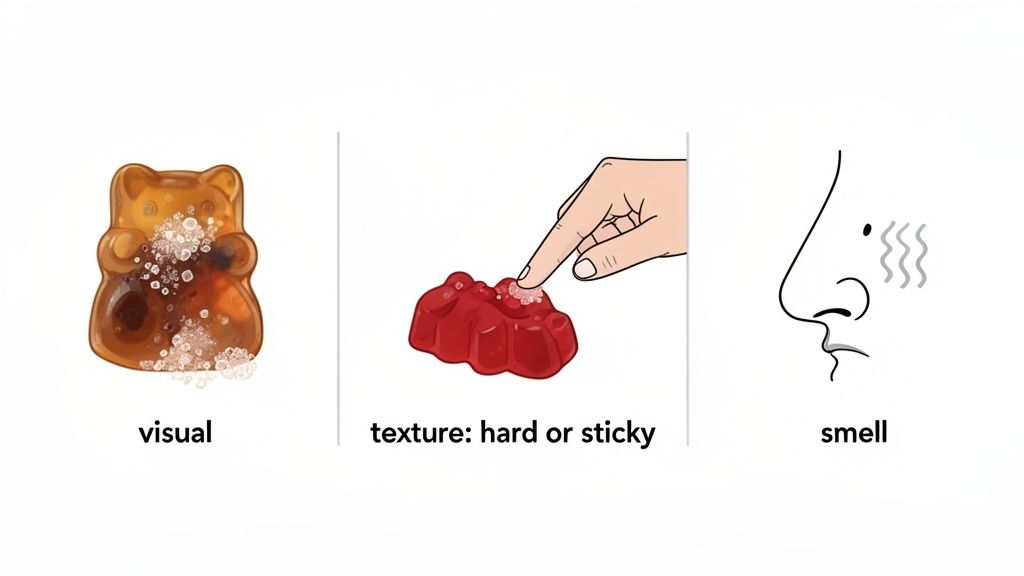
Your first check should always be with your eyes. A fresh, high-quality gummy has a vibrant, consistent color and a slightly glossy look. As it gets older, you might start to see some obvious red flags.
Keep an eye out for these warning signs:
Next, pick one up and give it a squeeze. A good gummy should have a pleasant, slightly firm but yielding chewiness. Texture is a huge part of the gummy experience, and it's one of the first things to go when they start to expire.
Feel for these changes in texture:
When in doubt, trust your gut. If a gummy looks or feels "off," it probably is. The goal is to enjoy a premium product, not force down a stale one. A less-than-perfect texture is a clear sign that the quality has declined.
Finally, give the gummies a quick sniff. Fresh gummies should smell like the fruit flavors they represent—sweet, inviting, and clean. Your nose is fantastic at detecting when something is wrong.
An off-putting odor is an immediate deal-breaker. Be wary of any scents that are:
To make it even simpler, here's a quick checklist you can run through.
| Sense | What to Look For (Good Gummy) | Warning Signs (Bad Gummy) |
|---|---|---|
| Sight | Vibrant, uniform color; slight glossiness. | Faded or uneven color; sugary crystals; any visible fuzzy mold. |
| Touch | Soft but firm; a pleasant, yielding chew. | Rock-hard and brittle, or excessively sticky, slimy, or gooey. |
| Smell | A clean, sweet, and fruity aroma matching its flavor. | Rancid, oily, chemical-like, or a musty, damp odor. |
By using this simple three-step sensory check, you can confidently figure out whether your gummies are still good to go. It’s the easiest way to make sure you always get the fresh flavor, perfect texture, and reliable effects you paid for.
Figuring out what makes your gummies go bad is only half the battle—the other half is actively protecting them. Proper storage is your number one defense against degradation, making sure every gummy tastes and feels exactly as it should. Think of it like keeping produce fresh; the right environment makes all the difference.
The golden rule here is simple: keep them somewhere cool, dark, and dry. Heat, light, and moisture are the triple threat that breaks down active ingredients and cannabinoids faster than anything else. Your pantry, a kitchen cupboard, or even a drawer in your bedroom are all great spots.
Just never, ever leave them in your car, on a sunny windowsill, or near a radiator. Those places are gummy torture chambers, practically guaranteed to melt them into a sticky blob and tank their potency in no time.
Often, the best container is the one your gummies came in. Brands like Melt use airtight, opaque packaging for a reason—it’s built to shield the product from air and light. If you do move them to a different container, just make sure it offers that same level of protection.
Here’s a quick checklist for the perfect gummy home:
This kind of care is especially crucial for cannabinoid products. If you want to dive deeper, our guide on how to properly store your THCA products has more pro tips for preserving all your cannabis goods.
When it comes to the fridge or freezer, the answer isn't always so clear-cut. While cold temperatures can definitely extend shelf life, they also come with a few potential trade-offs.
Refrigeration: Sticking gummies in the fridge can be a smart move, especially if you live in a hot climate. It’s a great defense against melting and slows down degradation. The only real catch is moisture. Fridges can be humid, and if your container isn't sealed perfectly, condensation can make your gummies sticky or even encourage mold.
Freezing: For long-term storage (6+ months), the freezer is a solid option. It basically hits the pause button on the degradation process. The downside? Freezing can sometimes mess with the texture, making gummies a bit tougher or chewier once they thaw.
The best method really just depends on how fast you plan to eat them. For daily or weekly use, a cool pantry is perfect. For stashing them long-term, a well-sealed container in the freezer is your best bet.
At the end of the day, a huge part of a gummy’s stability comes down to how it was made in the first place. Smart tweaks to a formula can extend a gummy's shelf life up to 52 weeks in the right conditions. Research shows that jellies with no starch, 6% gelatin, and a 1.5 glucose syrup-to-sucrose ratio are the gold standard, gaining only 2-5% moisture over a year compared to 10-15% in other recipes. It’s a fascinating look into how small changes make a huge difference in creating a stable, long-lasting product.
Even after covering the basics, a few specific questions always pop up. Let's clear the air and tackle the most common ones so you can feel confident about the gummies you're enjoying.
This is the big one. The short answer is no, with one major exception. Eating an old gummy that’s just a bit stale or less potent isn't likely to hurt you. It just won’t taste great or deliver the effects you were hoping for.
The real danger is mold. If your gummies were exposed to moisture or the package seal was broken, they can become a perfect home for bacteria and mold. If you see any fuzzy spots, weird discoloration, or notice a musty smell, throw the whole bag out immediately. Trust me, you don't want to mess with mold.
Maybe a little, but don’t count on it. Cannabinoids like THCA are delicate. They break down over time, especially when they’re exposed to light, air, and heat. An expired gummy is almost guaranteed to be less potent than it was on day one.
Think of it as a slow fade. A gummy that's a few months past its date might feel a bit weaker. One that's a year old? It's probably lost a huge chunk of its potency, leading to a seriously underwhelming or unpredictable experience. For consistency, fresh is always the way to go.
An expiration date on a cannabinoid product isn't just a suggestion—it's your guarantee of potency. Once you go past that date, the dosage on the label is no longer reliable, which kind of defeats the purpose of a precisely dosed edible.
People often use these terms interchangeably, but they have slightly different meanings. Knowing the difference helps you make the right call.
Most gummies will have a "Best By" date. It’s your best guide to getting the full experience you paid for.
The best way to know you’re getting a high-quality product right from the start is to buy from brands that are completely transparent. Reputable companies will always invest in third-party lab testing to prove their products are pure and contain the exact amount of cannabinoids advertised.
This is something we take seriously at Melt. We make it easy to find our detailed lab reports for our products, which confirm that what’s on the label is exactly what’s in your gummy. That level of transparency is the ultimate seal of approval for a safe, consistent, and top-tier experience, long before the expiration date is even a thought.
Your cart is currently empty.