



Free Shipping All Orders Over $95
Myrcene had the strongest association with indica labeling, yet it explained only 21.2% of the variation in label scores in a Nature Plants study of commercial cannabis. That's a weak foundation for the familiar promise that indica means sleepy and sativa means energetic. When you compare indica vs sativa terpenes, the useful question isn't which category sounds right. It's what the current batch contains.
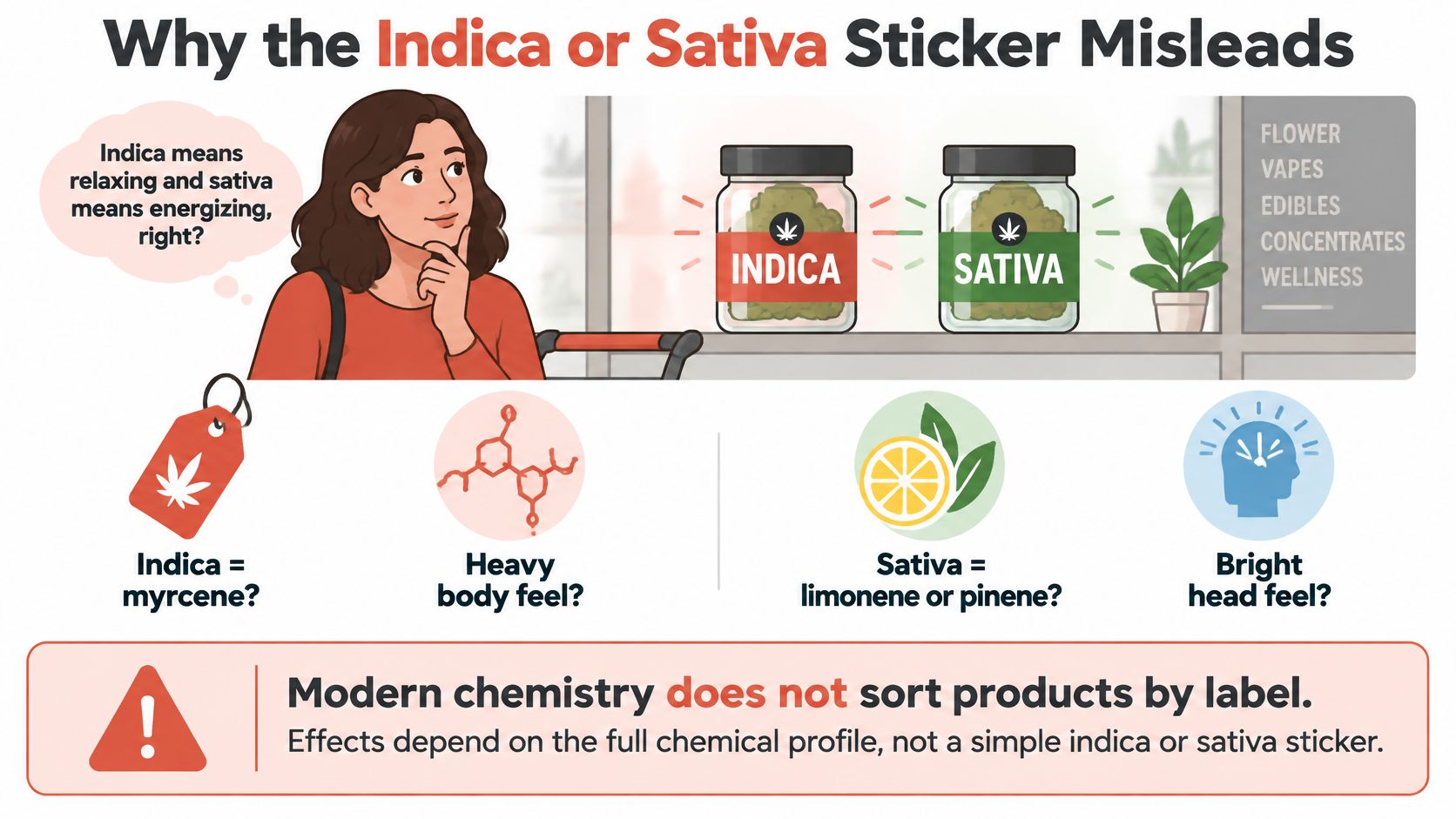
A shopper might expect an indica jar to contain myrcene and deliver a heavy body feel. Across the counter, a sativa jar might suggest limonene or pinene and a brighter, head-focused experience. Those expectations combine chemistry, aroma, and effects into a shortcut that modern profiling doesn't support.
A terpene is an aromatic compound that helps shape cannabis smell and flavor and may interact with cannabinoids. Cannabinoids are compounds such as THC and CBD. The idea that these compounds can influence an experience together is commonly called the entourage effect, but that idea doesn't establish that a named terpene guarantees sedation or stimulation.
The infographic captures the assumptions worth questioning before you buy.
The distinction is simple: a compound can appear more often under a particular retail label without causing the experience associated with that label. Myrcene's relationship with indica labeling describes how sellers classify products. It doesn't prove what myrcene will make a person feel.
The same caution applies to bergamotene and farnesene, which showed modest associations with sativa labeling. A statistical relationship with a category isn't a reliable instruction for choosing a daytime product.
Buying principle: Neither the sticker nor a single terpene is a dependable forecast of your experience.
This doesn't mean your previous experiences are meaningless. If you enjoyed a particular flower, that's useful personal information. The mistake is attributing everything you liked to the word indica, or assuming another product carrying that word will reproduce it.
A better purchase decision combines several kinds of information:
A certificate of analysis, usually shortened to COA, is a laboratory report describing what was measured in a submitted sample. It's more useful than a category sticker because you can compare actual compounds rather than inherited expectations.
Expected indica and sativa terpenes versus measured ranges
The numerical spans below come from published analytical work on cannabis terpenes, with concentrations expressed in micrograms per gram, or μg/g.
| Terpene | Usual label story | Reported range (μg/g) | Aroma cue | What overlaps |
|---|---|---|---|---|
| Myrcene | Strongest indica-label link, not a sedation guarantee | 0.7–17,400 | Earthy, musky, herbal | Shows up across multiple chemical clusters |
| Beta-caryophyllene | Often grouped with spicy indica flower | 60–3,300 | Pepper, spice, wood | Present across indica, sativa, and hybrid labels |
| Alpha-humulene | Companion to caryophyllene on indica-style panels | 40–870 | Woody, hoppy | A secondary note, not a category marker |
| Alpha-pinene | Folklore ties pine to sativa alertness | 9.8–2,270 | Sharp pine, herbal | Range overlaps both retail categories |
| Limonene | Folklore ties citrus to an uplifting sativa | 1.3–300 | Citrus peel | Not evidence of a stimulant effect |
| Bergamotene | Modest positive link to sativa labeling | Range not reported | Woody citrus, tea-like | Weak association, not a species signature |
| Farnesene | Modest positive link to sativa labeling | Range not reported | Green apple, floral | Weak association, not a species signature |
| Terpinolene | High levels disproportionately labeled sativa | Range not reported | Floral, pine, citrus | Not exclusive to sativa |
Myrcene illustrates why a category name can't specify a jar. Its published concentration span is broad enough that knowing it's present tells you little about its prominence. An earthy aroma is something you can evaluate, but it isn't a measurement of sedation.
Beta-caryophyllene offers a peppery, spicy reference point. If you enjoy that character, look for its measured position in the panel rather than restricting your search to indica flower. Alpha-humulene adds a woody, hoppy reference, but being a supporting compound doesn't make it a category identifier.
Alpha-pinene and limonene are familiar because pine and citrus are easy aromas to recognize. Those sensory descriptions are useful. Turning them into promises of alertness or stimulation is where the comparison becomes misleading.
Bergamotene, farnesene, and terpinolene belong in the conversation, too, but their retail associations shouldn't substitute for missing numbers. If a report doesn't provide a concentration, there's no sound reason to invent an expected range.
Total terpene concentration describes the combined amount of the terpenes included in the laboratory's calculation. It doesn't tell you which compound supplies the strongest part of the profile.
A useful panel lets you distinguish:
Say two jars both list myrcene first. One might pair it with peppery caryophyllene, while another emphasizes citrus-associated compounds. Calling both myrcene-dominant compresses those differences.
Treat the table as a smell dictionary, not an effects menu. A higher concentration can help explain aromatic prominence, but it doesn't identify a retail category or guarantee a particular subjective result. Your nose can help evaluate a flavor description; only the panel can verify the measured composition.
Say two jars both carry an indica sticker. One smells gassy and peppery; the other resembles sweet berry candy. The mismatch isn't necessarily a labeling error. The category leaves out much of the chemistry that distinguishes them.
The visual comparison makes that limitation concrete.
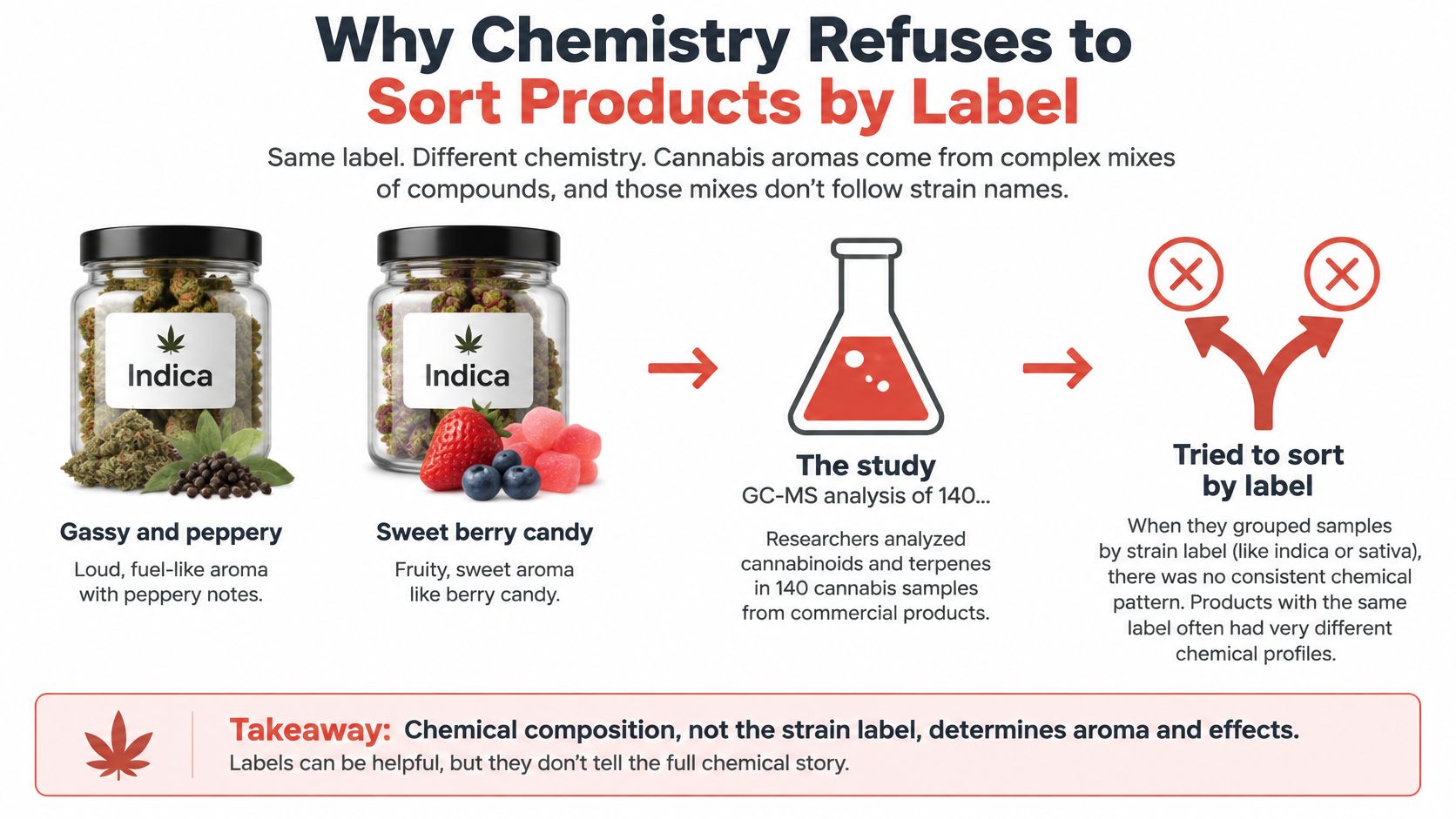
Gas chromatography–mass spectrometry, or GC–MS, is a laboratory technique used to separate and identify compounds. A GC–MS analysis of 140 commercial cannabis strains found heterogeneous terpene profiles, with indica-, sativa-, and hybrid-labeled cultivars mixed within chemical clusters, and no demonstrated relationship between terpene profiles and estimated pharmacological effects.
A chemical cluster is a group of samples that resemble one another in their measured composition. If retail categories described consistent chemical types, you'd expect those categories to separate more cleanly. They didn't.
That finding also sets a limit on the shopping advice. A chemical fingerprint provides a more precise description of the product, but precision about composition isn't the same as validated prediction of its effects.
Genome-wide comparisons likewise haven't supported a clean retail split. In an analysis summarized in the Journal of Cannabis Research, only 12 of 40 measured terpene and cannabinoid compounds correlated significantly with the indica–sativa labeling scale.
That doesn't mean ancestry never matters. A taxonomic review examining 1,100 herbarium specimens described extensive hybridization while identifying distinct sesquiterpene alcohol patterns in indica-associated hybrids with Central Asian ancestry.
Sesquiterpene alcohols are a chemical subgroup of aromatic plant compounds. Their relevance here is historical: regional breeding ancestry can leave a chemical trace. A dispensary sticker doesn't document that ancestry with comparable precision.
Commercial testing provides another useful distinction. An analysis of U.S. commercial cannabis chemistry found that high-terpinolene products were disproportionately labeled sativa, while high-myrcene samples appeared across multiple chemical clusters. A tendency across products still doesn't tell you the contents of an individual package.
Genetics aren't the only consideration when comparing purchases. Growers and manufacturers also make decisions that can change the final aromatic profile:
For additional context on cannabis classification and product differences, this video offers another viewing format.
For purchasing, the practical hierarchy is batch result first, dominant-terpene shorthand second, retail category last. Compare the full pattern, not just the largest number.
If you're evaluating consistency across lots, request comparable reports using the same validated laboratory method. Differences in methods or reporting panels can make an apparent product change difficult to interpret.
The entourage effect proposes that cannabinoids and terpenes may influence the experience together. It's a useful question about combined chemistry, not proof that every aromatic compound has a dependable consumer effect.
Our entourage effect explanation provides additional context for that distinction. The important boundary is between a plausible interaction and a promise that a particular jar will produce sleep, focus, or relief.
Consider three ways people interpret terpene descriptions:
Even when a compound has an interesting biological mechanism, the mechanism alone doesn't establish what a finished product will do at a particular dose. Concentration, other ingredients, and the way the product is used still matter.
An aroma description tells you what to notice. An effects guarantee tells you more than the panel can establish.
THCA converts to THC when heated, so heated THCA flower produces an experience comparable to traditional cannabis. Don't treat the THCA name as a reason to disregard intoxication or potency.
Likewise, an inhaled product and an edible aren't interchangeable comparisons. The route, amount consumed, and timing complicate any attempt to attribute a response to aroma chemistry alone.
Your tolerance, mood, surroundings, and expectations also belong in the interpretation. For edibles, note whether you ate beforehand rather than comparing sessions with substantially different conditions as if the terpene pattern were the only variable.
A useful personal log records product and batch name, leading terpenes, amount used, format, time of day, and your response. Include unwanted effects, not just whether you liked the flavor.
Review several reasonably comparable sessions before concluding that a profile suits you. Don't keep using a product that produces an unpleasant response merely to complete a comparison, and don't assume someone else will rate the same flower the way you do.
The point isn't to dismiss terpenes. It's to give them an appropriate role: part of a fuller product description, not a replacement for reading the cannabinoid panel or considering your own response.
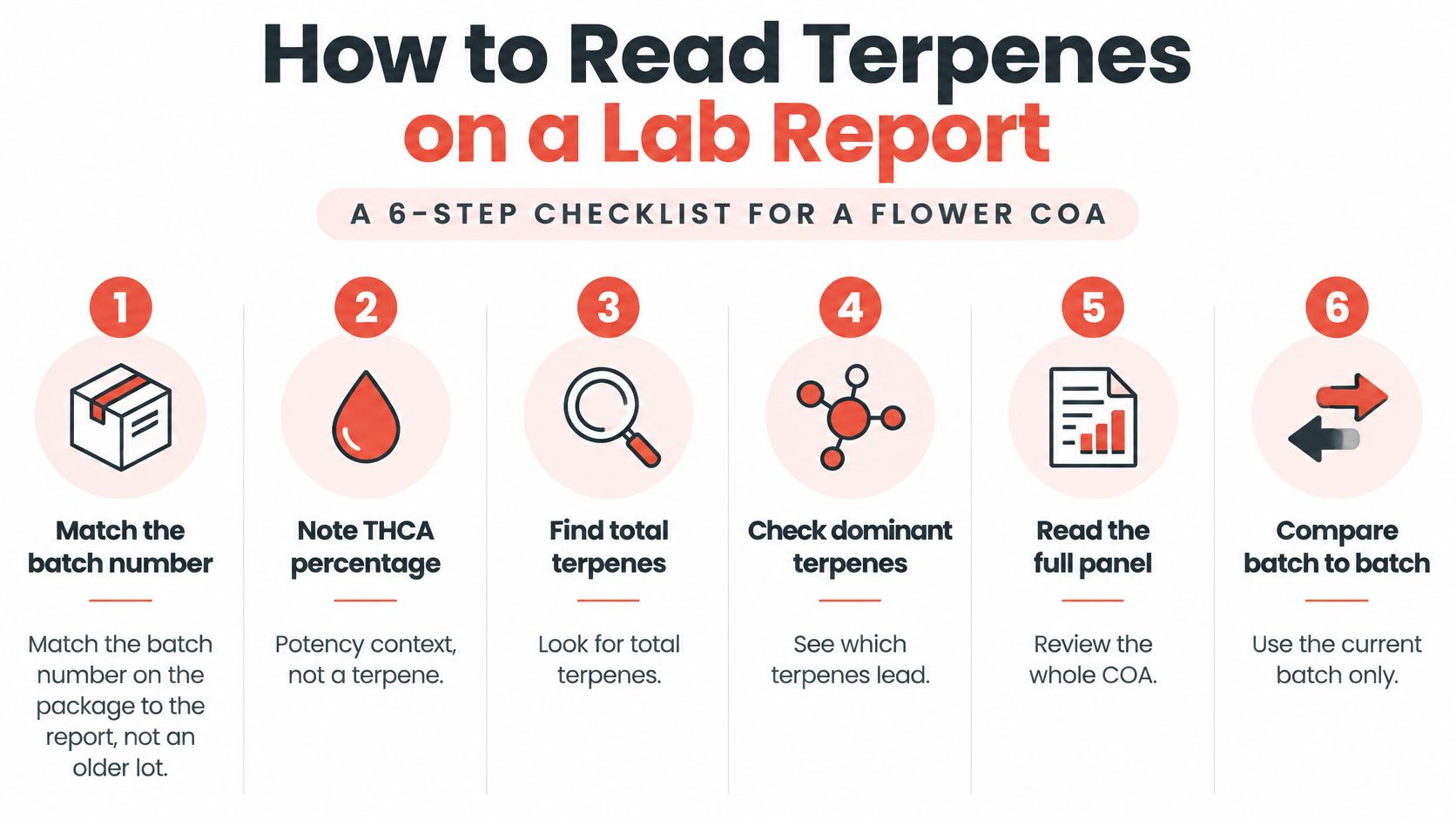
Our guide to reading a certificate of analysis explains how to interpret the report beyond its headline potency result. If the terpene panel or analytical method is missing, treat the terpene composition as unverified, rather than assuming the category fills the gap.
The checklist keeps the package-to-report comparison in view.
Our Cinex Sativa THCA Flower lists 24.820% THCA, with sharp citrus, sweet pine, and herbal lift. Those descriptors suggest checking the report for limonene and pinene, but they don't establish that either compound leads the batch.
Our Dante's Inferno Indica THCA Flower lists 25.211% THCA, with spicy gas, dark fruit, and peppery earth. Caryophyllene is a reasonable compound to investigate when evaluating that peppery description. It's not a confirmed dominant terpene unless the panel says so.
Our Sunset Sherbet Indica THCA Flower lists 29.47% THCA, with sweet berry candy and creamy citrus. Its flavor description contrasts with Dante's Inferno despite the shared indica label.
| Product comparison | What the description establishes | What still needs verification |
|---|---|---|
| Cinex | Citrus, pine, and herbal flavor notes | Whether limonene or pinene leads |
| Dante's Inferno | Gas, dark fruit, and peppery notes | Caryophyllene concentration and supporting terpenes |
| Sunset Sherbet | Berry candy and creamy citrus notes | The compounds responsible for the batch's measured pattern |
These flowers illustrate aroma contrasts, not proven differences in effects. Their THCA percentages don't reveal their terpene totals, and their category names don't supply missing concentrations.
If a terpene isn't listed, distinguish not tested from not detected. A missing panel doesn't mean the flower contains no terpenes; it means that report doesn't establish the information you need.
Check current local rules and shipping restrictions before ordering. Product chemistry and permission to purchase are separate questions.
Which terpene pattern fits the session
| Session goal | Look for on the COA | Example aroma | Do not assume |
|---|---|---|---|
| Evening wind-down | Myrcene or caryophyllene among the leading compounds, if previously preferred | Pepper, earth, dark fruit | Every indica is sedating |
| Daytime brightness | Limonene, pinene, or terpinolene leading | Citrus, pine, mango | Every sativa is energizing |
| Dessert flavor | Supporting compounds alongside the lead terpene | Berry candy, chocolate, vanilla | Indica means gas and sativa means citrus |
| Same experience next time | Similar leading compounds, proportions, and total concentration | A comparable measured profile | The strain name freezes the chemistry |
Use session goals to organize your preferences, not to prescribe effects. If you enjoy peppery or earthy flower in the evening, a batch containing prominent caryophyllene or myrcene may be worth comparing with your previous notes. Our guide to terpenes associated with relaxation offers a way to investigate those preferences without treating a terpene name as a guarantee.
Our Purple Punch Indica THCA Flower, at 25.21% THCA, has grape candy, blueberry, and vanilla notes. It's a useful counterexample to the assumption that an evening-oriented indica must smell gassy.
For a citrus-and-pine flavor direction, our Green Crack Sativa THCA Flower lists 24.96% THCA, with tangy mango, sweet citrus, and a hint of pine. Check the batch panel before attributing that description to particular dominant compounds.
Our Chocolope Sativa THCA Flower, at 28.407% THCA, has rich chocolate, coffee, and tropical fruit notes. Its dessert-like description also shows why sativa isn't a synonym for citrus.
The visual guide organizes these choices by preferred aroma and verification, rather than by guaranteed effects.
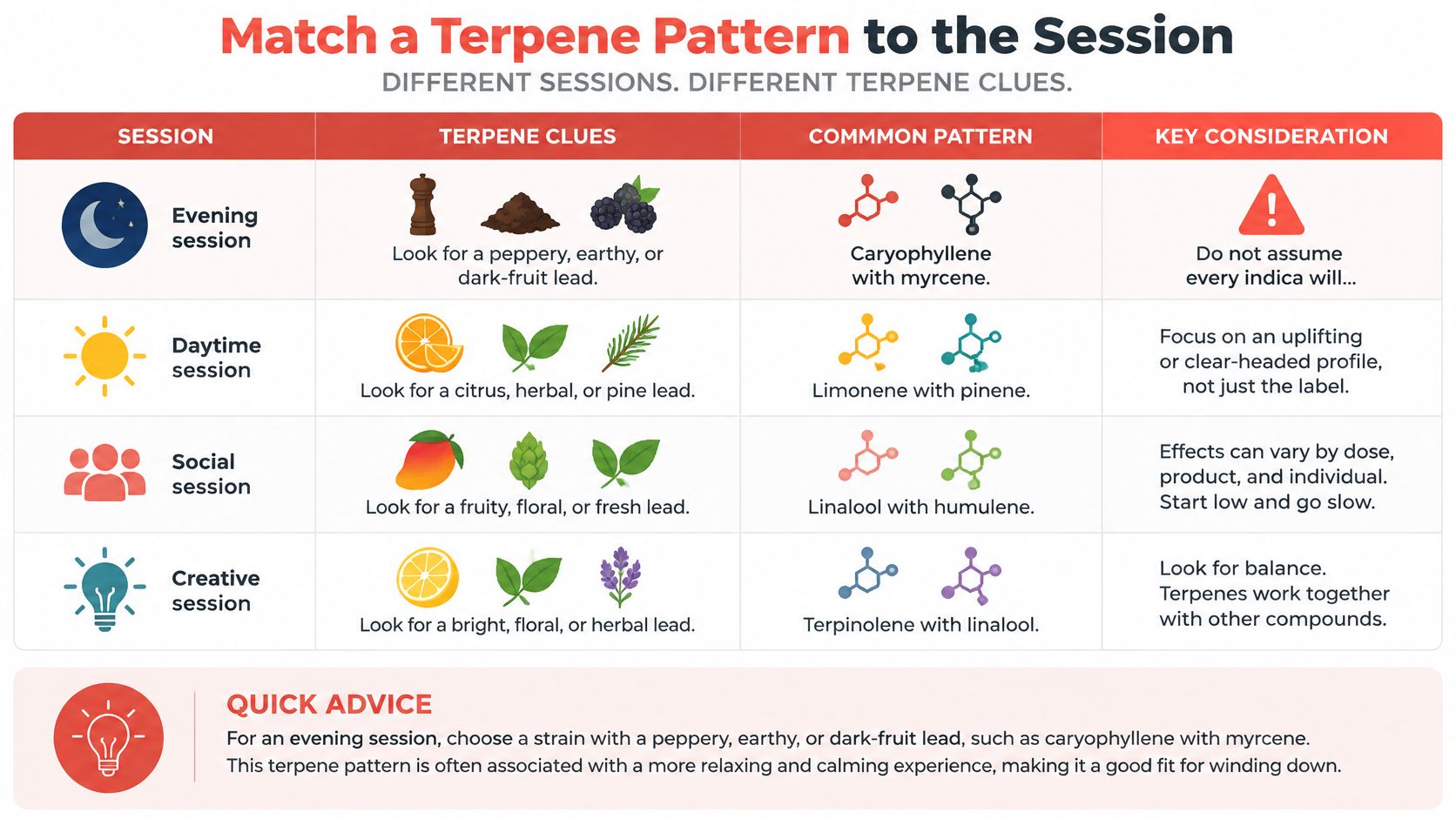
When replacing a favorite, look beyond whether the same terpene leads. Check its supporting compounds and relative amounts, then consider cannabinoid potency and format before expecting a comparable session.
The verdict: Shop the fingerprint. Use indica or sativa only as a starting flavor hint, and pause the purchase if the terpene panel is absent.
Melt offers THCA flower and strain-specific products with transparent laboratory reports to help you compare more than category names. Visit Melt to explore the flavor descriptions, check available batch reports, and choose your next product by its measured profile rather than the sticker alone.
Your cart is currently empty.