



Free Shipping All Orders Over $95
A strain name can't promise one plant, one flavor, or one predictable session. The popular shortcut, choosing a product because its label says Blueberry Crumble, misses the most useful details: who bred it, what the batch's lab report says, and whether the product format suits the experience you want.
For adults 21 and older, the name is a starting point, not proof of identity. Published listings connect Blueberry Crumble to different parent plants, so potency figures are snapshots of particular reported profiles, not a guarantee for every jar, vape, preroll, or edible. The practical question isn't whether a product is called Blueberry Crumble. It's whether its lineage, batch paperwork, and format fit what you're looking for.
Searching for Blueberry Crumble can feel like looking up one dessert recipe and finding several kitchens using the same name. The listings don't agree on a single genetic identity, so Blueberry Crumble functions more like a recurring commercial label than a standardized cultivar name. Two products with that name may not come from the same cross or deliver the same chemical profile.
That distinction matters if you're shopping for a particular taste or trying to choose a session that feels predictable. A strain title can hint at what a seller intends to communicate, but it can't confirm the plant's parentage or tell you what's in a specific batch. For that, look for the breeder or clone source, the stated lineage, and a certificate of analysis (COA) that matches the product lot.
There are three useful questions to keep separate. First, what older Blueberry genetics might inform the name? Second, what flavor does the seller describe, and can the flower or product deliver it? Third, what does the batch-specific lab report say about cannabinoids and product testing?
Keeping those questions apart prevents a common mistake: treating a familiar aroma description or potency figure as proof that two products are genetically alike. The later potency figures you may encounter are published snapshots, not a promise about every bag carrying the name.
This isn't a botany lecture for its own sake. Adults 21 and older who want a flavorful, relatively predictable session need enough identity information to compare products, not an assumption that every seller uses the name the same way. A useful product page should let you check the lineage and lot paperwork, then decide whether flower, a preroll, a vape, or an edible fits your plans.
The practical outcome is simple: the breeder, batch report, and product format matter more than the strain title by itself. Once you know that, conflicting listings become a reason to verify, not a reason to guess.
Blueberry Crumble is a recurring commercial label, not a guarantee of one shared pedigree. Parent plants can influence a cannabis plant's growth, flowering, aroma, and chemical profile, much like ingredients shape a recipe. Different breeding projects can use the same name and produce plants with distinct traits.
Published descriptions list several possible crosses. One associates Blueberry Crumble with Blueberry × OG Kush, while another gives Blueberry Pie × GSC. A separate seed-breeder listing uses the name for Blueberry × Purple Panty Dropper, describing that particular cultivar as 80% indica and 20% sativa, with THC advertised up to 24%. These are claims about individual listings, not a confirmed pedigree shared by every product sold under the name.
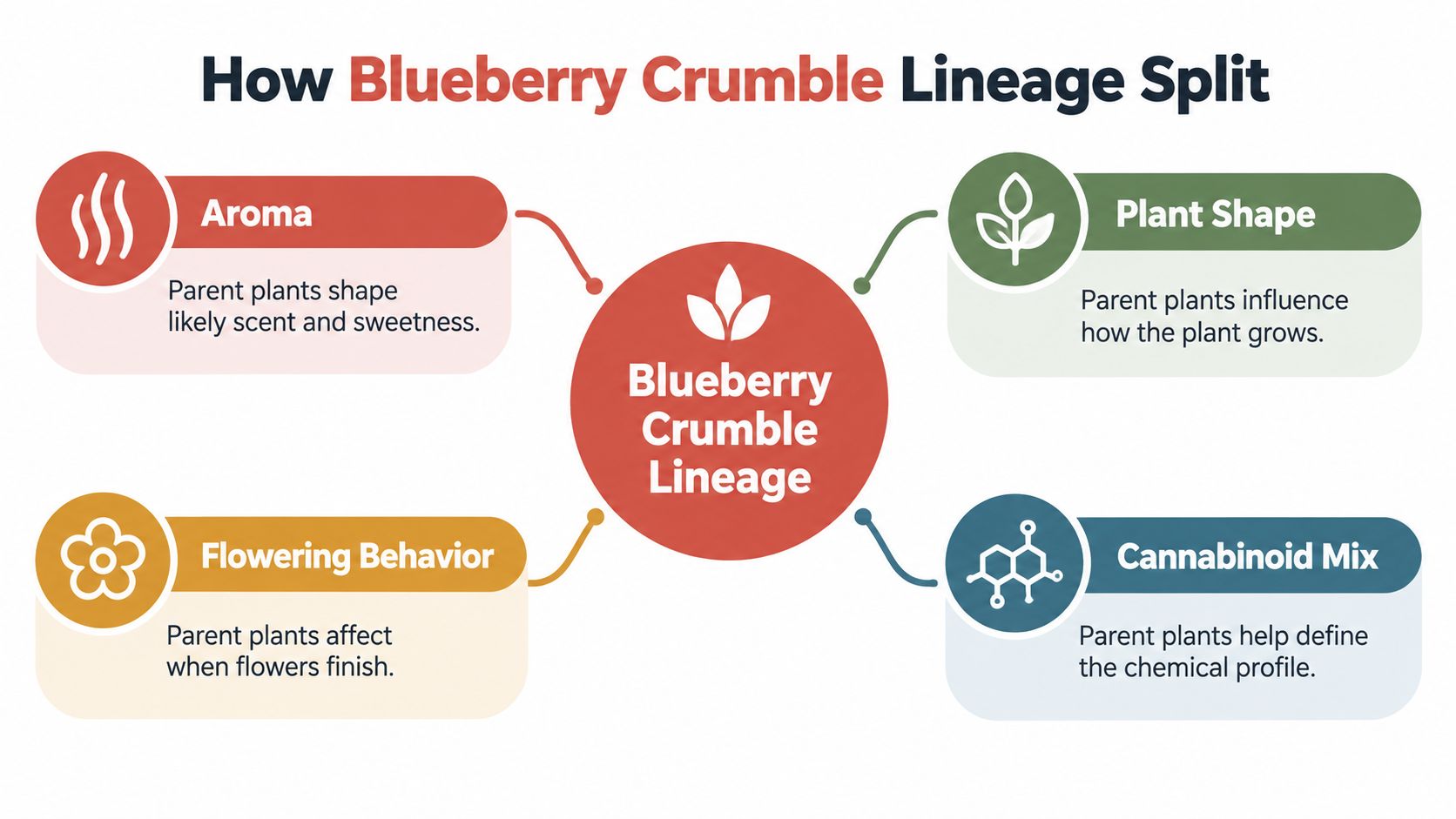
The Blueberry name is generally traced to DJ Short's breeding work in the 1970s, with Purple Thai and Thai genetics cited in historical accounts. That history helps explain why blueberry aroma and an indica-leaning reputation appear in some descriptions. It does not establish that every Blueberry Crumble product descends from the same plant.
Treat “Blueberry” as a clue to a breeder's intended heritage or aroma, not proof of ancestry. Indica and sativa labels have the same limitation. A classification attached to one breeder's cultivar does not automatically describe another product carrying the commercial name.
When listings conflict, compare the details that connect to the product in hand: breeder or clone source, stated parentage, and the batch's certificate of analysis (COA). The breeder and parentage help explain the intended cross. The COA identifies the tested lot, rather than settling which lineage is the definitive Blueberry Crumble. For a purchase, choose by breeder, batch paperwork, and product format, not by the name alone.
The flavor people usually seek from the blueberry crumble strain is easy to picture: ripe berry first, followed by a sweet, bakery-like note. Think warm blueberry filling under a buttery crumble topping, not a sharp citrus burst or a profile dominated by fuel. That's a useful expectation, but it isn't a guarantee that every product carrying the name will taste that way.
Terpenes are aromatic compounds that help explain why two cannabis products with similar THC readings can smell different. Their scent can contribute to a blueberry, sweet, herbal, or other impression, but a strain name doesn't establish a product's terpene profile. For a plain-language introduction to how aroma and flavor descriptions work, see this guide to terpene flavors and their character.
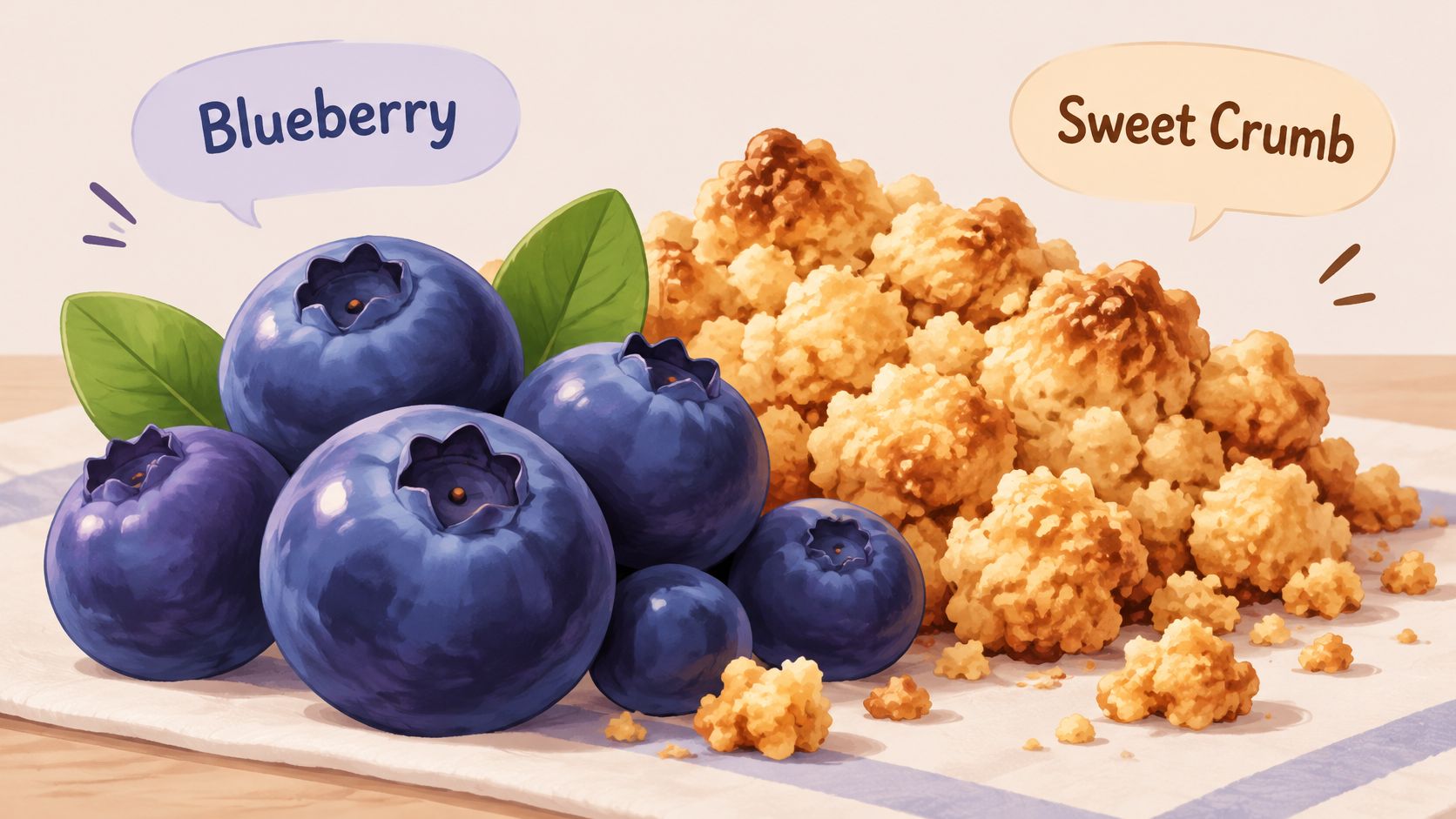
Start with the flower's aroma when you open the jar. Does it suggest fresh berry, sweet pastry, or something quite different? Then notice the flavor on the exhale. A blueberry-forward smell that turns muted, harsh, or unrelated in use may not deliver the experience the label led you to expect.
Format changes how clearly you can judge the material. Flower lets you examine and smell the plant itself. A vape's taste depends on the oil and its formulation, while an edible's berry character may come from the recipe rather than the original flower. Poor storage can also leave flower or oil less expressive than its description suggests.
A product page is more helpful when it describes a terpene profile tied to the lot, rather than relying on a flavor name alone. Even then, treat the description as a guide and use your own senses where the format allows.
Practical rule: Judge the aroma and taste you actually get, not the flavor you assume from the pouch. A blueberry label sets an expectation; it doesn't verify what's in the product.
Blueberry Crumble does not point to one plant or one potency figure. Published profiles report approximately 24% THC and 0–1% CBD, approximately 22% THC, or a typical 18–24% THC range. A separate seed listing advertises THC up to 24%. These figures describe different listings, not a shared batch, so none guarantees what a product with the same name contains.
| Reported profile | Stated parents or type | Potency note |
|---|---|---|
| One listed profile | Blueberry Crumble; parentage not specified in the report | Approximately 24% THC and 0–1% CBD (profile listing) |
| Leafly entry | Blueberry Crumble; listing reports Blueberry × OG Kush | Approximately 22% THC |
| Industry guide | Blueberry Pie × GSC | Typical 18–24% THC range |
| Seed-breeder listing | Blueberry × Purple Panty Dropper; 80% indica and 20% sativa | THC advertised up to 24% |
THC is linked to cannabis's intoxicating effects after consumption. The profile that reports CBD lists only trace amounts, so it does not describe a high-CBD product. Treat each number like a label on a particular batch: it cannot stand in for the COA of another product carrying the same strain name.
People may describe a session as relaxing or mentally active, but those impressions vary with the batch, amount consumed, and format. An indica-leaning label can suggest how a breeder classifies a plant; it cannot predict how every product sold as Blueberry Crumble will feel. The name is a recurring commercial label, not proof of one consistent lineage or effect.
Raw flower and heated cannabis also differ. THCA in raw flower isn't the same experience as THC after heating; smoking, vaping, or cooking changes the compounds involved. For a more useful comparison, check the product's lot-specific COA and consider its format, rather than using a strain title or a published percentage as a personal dosing guide.
The best format depends on whether you want to inspect the flower, skip grinding, carry something discreet, or choose an edible experience. Don't expect each option to deliver the same flavor or timing just because all of them use the blueberry crumble strain name.
| Format | Useful when you want | What to keep in mind |
|---|---|---|
| Flower | The clearest chance to inspect and smell the plant | You can judge the material directly, but the session still depends on the batch |
| Preroll | A flower session without grinding | You give up some of the direct selection and handling of loose flower |
| Vape | A portable, flavored inhale | The oil's formulation affects how closely its taste echoes the cultivar |
| Edible | An eaten option rather than an inhaled one | The blueberry note may come from the recipe, and the experience follows a different clock |
Flower is the most direct choice if your priority is assessing the berry-and-crumb character itself. You can look at the material and smell it before use. A preroll suits someone who wants a flower session without preparing loose flower, though it won't let you inspect the contents as directly as a jar.
A vape offers a portable option, and its flavor depends on whether the oil's terpene profile is formulated to echo the cultivar. An edible works differently: the product is eaten rather than inhaled, and a blueberry taste may come from its recipe as much as from the flower. Don't use flavor alone as evidence of shared lineage.
Use this simple decision rule: choose flower or a preroll to judge the cultivar, a vape for a portable flavored session, and an edible when you want an eaten experience rather than a quick taste test. For a broader comparison of how inhaled formats differ, consult this guide to vape versus flower.
Whatever you choose, the name doesn't tell you whether the format's flavor is faithful to a particular plant. A vape can be designed to resemble a strain's aroma, while an edible can taste like blueberry because of added recipe ingredients. The product description and batch information should clarify what you're buying.
Pick based on the experience you want and the information the seller provides. If your goal is to taste the flower, buy flower. If convenience matters more than inspecting the bud, consider a preroll or vape. If you prefer an edible, treat it as its own product choice, not a substitute for sampling the cultivar.
A certificate of analysis is the receipt for what's in a specific batch. It's especially useful for Blueberry Crumble because published descriptions report different THC figures. Assuming every product with the name matches one listed number can lead you to misread the package.
Use a short check before buying:
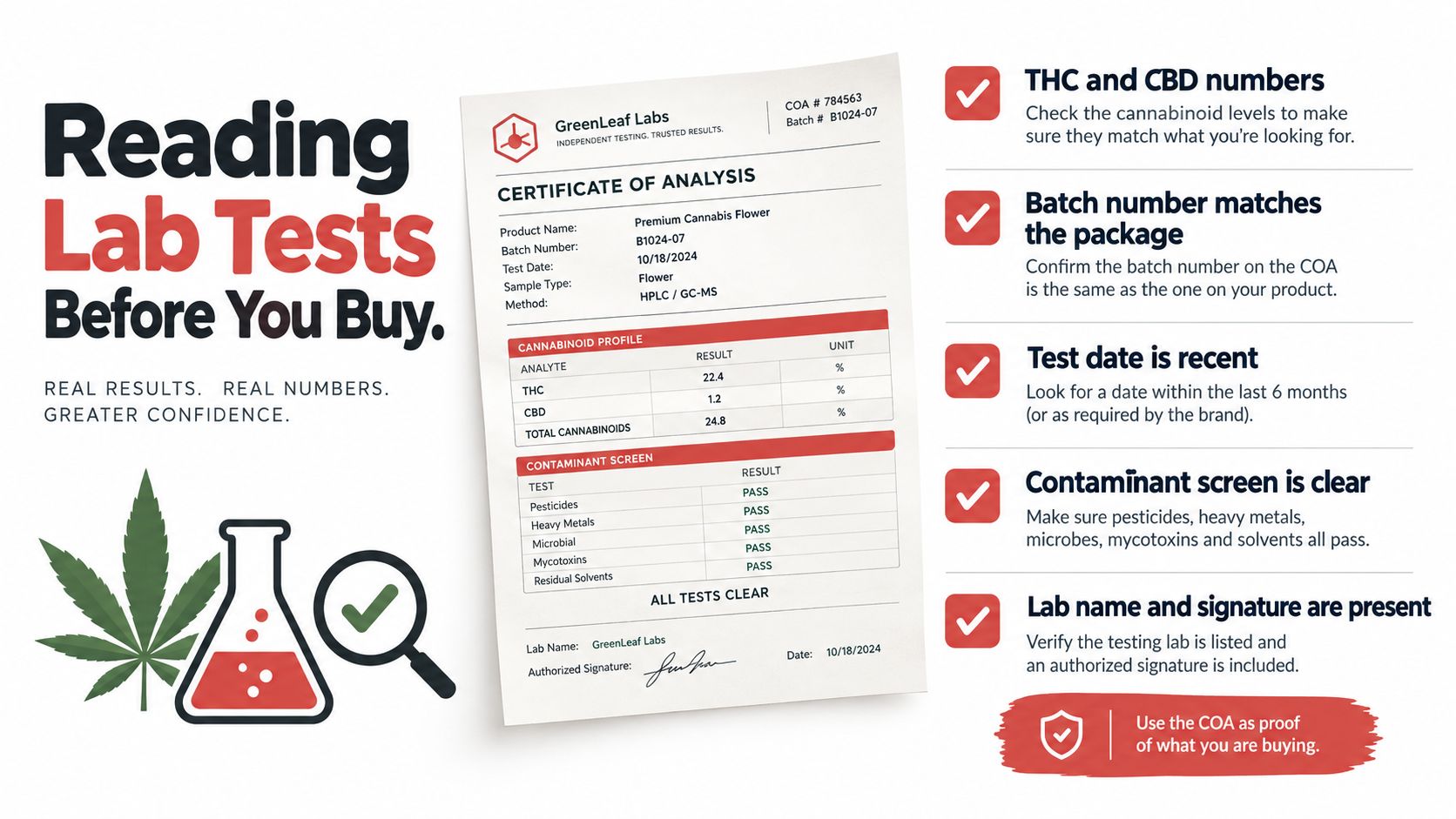
A COA can help you verify a cannabinoid panel, but it can't prove that two products with the same strain name have matching genetics. Use the breeder or clone-source information for lineage, and use the lab report to check the tested batch. For a more detailed walkthrough, see this guide to reading a certificate of analysis.
For U.S. hemp products, the compliance frame described by Melt is at or below 0.3% delta-9 THC, and THCA shipping is restricted where prohibited. Rules and availability may differ by location, so check whether the product can legally ship to your state before ordering.
THCA is the acidic form discussed in raw flower, and heating converts it toward THC. That's why a raw percentage and a smoked or vaped experience aren't interchangeable.
If the report matches the batch and its results meet your requirements, you have a more informed basis for deciding. If a seller doesn't provide a COA, or the batch details don't match, skip the product rather than filling in the missing information with assumptions about the strain name.
A flavor-first session starts with the product that lets you assess the flower. Choose THCA flower or a Duo preroll, then keep your first session small enough to notice what the lot smells and tastes like. That gives you a better read on the product in front of you than relying on a memory of another Blueberry Crumble.
For a portable option, consider an AMF Blend all-in-one only if the listed terpene profile fits the berry-and-bakery character you want. If you'd rather have an eaten product for a stay-in session, Melt Bites offer a different experience, with the timing of an edible rather than an inhaled puff.
Match the product to its COA and breeder notes, not to the name on the package or your memory of a different batch.
Before ordering, confirm you're 21 or older, open the age-gated shop, and read the lot report. Check that THCA products can ship to your state. If the paperwork looks right, then consider the free-shipping threshold over $50; retail partners and the brand's educational blog are other ways to explore products and buyer guidance.
Melt offers THCA flower, Duo prerolls, AMF Blend all-in-one devices, and Melt Bites, with third-party testing and lab reports to help you assess what you're buying. If you're 21 or older, visit Melt to review the available formats and check the batch details before choosing a Blueberry Crumble product.
Your cart is currently empty.