



Free Shipping All Orders Over $95
You're probably in the exact spot where people make a bad buy.
One shelf has disposables and carts that promise quick, clean, easy sessions. The other has flower that looks and smells like the experience you wanted in the first place. You've got your phone half out, maybe comparing strains, maybe trying to decide whether you want something strong, discreet, social, or just simple.
Most vape vs flower guides answer the wrong question. They treat it like a debate about which format is “better.” That's lazy advice. Cannabis formats are tools. If you pick the wrong tool for the job, you'll blame the product when the problem was the fit.
The question isn't whether vape beats flower.
It's this: what kind of session are you trying to have right now?
If you need a fast reset after work without grinding, rolling, or stepping outside for a long smoke, flower is probably fighting your goal. If you want to slow down, taste the strain, share with friends, and feel the ritual, a disposable can feel flat and forgettable.
That's where confusion sets in. They shop by category instead of by use case. Then they end up with a product that technically works but feels wrong every time they reach for it.
Before you choose anything, get brutally clear about the moment:
That's the whole game.
Practical rule: If your format makes your session harder, messier, smellier, or stronger than you wanted, you picked the wrong format, not the wrong strain.
A lot of consumers should own both. That's not indecisive. That's normal. The same person might want flower on a slow Saturday night and a vape on a weeknight when time is short. If you want a deeper breakdown of how the two highs can feel different, this cart high vs bud high guide is worth a read.
The wrong move is acting like one format has to do every job.
Before comparing them, define them clearly. A lot of confusion starts because people use “vape” to mean three different things and “flower” to mean only joints, which isn't accurate.
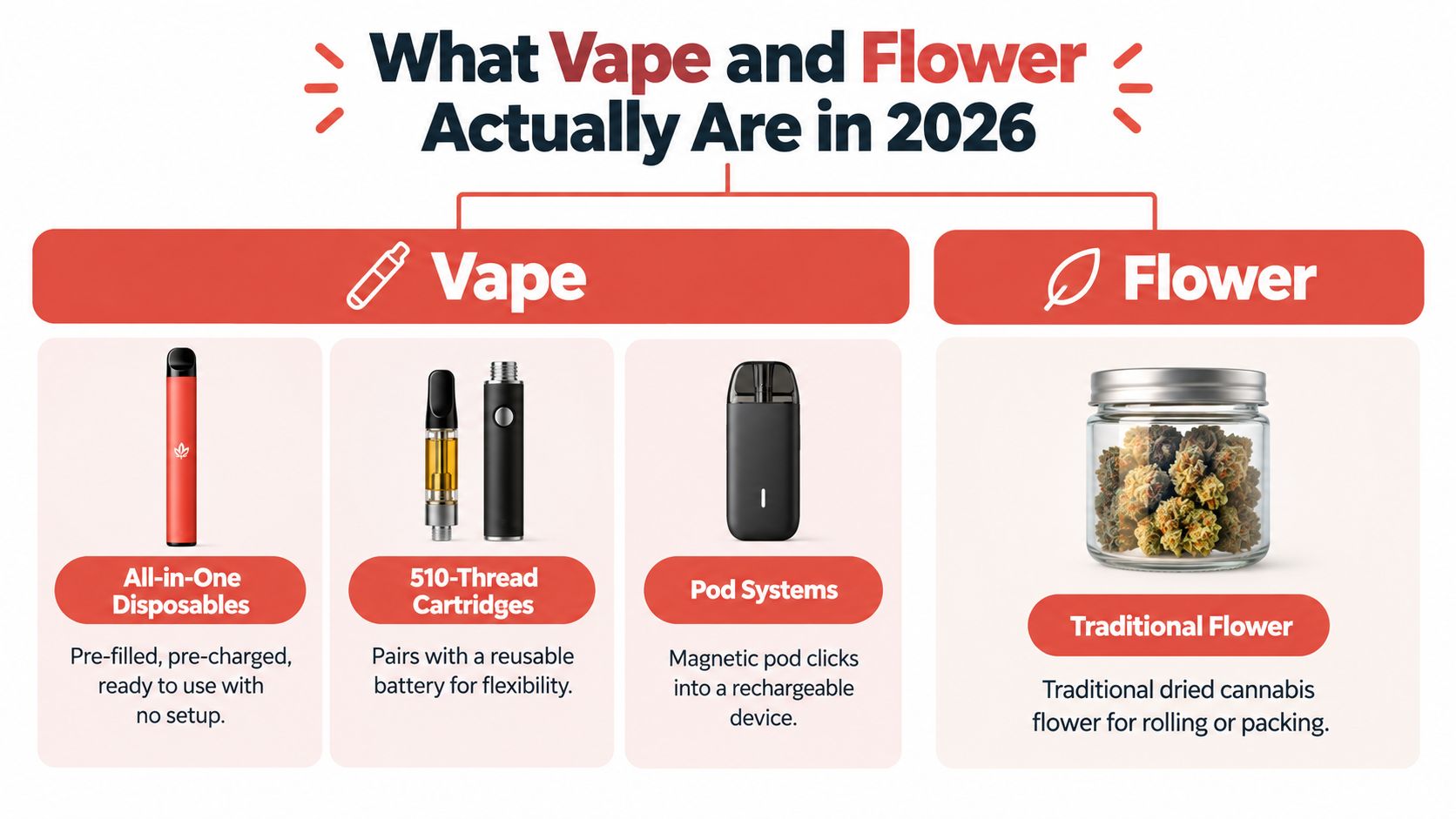
Vape usually means a device that heats cannabis oil into aerosol for inhalation. In practice, that includes a few common formats:
All three are built around the same basic idea. They heat an extract rather than burning raw plant material. If you need a simple hardware primer, this cannabis vape pen guide breaks down the basics.
Flower is the dried cannabis bud itself. This includes what people smoke in a joint, blunt, pipe, or bong. It also includes THCA flower, which belongs in the same conversation because once it's heated, it behaves like the cannabis flower experience people are buying it for.
Flower doesn't only mean smoking, either. You can also use a dry-herb vaporizer, which heats the plant material without full combustion. That matters, because “flower” describes the input material, while “smoked” or “vaporized” describes the method.
That distinction changes the whole vape vs flower discussion.
If you smoke flower, you're dealing with combustion. If you vaporize flower in a dry-herb device, you're still using flower, but not burning it. If you inhale from a cart or disposable, you're using extract, not raw bud.
That means the comparison really has two layers:
| Format Type | What It Is | How It's Used | Main Appeal |
|---|---|---|---|
| Disposable vape | Prefilled oil device | Inhale from ready-to-use pen | Convenience and speed |
| 510 cart | Replaceable oil cartridge | Attach to battery and inhale | Flexibility |
| Pod system | Pod-based oil device | Insert pod into device | Clean, portable routine |
| Flower | Dried cannabis bud | Smoke or dry-herb vaporize | Full plant experience |
If you don't separate material from delivery method, you'll keep comparing the wrong things.
Here's the part most buyers care about. How fast will it hit, how long will it last, and how hard will it feel?
Short answer: vapes are built for fast, efficient sessions. Flower is built for a broader, more tactile one. But the details matter.
| Format | Onset | Typical Duration | Relative Potency |
|---|---|---|---|
| Vape | Fast | Shorter to moderate | Often feels more concentrated per pull |
| Smoked flower | Fast | Moderate | Often feels fuller but less concentrated per inhale |
| Dry-herb vaporized flower | Fast | Moderate | Adjustable based on temperature and draw style |
In Canada, dried flower or leaf remained the most commonly used cannabis product in 2024, but use among past-12-month consumers fell from 82% in 2018 to 63% in 2024, while vape pens and cartridges rose from 16% to 37%. The same survey found daily or almost-daily use was highest for dried flower or leaf at 29%, followed by vape pens and cartridges at 21%. That tells you flower still anchors routine use even as vaping has become a major second lane for consumers in a regulated market, according to the Canadian Cannabis Survey 2024 summary.
That pattern fits what I'd tell anyone on a sales floor. People still build their cannabis habits around flower, but they add vapes when they want convenience, privacy, and simpler control over a short session.
A vape usually feels immediate and efficient. You take a pull, wait a minute, and you know where things are heading. That makes carts and disposables a strong fit for people who want control in smaller increments.
Flower also hits quickly, but the session tends to feel less compressed. There's more ramp, more ritual, and for a lot of people, a more rounded arc to the high.
If you only have a small window and don't want to smell like your session afterward, reach for the vape. If you want the session itself to be part of the point, flower still does that better.
In the U.S. retail market, flower still leads sales, but vapes are a major category. BDSA reported flower at 40% of national cannabis retail sales in 2026, compared with 26% for vape products, and estimated the U.S. vape market at about $8 billion over the 12 months ending May 2026. The same source cites independent research showing average THC contents of 25.48% for flower versus 78.29% for vapes, which helps explain why vapes often feel stronger per inhale even while flower stays the largest category by sales, as summarized by BDSA's cannabis vape trends page.
That doesn't mean vapes are automatically “better” for everyone. It means they deliver a more concentrated format. For low-tolerance users, that can be a feature or a mistake.
If your usual problem is “I barely feel anything,” a vape may solve it fast. If your usual problem is “I overdid it,” flower gives you a little more friction, and sometimes that friction is exactly what keeps the session enjoyable. If you're comparing timing specifically, this guide on how long a cart high lasts helps set expectations.
This part needs blunt honesty.
Neither vape nor flower is healthy for your lungs. But they are not the same respiratory event. If you combust flower, you're inhaling smoke. If you vaporize cannabis, you avoid a lot of the chemistry created by burning plant material.
One clinical study found comparable THC plasma concentrations between smoking and vaporization, but smoking produced a clear rise in exhaled carbon monoxide while the vaporizer produced little or no CO increase. A separate emissions review found cannabis vaporizer emissions were non-detectable or below quantification for most VOCs, with exceptions such as glycidol and 1,3-propanediol, as summarized in this ScienceDaily report on vaporization research.
That's the practical takeaway. If your goal is to lower exposure to combustion byproducts, vaporization has a measurable advantage.
| Exposure Factor | Smoked Flower | Vaporized (Cart or Disposable) |
|---|---|---|
| Combustion byproducts | Present | Much lower because there's no combustion |
| Carbon monoxide exposure | Higher | Little or no increase reported in the cited clinical comparison |
| Tar and smoke residue | Present | Reduced compared with smoke |
| VOC profile | Broader smoke-related exposure | Many VOCs non-detectable or below quantification in standardized review |
A controlled study using the Volcano found average THC delivery efficiency from dried cannabis flower rose with temperature, from about 24% at 170°C to 60% at 200°C and 77% at 230°C. The same study reported that roughly 35% of inhaled THC was immediately exhaled again, which means raw device output doesn't equal absorbed dose, as summarized in this review of vaporizer study findings.
That matters if you want the effects of flower without the combustion of smoking it. A dry-herb vape lets you keep the plant material and tune the extraction. Lower temperatures usually preserve more aroma. Higher temperatures pull more out, but the session gets hotter and rougher.
If respiratory harshness matters, the ranking is pretty straightforward:
Use this filter: If you're a daily user with a recurring cough, switching from smoke to vapor is the first format change I'd make before changing strains.
There's one more useful point. Peer-reviewed research summarized elsewhere found cannabis vapers were 40% less likely to report coughing, phlegm, and chest tightness than smokers after controlling for cigarette use and cannabis amount, according to this summary of method-specific respiratory findings.
That doesn't make vaping harmless. It just means “less harmful than smoking” is a real distinction, not marketing fluff.
Now we get to the trade-offs people feel immediately.
Not in a lab. In an actual session.
Flower gives you the broadest plant expression. You break up the bud, smell the jar, light it, and you're getting the strain in its whole form. For people who care about ritual and raw character, that still matters.
The downside is obvious. Combustion changes flavor as you go. The first part of a joint can taste great. The back half often tastes hotter, harsher, and dirtier.
Vapes split into two camps. Some taste closer to the strain itself. Others taste more engineered and polished. If you care a lot about flavor, don't assume every vape is equal just because it's a vape.
No grinder. No papers. No lighter. No ashtray. No half-finished joint stinking up your pocket.
That's why people keep a vape around even when they love flower. It removes friction. On a rushed night, friction matters more than romance.
| Factor | Flower (Joint, Preroll, THCA) | Vape (Disposable, Cart, All-in-One) |
|---|---|---|
| Flavor expression | Broad, raw, full plant character | Cleaner, more focused, varies by extract style |
| Session prep | Requires setup | Ready fast |
| Discretion | Smell lingers more | Lower odor and easier to hide |
| Cleanup | Ash, roaches, gear | Minimal cleanup |
| Ritual | Strong tactile experience | Minimal ritual |
| Cost feel per session | Often feels more economical for frequent use | Often feels easier for measured, smaller sessions |
Heavy consumers often like flower because it stretches into longer sessions and feels less compressed. Casual users often like vape because it's easier to take one or two pulls and stop there.
That's why broad statements about cost usually miss the point. A person who burns through carts because they hit them constantly may save money with flower. A person who wastes half a joint every time may do better with a vape.
Flower makes more sense if you like to sit with the session. Vape makes more sense if you like to dip in and get on with your night.
If your top two priorities are flavor plus ritual, flower wins. If your top two priorities are speed plus discretion, vape wins. Most buyers don't need a perfect universal answer. They need to admit which pair of priorities runs their purchase.
People get careless, especially online.
You can't just decide between vape vs flower by effect alone. You also need to know what you're legally buying, what can ship, and what your state treats differently.
Federally, hemp products have to stay at or below 0.3% delta-9 THC by dry weight. That's the threshold that allows THCA flower to exist in the hemp marketplace before heating. Once heated, THCA converts in the way consumers expect, which is why THCA flower sits in this conversation even though buyers often encounter it through hemp channels rather than state dispensaries.
That same framework affects hemp-derived vapes too. The federal baseline doesn't erase state law. It only gives you a starting line.
A hemp-derived vape sold online and a cannabis-derived vape sold in a licensed dispensary might feel similar in use, but they don't live under the same regulatory structure.
One is sold through the hemp system with shipping limits, cannabinoid thresholds, and state-specific restrictions. The other moves through a state-licensed cannabis framework and remains federally illegal.
That changes checkout in very practical ways:
Don't shop hemp products like every state reads the same law. They don't.
Check three things before checkout:
If a product can't legally ship to your address, the format discussion is over before effects, flavor, or convenience even matter.
That's not exciting advice. It's just the advice that prevents wasted time and canceled orders.
The cleanest way to settle vape vs flower is to stop thinking like a category shopper and start thinking like a user with a specific moment in front of them.
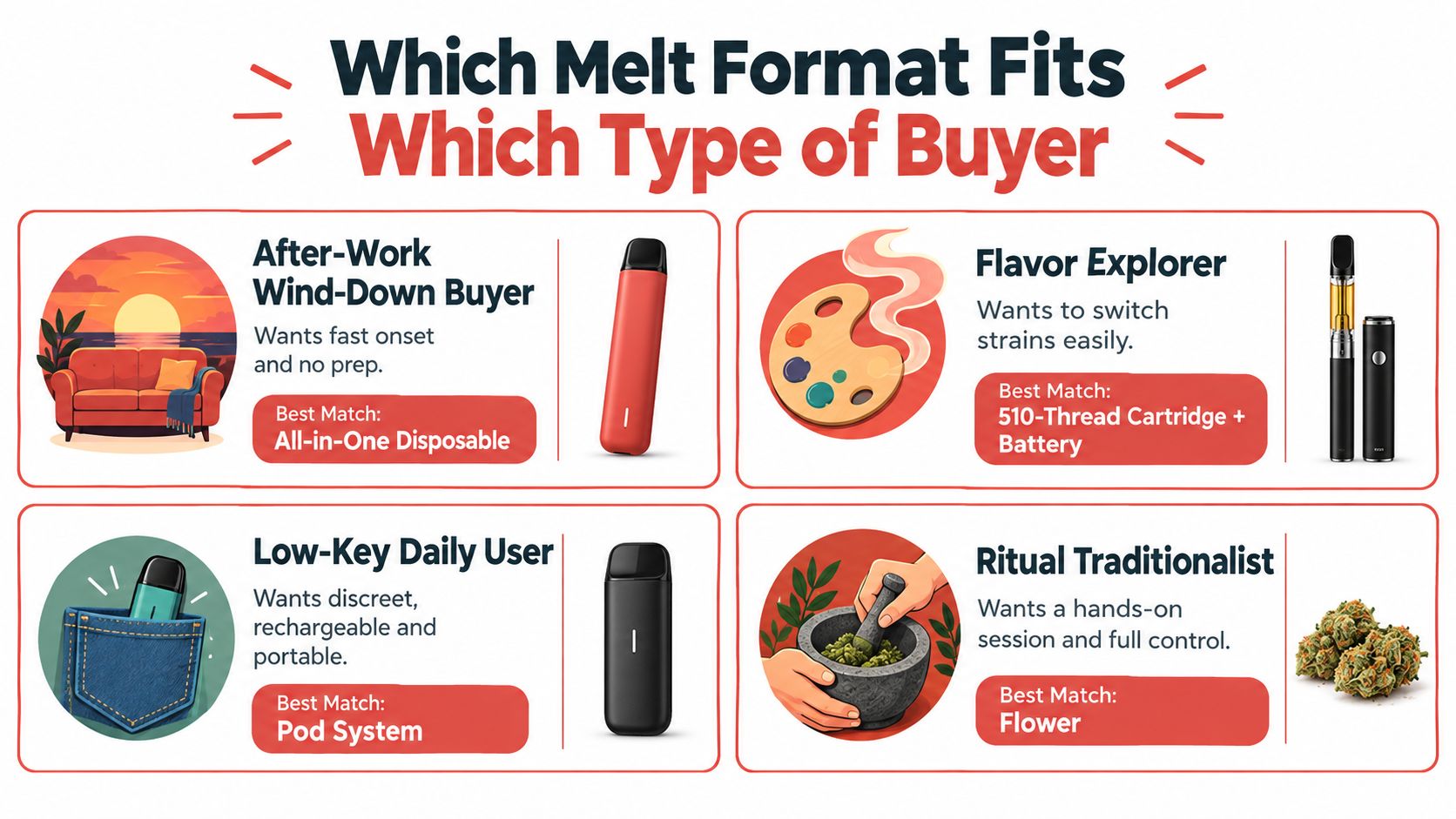
This buyer gets home, wants relief quickly, and has no interest in grinding, rolling, or airing out a room. That person should stop forcing flower into a job it doesn't do efficiently.
A disposable or all-in-one makes more sense here. It's quick, low-ceremony, and easy to put away. For this use case, Melt's AMF Blend all-in-one devices fit the goal because they're designed for ready-to-use sessions without separate setup.
This person doesn't want efficiency. They want the experience. They want to open the jar, break up the bud, smell the terpene profile, maybe roll slowly, maybe share.
That buyer should choose flower. Not because vape is bad, but because vape strips away the exact part they value most. If commitment feels too high, prerolls are the easier entry point.
Some people aren't shopping for effects alone. They're shopping for a pace. Flower still owns that lane.
Here's a useful visual for matching the profile to the format:
This buyer still wants inhalation, still wants consistent access, but doesn't want the repeated harshness of smoking every session. They're not chasing novelty. They need a routine they can repeat.
That buyer should move toward vapor, then get disciplined about dosing. A simple usage log helps more than people think. If you're inhaling every day, structure matters.
When friends are over, flower usually wins. Passing a joint or opening a jar creates a shared rhythm that a vape rarely replaces. But when everyone leaves and you want one more small session without restarting the whole ritual, a cart or disposable makes a smart backup.
That's why a lot of experienced consumers land on a mixed setup:
The point isn't loyalty to a format. The point is matching the tool to the moment.
If you're still stuck, don't overcomplicate it. Run this quick checklist and your answer usually gets obvious.
If you want one format to do everything, you'll probably end up annoyed. If you choose by occasion, you'll get far better results.
So keep it simple. Choose vape when you want speed, ease, and discretion. Choose flower when you want time, flavor, and ritual. Choose both if your week includes both kinds of moments.
If this guide helped you narrow down vape vs flower, Melt offers the formats that matter for that decision, including THCA flower, Duo prerolls, and all-in-one devices. If your goal is quick, low-fuss sessions, start with the vape side. If you want the full plant ritual, go straight to the flower lineup.
Your cart is currently empty.