

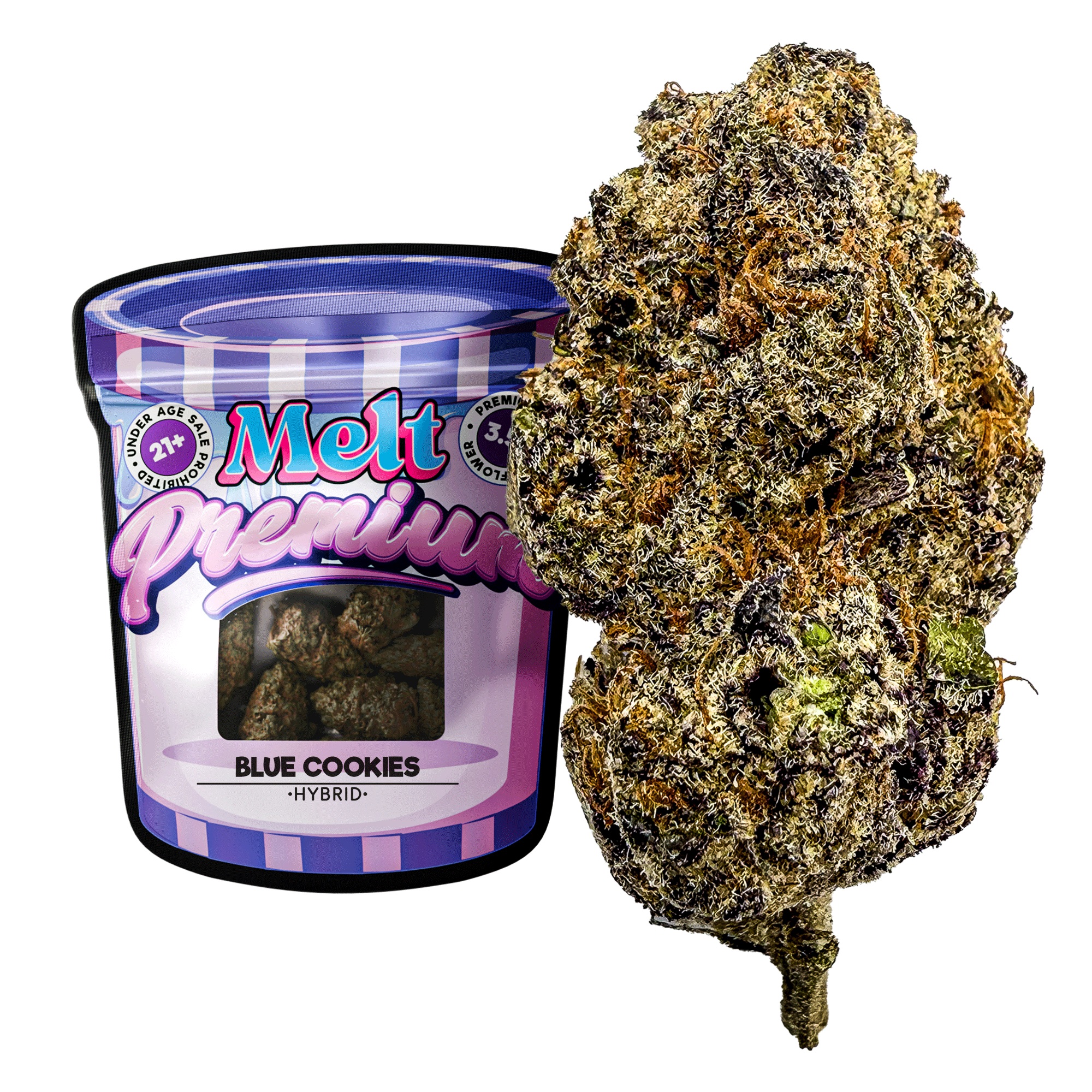


Free Shipping All Orders Over $95
Quick Answer: THCA sits dormant in raw cannabis as a non-psychoactive compound that only lights up once you apply heat to transform it into THC. On the other hand, THCP goes straight to work, latching onto CB1 receptors with up to 33× the affinity of regular THC for a truly powerful experience.
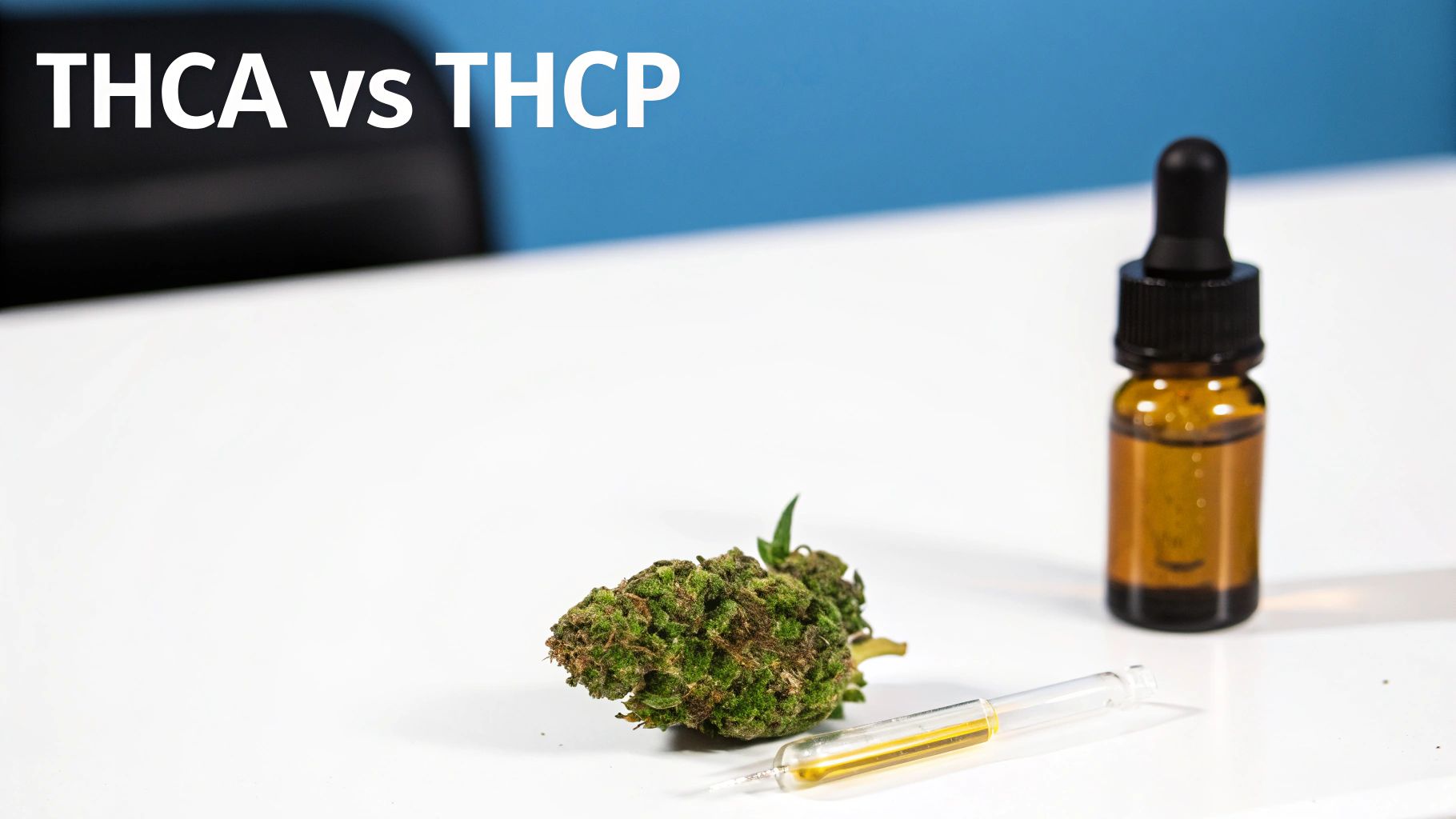
Raw cannabis flower naturally holds THCA, an acidic forerunner that won’t induce a high. Once you expose it to heat—through smoking, vaping, or baking—THCA sheds its carboxyl group and becomes Δ9-THC, which is responsible for that classic buzz.
In contrast, THCP features an unusually long, seven-carbon side chain, letting it slip into CB1 receptors without any heat-triggered transformation. It’s ready to deliver psychoactive effects straight out of the bottle, no decarboxylation required.
After you convert THCA into THC, the results tend to be gentle and well-balanced. On average, you'll feel effects kick in around 30–60 minutes, with the peak often settling in for 2–4 hours.
THCP, however, shows up almost immediately—sometimes within minutes—and sustains a more intense journey. Users frequently report a deeper euphoria, altered thinking, and longer-lasting clarity shifts.
Under the 2018 Farm Bill, hemp-derived products containing no more than 0.3% Δ9-THC are federally legal. That means THCA flower qualifies in its raw form, as long as you stay under that threshold.
THCP occupies a murkier legal landscape. Its potency often places it in a gray area, so it’s crucial to:
This snapshot sets the stage for deeper dives into pharmacology, dosing strategies, and safety profiles.
Before you decide, here’s a concise side-by-side overview:
| Feature | THCA | THCP |
|---|---|---|
| Molecular Form | Acidic precursor to Δ9-THC | Rare cannabinoid with extended side chain |
| Activation | Heat required for decarboxylation | Psychoactive without conversion |
| Potency | Non-psychoactive raw, milder after decarb | Binds CB1 up to 33× stronger |
| Onset & Duration | 30–60 min onset; 2–4 hr duration | Minutes onset; prolonged intensity |
| Legal Status | ≤ 0.3% Δ9 THC compliant under US law | Regulatory gray zone in most regions |
| Common Consumption | Raw flower, vapes, edibles post-decarb | Vapes, edibles, isolates |
Use this table as a quick reference before exploring detailed insights below.
THCP binds CB1 receptors much more strongly, making it ideal for users seeking intense effects.
For more context on THCA vs THC, head over to our in-depth guide: Difference Between THC and THCA
Choose your cannabinoid based on whether you prioritize a heat-activated mellow effect or an immediate, powerful high.
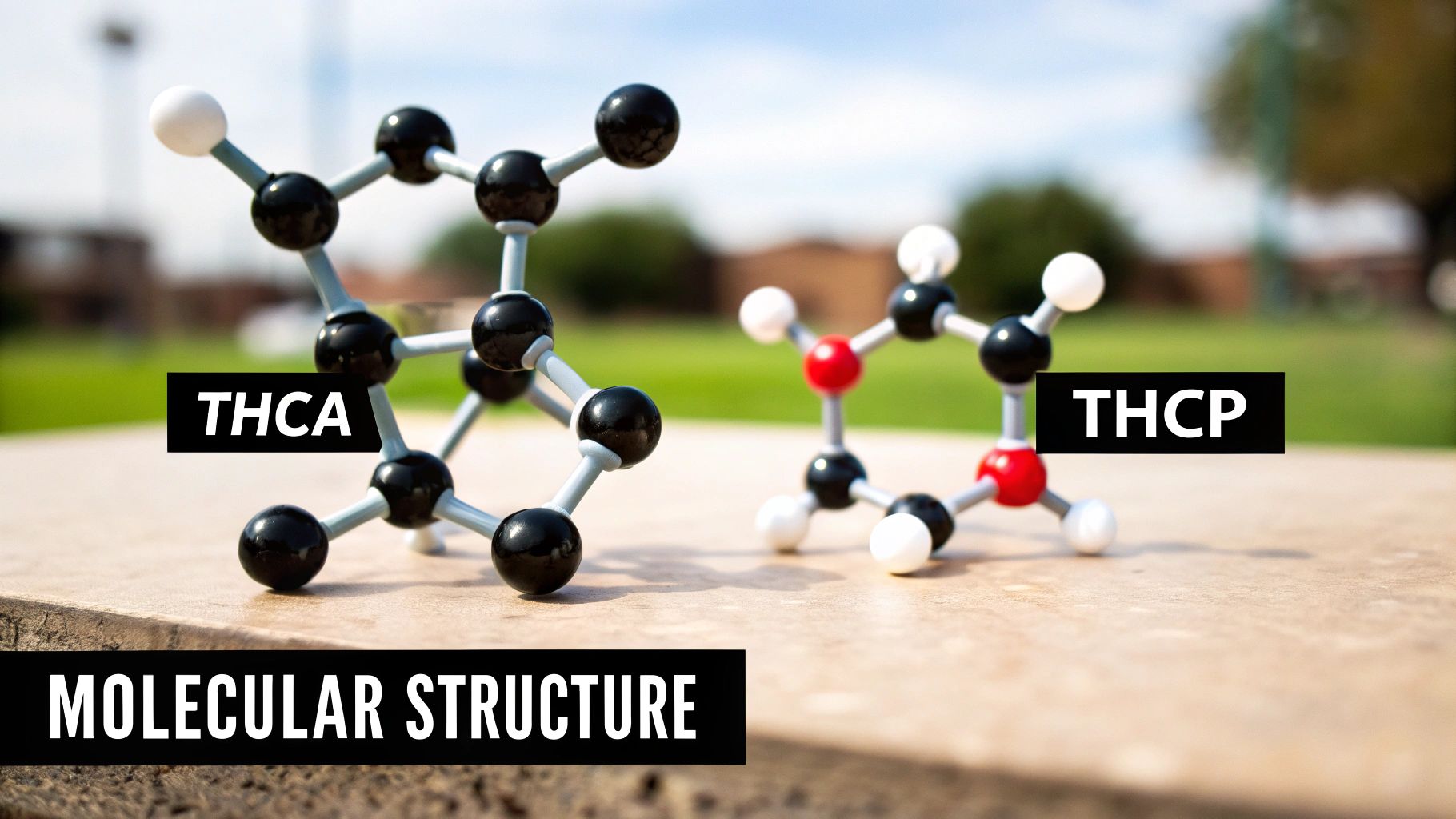
In its raw form, THCA carries a carboxylic acid group that prevents it from binding to cannabinoid receptors. Only when heat strips away a CO₂ molecule does it convert into Delta-9 THC, unlocking that familiar psychoactive effect.
By contrast, THCP was identified in 2019 and stands out because of its seven-carbon alkyl side chain—and it doesn’t need heat to get to work.
Key Molecular Figures
A tiny tweak in structure can translate into a major functional shift. THCA’s compact shape keeps it from psychotropic binding until you apply heat, meaning raw extracts stay non-intoxicating.
On the other hand, THCP mimics the THC core but with a longer tail—lab tests have shown it can latch onto CB1 receptors 33× more effectively than Delta-9 THC.
THCP’s extended alkyl chain is the defining factor behind its dramatic potency boost, offering vivid psychoactive responses.
Because THCP is so scarce in the plant, most commercial products rely on lab synthesis to deliver predictable highs. Meanwhile, THCA remains the go-to for non-psychoactive wellness options right out of the flower.
Heat is essential for THCA’s transformation into something psychoactive, but THCP skips that step entirely.
These distinct routes dictate how quickly each cannabinoid kicks in and influence how you dose.
As a quick reference, here’s a side-by-side summary:
Summary Comparison of THCA and THCP
| Feature | THCA | THCP |
|---|---|---|
| Chemical Form | Acidic precursor; contains carboxy group | Neutral molecule; no acid group |
| Activation Requirement | Heat-triggered decarboxylation (220°F +) | No activation needed |
| Potency (CB1 Binding) | Moderate until converted to Δ9-THC | Up to 30× stronger potency |
| Psychoactive Effects | Delayed onset; 30–60 minutes post-decarb | Rapid onset within minutes |
| Legal Status | Hemp-legal (<0.3% Δ9-THC) | Legal grey area; synthetic forms common |
| Typical Use Cases | Wellness tinctures, non-intoxicating topicals | High-powered vapes, fast-acting edibles |
This table highlights the core differences at a glance and shows why THCA sits idle until heated, whereas THCP is ready for action right away.
When you rely on THCA, plan for a 30–60 minute ramp-up as it decarbs into Delta-9 THC. And because heat application can vary, dosing requires a bit more patience and precision.
THCP, conversely, strikes fast—effects can appear in mere minutes, often with noticeably greater intensity. For deeper reading on these structural insights, check out Nurse Wellness.
These molecular foundations set the stage for comparing CB1 and CB2 interactions in the next section. At Melt, we source organic hemp to maximize THCA yield and work with accredited labs to certify THCP purity below 0.1%.
Thanks to transparent COAs, you can confidently pick a gentle THCA preroll or a potent THCP vape. For example, many users roast THCA flower at 230°F for 30 minutes to unlock gradual relief, while THCP concentrates deliver a swift effect when vaped around 350°F.
Gain essential molecular clarity for mindful cannabinoid selection now.
Getting a clear picture of how THCA and THCP engage with cannabinoid receptors is essential when choosing the right product. Raw THCA barely touches CB1 until heat converts it into Δ9-THC, whereas THCP slots into those receptors with striking affinity, delivering a far more potent profile.
Here’s a snapshot of how these molecules compare at the receptor level:
| Compound | CB1 Ki (nM) | Relative Potency vs Δ9-THC | Typical Effective Dose |
|---|---|---|---|
| THCA | >1000 | Minimal until decarb | N/A raw; 5–10 mg THC |
| Δ9-THC | 40 | 1× | 5–10 mg |
| THCP | 1.2 | 33× | 0.5–2 mg |
The table above highlights THCP’s dramatically lower Ki and elevated potency compared to THCA and Δ9-THC. Preclinical rodent studies confirm that THCP produces cannabimimetic effects at just a fraction of the dose required for traditional THC. In contrast, THCA aligns with standard Δ9-THC dosing once decarboxylated.
With a Ki of 1.2 nM, THCP rivals synthetic full agonists like CP55940, so even small doses demand careful attention.
These receptor insights are your compass for tailoring onset, intensity, and safety.
Rotate days when using THCP to curb tolerance and protect CB1 responsiveness.
These scenarios illustrate how THCA favors gentle, non-psychoactive relief, while THCP delivers a powerful, short-lived uplift.
One of the most striking differences is that THCP can exhibit up to 33× greater activity at CB1 receptors than Δ9-THC, while raw THCA remains non-psychoactive until decarboxylated. Learn more about THCP’s receptor affinity in this Nature Study.¹
By combining receptor data with user feedback, you can fine-tune your regimen for consistent results.
Cycling your intake helps reset CB1 receptor sensitivity.
Transparent lab data prevents dosing surprises.
With these pharmacology insights in hand, you’re ready to optimize dosing strategies and explore onset and duration comparisons in the following section.
Explore Melt’s lab-verified THCA flower and THCP isolates to tailor your experience with clear dosing guidelines and transparent COAs. Access products online for fast, discreet shipping, and rely on Melt’s third-party certificates to verify potency and purity.
¹ Read the full research about THCP’s Ki values and potency implications.
When it comes to THCA and THCP, the real story lies in how fast each kicks in and how long the ride lasts. These two cannabinoids may look similar on paper, but your experience with them can feel worlds apart.
Decarbed THCA behaves much like traditional THC once it’s heated. Most users feel the effects build steadily rather than hit all at once.
THCP, on the other hand, is famous for its rapid-fire action. Whether you vape or ingest, you’ll often notice a shift in mood almost immediately.
“THCP can hit in under five minutes and stay intense for hours,” says a veteran microdoser who relies on it for creative focus.
A quick glance at the table below highlights their distinct profiles:
| Profile Attribute | Decarbed THCA | THCP |
|---|---|---|
| Onset Time | 30–60 min | <5 min |
| Peak Intensity | 2–4 hours | 4–6 hours |
| Overall Duration | 4–6 hours | 6–10 hours |
Microdosing THCA can ease pain and inflammation without a heavy psychoactive load. In contrast, even 0.5–2 mg of THCP can deliver a deep, recreational high to seasoned users.
Choosing between THCA and THCP often comes down to your schedule and desired vibe. A quick lunch break pairs perfectly with THCA’s predictable window, while THCP shines during longer, evening sessions.
“I never start a long shoot without my THCP pen,” a filmmaker shares. “Its consistency keeps me in the zone.”
To make the most of each session, remember:
For microdosing THCA, try 2.5 mg, then adjust by 1 mg weekly until you find the sweet spot for inflammation relief. With THCP, always test in a controlled setting, monitor your heart rate, and stay hydrated. Over time, you’ll learn whether THCA’s gentle ascent or THCP’s powerful plunge best suits your personal goals.
Mapping legal frameworks across major markets reveals a clear divide: THCA rides on compliant hemp roots, while THCP drifts in synthetic ambiguity. This breakdown will help you navigate local rules and pick products that align with the law.
In the U.S., the 2018 Farm Bill opened doors for hemp-derived cannabinoids as long as they stay below 0.3% Δ9 THC by dry weight. That provision keeps raw THCA flower in the clear in states from Florida to California.
“States vary on how they interpret newer cannabinoids, so local statutes may override federal guidance.”
Canada treats THCA-rich flower as a medical option under licensed producers. In Ontario and British Columbia, raw cannabinoids slip into therapeutic products with official exemptions.
Across Europe, Novel Food rules clamp down with a total THC cap of 1%—a ceiling that sidelines THCP as a controlled synthetic compound in many countries.
As Latin America, Asia, and Africa shape their cannabis policies, THCA and THCP occupy different storylines. Mexico and South Africa are testing hemp pilot programs, while other nations lag behind.
Beyond the policy maze, a chemical tug-of-war is unfolding. THCP appears almost exclusively in labs—natural plants yield below 0.1%—yet it binds CB1 receptors about 33× stronger than THC (Ki 1.2 nM vs 40 nM). That 30× potency boost puts THCP in boutique vapes and edibles. By contrast, raw THCA flower averages 10.74% total THC/THCA-A, keeping it comfortably under the U.S. hemp cap. And legally, that means THCA thrives under the 2018 Farm Bill’s 0.3% Δ9 THC rule, while THCP remains stuck in gray areas.
Before you buy any concentrate, edible, or flower, make lab data and local rules your best friends. Here’s how to stay on the right side of the law:
For a deeper dive, check Legal Considerations for THCA
| Region | THCA Status | THCP Status |
|---|---|---|
| United States | Legal under Farm Bill <0.3% Δ9 THC | Gray zone; FDA scrutiny |
| Canada | Medical access through licensed producers | Restricted under novel food rules |
| Europe | Limited by 1% total THC cap | Generally prohibited |
| Rest of World | Pilot programs emerging; regulations unclear | Mostly banned or unregulated |
Your buying decisions hinge on local compliance and transparent lab results:
Now you’re armed with the intel to choose THCA and THCP products that fit your legal and practical needs.
Working with raw THCA flower feels different than dialing in a THCP concentrate. The way you activate, measure, and even store these compounds shapes the overall experience.
Here’s a quick look at legal frameworks across major regions.
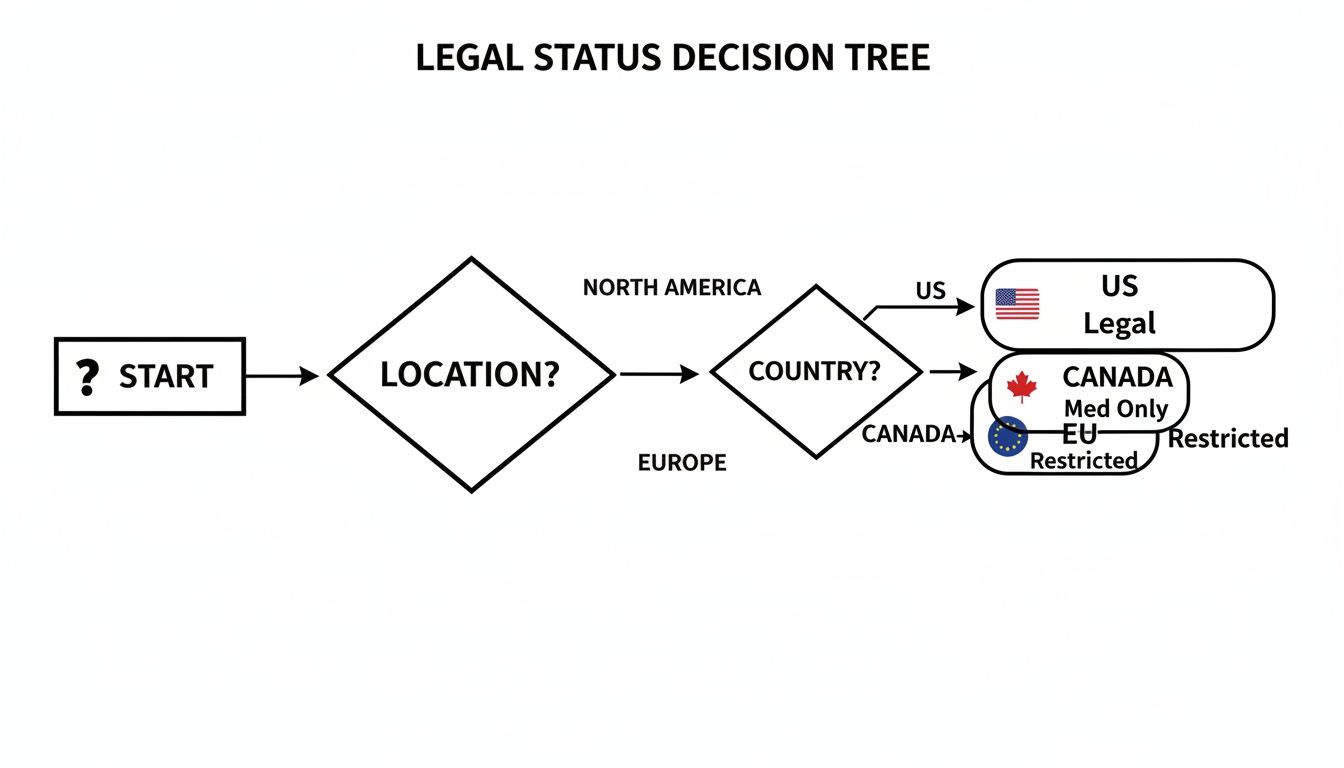
This graphic maps out where THCA and THCP are hemp-compliant, medically sanctioned, or restricted in the US, Canada, and the EU.
When it comes to raw THCA flower, heat is non-negotiable. Decarboxylating at 230°F for around 30 minutes converts the acid form into active THC, ensuring your tinctures and edibles hit with predictable potency.
By contrast, THCP vape carts and isolates arrive fully activated. Unpack, dose, and you’re good to go—but always err on the side of a light touch.
“Starting with 0.5 mg of THCP in a calm environment can help you gauge its potency,” suggests a Melt educator.
| Format | THCA Flower | THCP Isolate |
|---|---|---|
| Activation | Decarb with heat | No activation needed |
| Bioavailability | 30% oral | 50% oral/vape |
| Ideal Setting | Daytime relief | Focused evening use |
Raw flower integrates smoothly into a morning ritual, delivering gentle anti-inflammatory support. THCP isolate, on the other hand, often pairs best with an evening wind-down or creative session.
Precision dosing prevents surprises when working with potent cannabinoids. Always start low and wait at least 45 minutes before considering an additional hit.
HHC and THCP blends can offer balanced effects too. For more on flavor profiles, check out our guide on Melt’s HHC, THCP, and HHCP vapes in our article here.
Certificates of Analysis are your roadmap to a safe, consistent experience. Look for a detailed breakdown of:
Watch for abbreviations like ND (Not Detected) and LOD (Limit of Detection) to understand trace findings.
Light, heat, and air are cannabinoids’ worst enemies. To maximize freshness:
Case Study
A user stored THCA flower in a sealed jar and reported no flavor loss after 8 months, illustrating how proper storage maintains potency.
Your objectives dictate the best format:
Tailor your choice to the setting, desired intensity, and time you have.
A third-party COA is non-negotiable. When you review lab reports, check for:
“Accurate COAs are your best defense against inconsistent dosing,” advises a Melt laboratory specialist.
This approach ensures every dose of THCA flower or THCP concentrate meets expectations, letting you focus on the effects rather than the guesswork.
Whether you’re curious about activating THCA or dialing in your THCP dose, these FAQs should guide your next steps. We’ll break down lab readings, legal quirks, and dosing tips so you can choose with confidence.
To turn raw flower into active THC, spread your buds on a baking sheet and set your oven between 220–240°F. Let them toast for about 30–45 minutes, then cool before packing.
Start small—0.5 mg is a good baseline. After each session, bump your dose by 0.5 mg and jot down how you feel in a dosing journal.
• Review third-party COAs for THCA, THC, and THCP levels
• Ensure Δ9-THC stays under 0.3% for hemp compliance
• Look out for residual solvents and pesticides
• Pick the right format—flower, vape, or edible—based on your mood
Cannabinoid laws shift dramatically from one place to another. Before ordering THCA or THCP online, double-check your local statutes—particularly Novel Food or designer cannabinoid clauses.
Scan your COA for a clear breakdown of each cannabinoid. Remember, THCA shows up inactive until heated, while THCP potency often ties back to its Ki values. These numbers tell you how tightly the molecule binds to CB receptors.
Take the total THCA on your COA and divide by the number of servings. Since decarboxylation converts about 70% of THCA into active THC, multiply your per-serving THCA by 0.7 to find your estimate.
Raw THCA flower won’t get you high—that heat activation step is essential. THCP isolates, on the other hand, arrive ready to bind receptors immediately.
For mild relief, consider vaporizing THCA at lower temperatures. If you’re after a swift, powerful effect, dose a measured THCP isolate in your favorite vape device.
“Recording your sessions clarifies whether THCA’s gradual onset or THCP’s fast ramp-up suits you best.”
Track three key markers—onset, peak, and recovery—to dial in your ideal cannabinoid. A simple spreadsheet or dosing app will help you spot trends in effects and side effects. Share your notes with a trusted expert to fine-tune your routine.
Experiment responsibly and always consult a professional when you’re trying something new.
Discover the complete Melt THCA flower and THCP isolate collection online today exclusively at Melt https://meltofficial.com
Article created using Outrank
Your cart is currently empty.