



Free Shipping All Orders Over $95
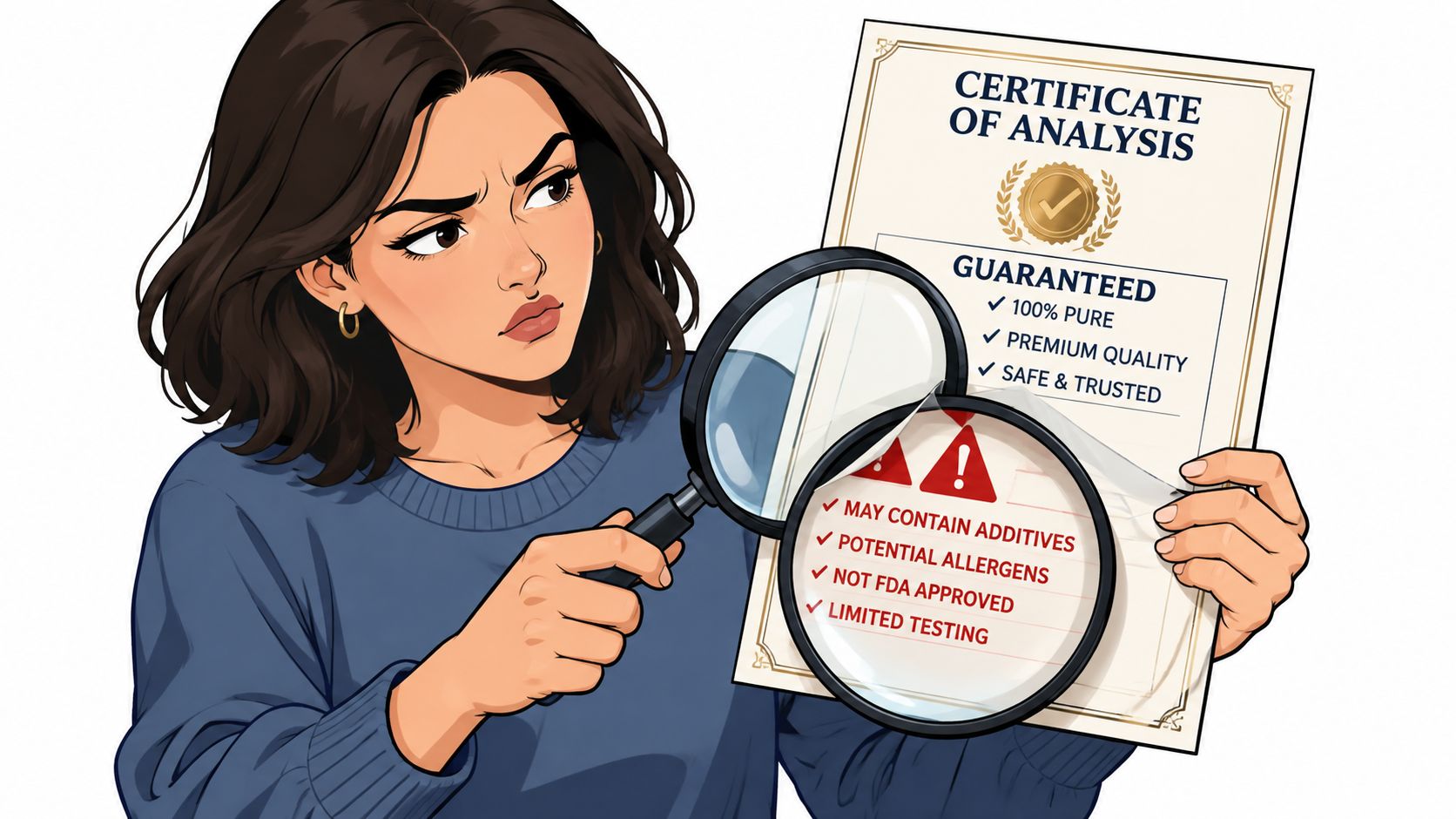
A certificate of analysis is not a safety guarantee. It's evidence, and the value of that evidence depends on who produced it, what was tested, how the method was measured, and whether the document matches the product in your hand. A polished PDF with a green “pass” can still leave critical questions unanswered.
Good lab reports give you enough information to judge trustworthiness, not merely compliance theater. For cannabis and hemp products, that means looking beyond potency and checking accreditation, independence, contaminant coverage, detection limits, and batch identity.
Many buyers use a simple rule: if a brand publishes a COA, the product must be safe. That rule is too weak. A report can exist without proving that the lab was independent, that the sample represents the item being sold, or that the methods were sensitive enough to detect relevant contaminants.
Cannabis testing still lacks standardized methods, so different labs can produce different potency results on the same material. Researchers have warned that this interlaboratory variability weakens both consumer confidence and claims about labeling accuracy in the sector. You can review the underlying discussion in the AOCS analysis of cannabis testing variability.
Most commercial testing is commissioned and paid for by producers or brands. That arrangement doesn't automatically invalidate a report, but it creates a reason to examine the laboratory relationship rather than accepting the document at face value. Reporting on the sector has identified lab shopping and false results as meaningful market problems, including concerns that producer-paid facilities may face incentives to inflate potency.
A report that highlights only an impressive cannabinoid number is marketing material until the rest of the document supports it. Look for the laboratory name, accreditation information, sample identifiers, test dates, methods, units, and complete results. If the document offers potency but says little about pesticides, heavy metals, microbial contamination, mycotoxins, or solvents, it hasn't answered the safety question.
Practical rule: A passing result tells you what the lab concluded about its sample. It doesn't, by itself, tell you whether the lab was independent or whether its sample matches your product.
Before buying, use the report as a verification document. A practical guide to reading a certificate of analysis can help you identify the basic fields, but don't stop at locating the cannabinoid table. Ask whether the report is complete, reproducible, batch-specific, and supported by a credible testing system.
Start with the laboratory, not the brand's claims. A strong hemp or cannabis report should come from an independent laboratory accredited to ISO 17025, include batch-specific identifiers, report potency, and show a meaningful contaminant panel. Industry guidance specifically flags potency-only documents, missing batch numbers, and stale reports as warning signs. The industry guidance on identifying misleading cannabis COAs explains why those omissions matter.
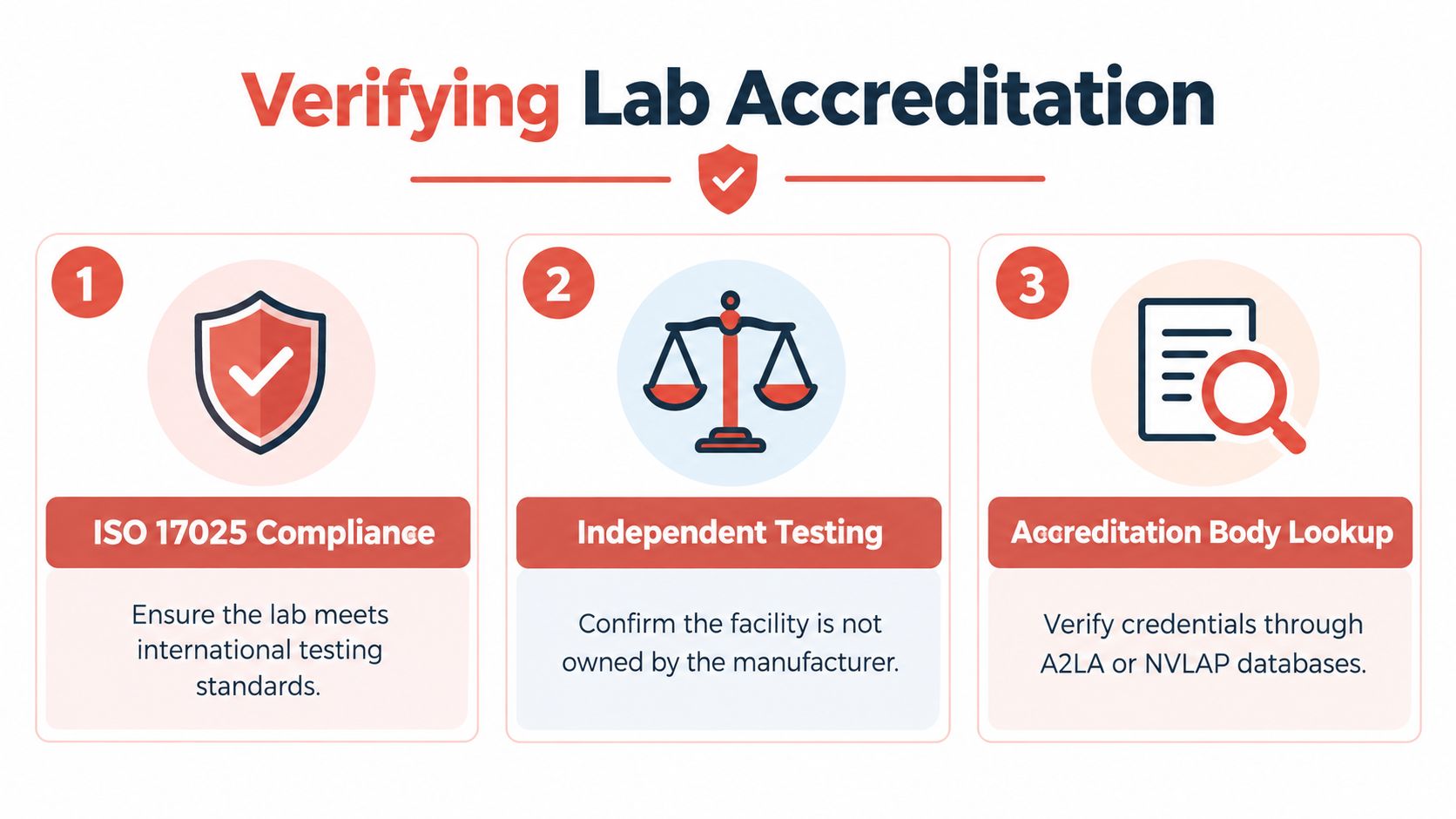
Use this sequence when reviewing a report:
The distinction between accredited and independent matters. Accreditation addresses competence and quality systems. Independence addresses incentives and conflicts. You want both.
A credible report should make its limitations visible. If the accreditation number is absent, the scope can't be located, or the lab refuses to confirm a document, pause the purchase. Don't allow a brand's reputation or attractive packaging to substitute for verification.
For a more detailed explanation of why outside testing matters, see this guide to third-party lab testing. The standard is simple: the lab should be competent, traceable, and sufficiently separate from the seller that its results carry independent weight.
“Pass” is a conclusion, not a method. A useful report should show what the lab looked for, how it measured the sample, and the lowest level it could reliably quantify. That last point is the limit of quantification, or LOQ.
The LOQ matters because a result below the reporting threshold isn't necessarily proof that a substance is absent. It may mean the laboratory couldn't reliably measure it at that level. Independent testing experts have identified the LOQ as a major source of misleading COA interpretation, especially when reports display only pass/fail outcomes.
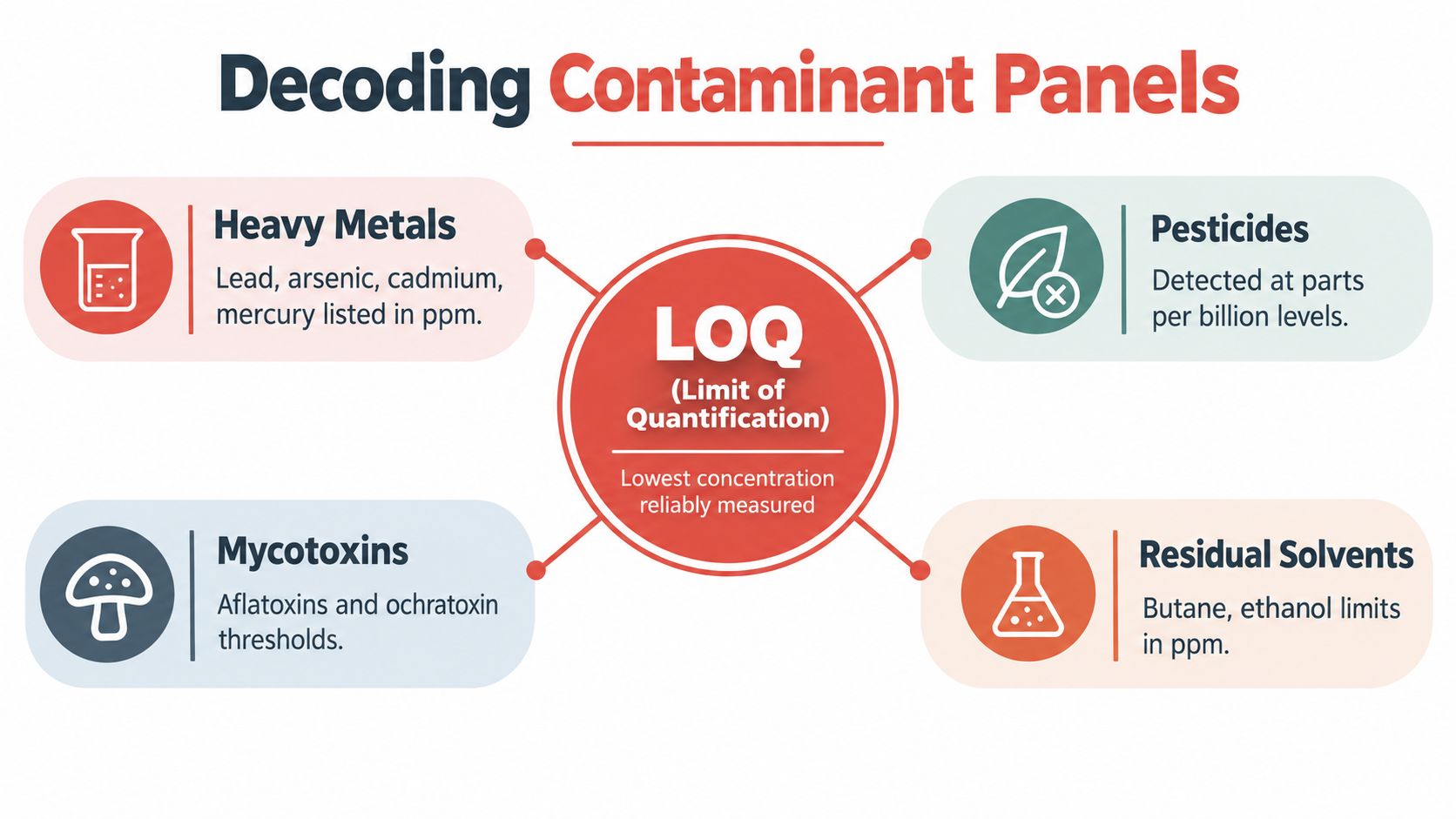
For most cannabis products, inspect these categories:
The report should also identify the method limits, units, sample preparation, and whether a result is detected, not detected, or below quantification. A laboratory that shows these details gives you a way to assess the strength of its conclusion.
Modern lab reporting uses statistical quality-control systems to monitor analytical performance. One widely used framework expects 95% of values within ±2 standard deviations and 99% within ±3 standard deviations, as described in this review of laboratory statistical quality control. These limits help laboratories distinguish expected variation from results that require investigation.
That framework doesn't mean every consumer needs to calculate standard deviations from a COA. It does mean you should prefer reports produced by labs that use documented controls, validation, and measurable acceptance criteria. A report that exposes method limits and quality indicators is more useful than a visually impressive page that hides them.
Ask one practical question: “What was the LOQ for each contaminant, and does the report show the actual result or only a pass/fail label?”
If the brand can't answer, treat the report as incomplete. Safety-conscious buying requires enough detail to understand what “not detected” means.
Product format changes the testing question. Raw flower, concentrated extracts, vape oils, and edibles don't share the same manufacturing history or exposure pathway, so they shouldn't all be judged by a potency-only report.
A 2022 analysis of California testing records found an overall failure rate of 5% across all contaminants. Extracts failed more than four times as often as flower, and pesticides were the most common reason for failure, according to the Environmental Health Perspectives analysis.
That evidence supports a stricter rule for concentrates and finished products. Extraction can concentrate desirable cannabinoids, but it can also concentrate unwanted substances. Processing can introduce residual solvents, and hardware used in vapes creates additional material and manufacturing questions.
| Product Format | Primary Risk Factors | Mandatory Contaminant Panels |
|---|---|---|
| Flower | Pesticide exposure, heavy metals, microbial contamination, mycotoxins | Cannabinoid potency, pesticides, heavy metals, microbes, mycotoxins |
| Concentrates | Concentrated contaminants, residual solvents, pesticides, heavy metals | Cannabinoid potency, pesticides, heavy metals, microbes, mycotoxins, residual solvents |
| Vape oils and disposables | Residual solvents, contaminated inputs, hardware-related concerns, inaccurate potency | Cannabinoid potency, pesticides, heavy metals, microbes where relevant, mycotoxins where relevant, residual solvents |
| Edibles | Contaminated extracts, formulation consistency, inaccurate cannabinoid content | Cannabinoid potency, pesticides, heavy metals, microbes, mycotoxins, and residual solvents when relevant to the extract |
For flower, a missing contaminant panel is still a serious problem. For a vape or edible made with an extract, it can be an immediate reason to walk away. The product's format should appear on the report, and the test menu should make sense for the way that product was made.
Don't accept a flower COA for a cartridge merely because the brand uses the same strain name. The sample, matrix, processing method, and risks differ. A serious producer commissions testing that reflects the finished product, not just an earlier ingredient.
A technically excellent report is useless if it belongs to another lot. A COA describes the specific batch sampled, not every item a company sells and not necessarily every future production run.
Neutral buyer guidance stresses that the batch number, product name, and product type must match exactly. It also recommends checking more than potency, including pesticides, heavy metals, residual solvents, and microbial testing, as outlined in New Jersey's consumer guidance on cannabis COAs.
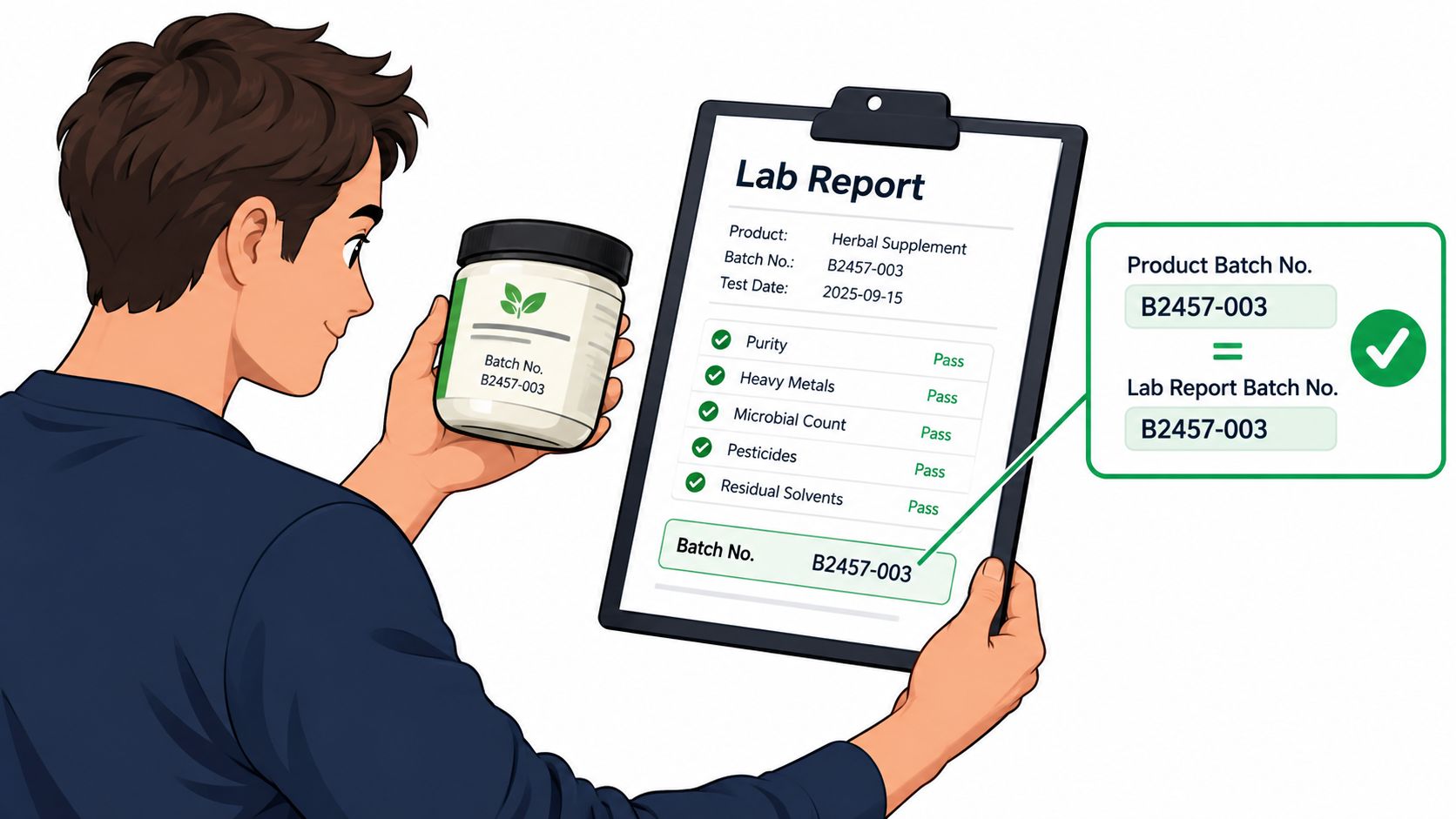
Put the package beside the report and compare each field:
A QR code is only a shortcut to a document. Scan it, then verify the document itself. A code can lead to a general laboratory page, a brand's library of reports, or an unrelated file. The destination must identify the same product and batch.
A report without a matching lot number is background information, not proof about the package you're holding.
If any identifier differs, ask the retailer or brand for clarification before using the product. If they can't provide a matching report, choose another item. For more context on why lot identity matters, see this explanation of batch testing.
You don't need to become an analytical chemist to reject weak documentation. You need a consistent screening process that starts with the laboratory and ends with the physical package.
Use this decision matrix at the point of purchase:
| Report Condition | Decision |
|---|---|
| No COA, broken report link, or refusal to provide documentation | Walk away |
| Potency-only report, missing lab identity, or no batch number | Reject unless the brand supplies complete verification |
| Non-accredited or apparently brand-controlled laboratory | Treat the result as unverified |
| Full panel but unclear LOQs, methods, or product identity | Ask questions before buying |
| Independent ISO 17025-accredited lab, complete panel, visible methods, and exact batch match | Reasonable basis for purchase |
| Repeatedly current, transparent reports with direct laboratory confirmation available | Stronger evidence of a responsible testing process |
On a brand website, go beyond the product page. Find the report library, open the actual PDF, and check whether files are organized by product and batch. A QR code should take you to the same kind of document, not merely a marketing page.
At a dispensary or retail counter, ask three direct questions:
A retailer that can't answer shouldn't pressure you to buy. Transparency is part of product quality.
For consumers evaluating online hemp products, Melt publishes third-party lab reports for its batches, including cannabinoid potency, pesticide screening, and heavy-metal testing. Treat those documents the same way you should treat any brand's COAs: verify the laboratory, panel, dates, and exact batch before purchasing.
The best buying habit is also the simplest. Don't reward impressive potency claims when the supporting evidence is thin. Choose brands that make independent testing easy to inspect, answer questions without deflection, and connect every report to the product being sold.
Melt gives adult shoppers access to batch-specific product information for its hemp-derived cannabinoids, including THCA flower, disposables, and edibles. Review the available lab documentation, match it to the product and batch, and visit Melt to shop with a more disciplined safety checklist.
Your cart is currently empty.