



Free Shipping All Orders Over $95
The most popular advice about popular indica strains is also the least reliable: choose the jar marked “indica” and expect a predictable, sleepy body high. That label can be a useful starting point, but it often tells you less than the cannabinoid and terpene profile printed on the package.
A better approach combines history with lab data. Names such as Northern Lights, Afghan Kush, Bubba Kush, and Hindu Kush remain important because they connect modern cannabis to influential genetics and consumer traditions. Yet the same name can describe different plants, batches, and chemical fingerprints. If your goal is relaxation, shop for the profile most likely to suit you, then use the strain name as context rather than proof.
“Indica” began as a botanical description, not a guarantee of sedation. Historically, it referred to plants associated with regions such as Afghanistan, Pakistan, and Tibet, often recognized by shorter structures, broader leaflets, and faster flowering than equatorial types. Those traits helped plants mature in demanding mountain environments and later made them useful for indoor cultivation.
Dispensary language changed the meaning. Today, “indica” often acts as shorthand for calming, body-focused, or evening-oriented effects. That shorthand is convenient, but research into cannabis genetics and strain naming shows that indica and sativa labels are weak predictors of a product's chemistry. The same strain name can also correspond to different genotypes, so two products called the same thing may not feel alike. The sativa versus indica comparison is helpful background, but it shouldn't replace reading a product's actual test results.
Start with the name, then test that assumption against the COA, or Certificate of Analysis. A product labeled indica might contain a terpene pattern that feels bright and mentally active to you, while an indica-dominant product with a different cannabinoid balance may feel heavier. THC level, minor cannabinoids, terpene proportions, dose, tolerance, and setting all influence the result.
Practical rule: Treat “indica” as a category clue, not an effects forecast.
That shift prevents a common shopping mistake. Instead of asking, “Which indica is strongest?” ask, “Which batch has a chemical profile that matches the kind of relaxation I want?” Someone looking for a gentle evening wind-down may prefer a different product from someone seeking deep physical stillness, even if both products carry the same indica label.
The modern indica story leads back to the Hindu Kush and surrounding regions, especially Afghanistan and neighboring parts of Pakistan. The geography matters because harsh mountain conditions favored plants with compact forms, heavy resin production, and flowering behavior suited to shorter growing seasons. Those traits became valuable to breeders working far from their original environment.
Afghan-derived lines, including genetics associated with areas such as Mazar-i-Sharif, Kandahar, and the Pakistani-Afghan border, entered Western breeding culture through seed collecting and exchange. Names such as Afghani, Hindu Kush, and Mazar still function as reminders of that lineage, even when a modern product contains substantial hybrid ancestry. Breeders valued these plants for their dense flowers, resin, and manageable indoor structure, then crossed them with other regional and equatorial lines.
Northern Lights, Bubba Kush, and other familiar names helped turn those inherited traits into recognizable consumer categories. Their influence wasn't limited to effects. They also shaped expectations around flower appearance, aroma, flowering speed, and the idea that a compact, broad-leaflet plant should produce a heavier experience.
The important distinction is that today's indica is rarely a pure landrace. A name may preserve a historical reference while the plant itself reflects generations of selection and crossing. Even products using the same cultivar name can differ because growers select different cuts, environments alter expression, and producers may use distinct breeding stock.
That history explains why strain names remain useful but incomplete. “Hindu Kush” can suggest a geographic and breeding connection, while “Bubba Kush” can evoke a particular cultural and sensory tradition. Neither name alone proves what a current batch contains. For a practical decision, lineage offers the backstory, while the lab report reveals what reached the package.
Relaxation isn't produced by a single “indica molecule.” THC, CBD, minor cannabinoids, and terpenes work together with dose and personal biology, and the available data show why a name can't settle the question.
A Medical News Today review of common indica strains reports measured THC values for several recognizable cultivars. Afghan Kush averaged 17.6% THC, with reported results from 14.7% to 22.0%. Blackberry Kush averaged 15.9%, ranging from 12.5% to 18.0%. Bubba Kush averaged 15.5%, with a range of 10.2% to 19.4%, while True OG averaged 18.5%, ranging from 13.4% to 22.2%. These figures come from the review of common indica strains and their THC measurements, and they illustrate variation even among familiar names.
Consumers often associate a more body-centered experience with myrcene, beta-caryophyllene, linalool, and humulene. Limonene can appear in relaxing products too, but a citrus-forward profile may feel more mentally bright for some people. The evidence remains nuanced. Research has found only a weak relationship between indica labels and certain earthy terpenes, while broader datasets don't cleanly separate cannabis genetics by indica and sativa categories. The research on terpene genes and cannabis labels supports a batch-level reading of the label.
| Marker | Relaxing chemotype | Uplifting chemotype |
|---|---|---|
| THC | Can be moderate or high, depending on batch | Can also be moderate or high |
| Myrcene | Often worth checking when seeking body calm | May be present but not necessarily dominant |
| Beta-caryophyllene | Spicy, peppery profile often associated with grounded sessions | May add depth without determining the whole experience |
| Linalool | Floral note that some shoppers prefer for winding down | Can soften a brighter profile |
| Limonene | May be secondary | Often more prominent in citrus-led profiles |
A product's chemistry still won't override your tolerance or dose. The most useful question is whether the whole profile suits your objective, not whether one terpene crosses a universal threshold. For more practical context, compare the best terpenes for relaxation, then confirm what appears in the specific batch you're considering.
The best-known indica cultivars matter for more than nostalgia. Each name carries a different combination of breeding history, aroma expectations, and consumer associations. The chemistry can change from one producer to another, so use these descriptions as orientation rather than a promise.
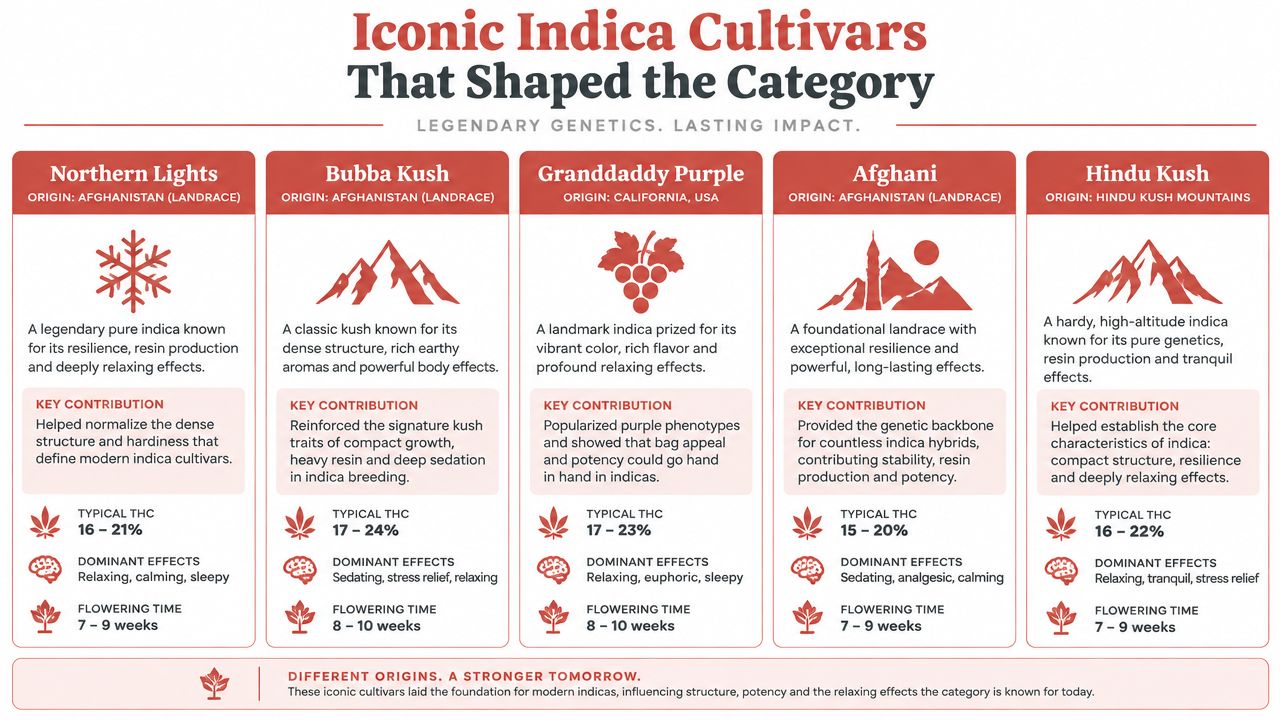
Northern Lights is often treated as a foundational indoor indica reference. Its reputation rests on compact, dense flowers and a calm, easygoing profile commonly associated with myrcene and beta-caryophyllene. Look at the COA rather than assuming every Northern Lights batch has the same balance.
Afghan Kush provides one of the clearest links to the Hindu Kush region in consumer-facing strain history. The documented THC figures cited earlier place reviewed samples in a moderate-to-high range, but the reported spread shows why the batch remains more important than the name.
Granddaddy Purple brought a strong berry and grape identity into mainstream indica culture. Its appeal is sensory as much as experiential, and current products may differ in whether myrcene, pinene, beta-caryophyllene, or another terpene leads the panel.
Bubba Kush is associated with hash-like depth, earthy sweetness, and a heavy evening reputation. The reported Bubba Kush THC average and range show that even a classic name has meaningful variation across tested material.
Hindu Kush and MK Ultra serve different roles in the conversation. Hindu Kush points toward regional lineage and landrace influence, while MK Ultra is often used by consumers as a benchmark for a more pronounced, narcotic-leaning profile. Neither should be selected without checking the product's current test data.
A popular name can help you choose a flavor family or historical direction. It can't tell you whether the current flower will be gentle, intense, clear-headed, or overly sedating for your body.
A short visual guide can help you compare the names before you compare their lab reports:
A professional-style purchase decision starts before you open the package. The process is simple: verify the batch, interpret the chemistry, inspect safety testing, then choose a format that lets you control the experience.
| Metric | What it tells you | What to aim for | Red flag |
|---|---|---|---|
| Batch number | Whether the report matches the product | Exact package-to-COA match | Missing or mismatched identifier |
| Test date | How closely the report relates to the current batch | A clearly documented, relevant report | No date or unclear sample identity |
| Total THC and THCA | The product's cannabinoid content | Values that fit your tolerance | Potency that conflicts with the label |
| Terpene panel | Aroma and possible experiential direction | Transparent, batch-specific results | No terpene information when it is advertised |
| Safety testing | Screening for contaminants | Clearly reported pass results | Missing panels or unexplained failures |
A COA isn't a guarantee of how you'll feel. It is a way to reduce uncertainty and make your choice more deliberate.
More THC rarely equals better relaxation. A dose that feels calming can become distracting, uncomfortable, or sedating beyond your preferred level, particularly when you haven't used the product recently.
For edible products, a cautious starting point is 2 to 3 milligrams of THC. For flower or a vape, begin with one or two small inhalations, then observe your response for 30 to 60 minutes before adding more. These quantities and the observation window come from the provided dosing guidance, not a guarantee of a particular outcome. Individual responses vary with tolerance, body chemistry, food, sleep, and context.
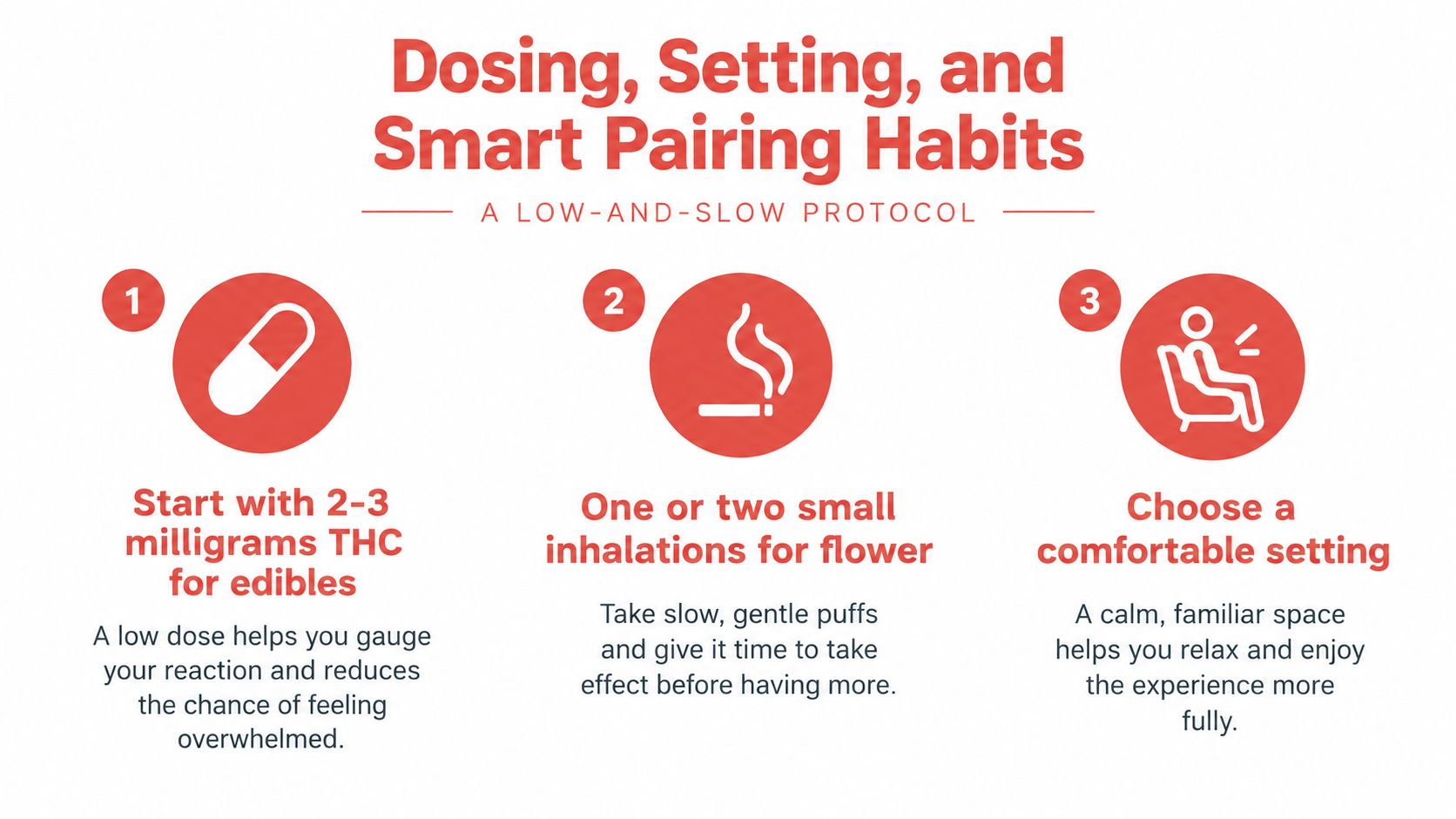
Choose a familiar space where you won't need to drive, work, or make important decisions. Keep water and a light snack available, reduce avoidable pressure, and decide what you want from the session before consuming.
A low dose may fit journaling, gentle stretching, reading, or a bath. A stronger experience requires more commitment to staying home and allowing the effects to unfold. The guide to 15 milligrams of THC can help explain why a fixed edible amount doesn't feel fixed across people, but new or infrequent consumers should avoid treating a higher amount as a default.
Better habit: Record the product, dose, time, setting, and result. Your own notes will eventually become more useful than a generic ranking.
Food can change the timing and character of an edible experience, while sleep debt and stress can make the same product feel more intense. Keep each variable reasonably consistent when you're learning what works for you, and don't combine cannabis with driving or other activities that require reliable coordination and judgment.
THCA shopping makes the chemistry discussion especially practical. THCA is the acidic precursor to THC, and heating converts it into intoxicating THC through decarboxylation. Before heating, THCA flower is sold within the hemp framework described by the product and applicable law. Once heated, the experience can resemble traditional cannabis flower, so the product still deserves careful potency and safety evaluation.
A compliant-looking COA should connect the report to the package. Check the batch number, test date, laboratory identity, cannabinoid percentages, and terpene panel. The cannabinoid section may list THCA, delta-9 THC, CBD, and minor cannabinoids. For a relaxation-focused comparison, look for transparent reporting of myrcene, linalool, and beta-caryophyllene rather than trusting a strain name printed on the jar.
An ISO-17025-accredited laboratory can provide a stronger basis for confidence than an undocumented internal claim, but shoppers still need to confirm that the report belongs to the product and batch they're buying. Regional names don't always transfer perfectly across markets. A product called Grape Ape in one shop may not match another product with the same name.
That gives you a useful substitution method:
Melt offers strain-labeled THCA flower, including options such as Do-Si-Dos, Grape Ape, Ice Cream Cake, LA Confidential, Slurricane, Hindu Kush, and Purple Kush, alongside solventless and disposable formats. Treat those names as browsing anchors, then use the listed potency and terpene information to find the closest match to your own relaxation notes.
Use this checklist the next time you shop for a relaxing product. It keeps the decision grounded in evidence without pretending that a label can predict your experience perfectly.
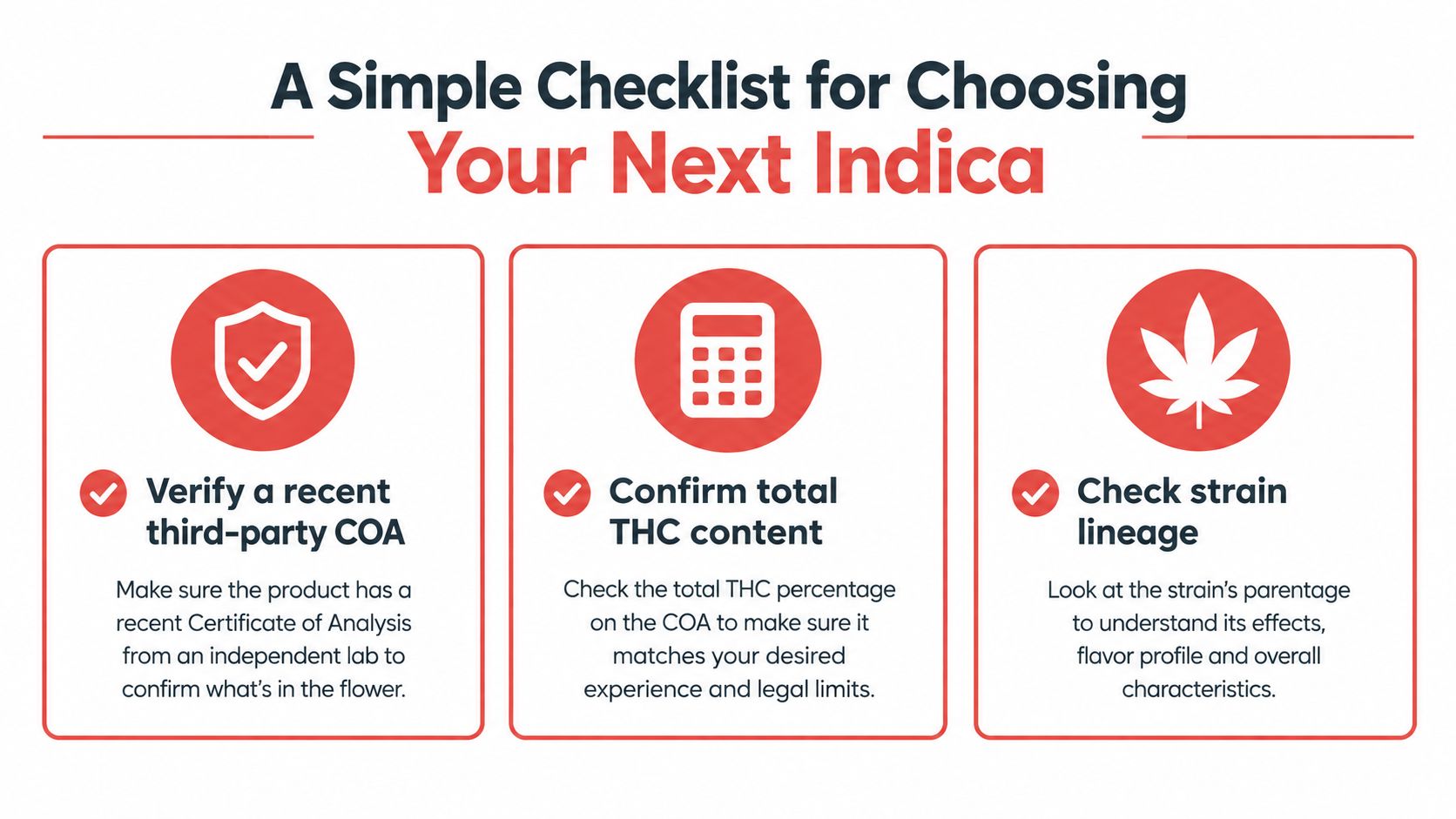
The strongest shopping habit is simple: choose chemistry first, format second, and name third. That approach gives you a better chance of finding consistent relaxation while staying honest about the limits of strain labels.
Melt offers strain-specific THCA flower, disposables, and other hemp-derived cannabinoid formats that you can compare by potency and terpene information. Visit Melt to explore available products, review lab-report details, and find an option that fits your own relaxation notes.
Your cart is currently empty.