



Free Shipping All Orders Over $95
You can be in one state where a THC vape is normal shelf stock, cross a border, and suddenly the same product is treated like contraband. A small retailer runs into the same problem from the other side, because a product can be federally compliant hemp and still fail state rules, local zoning, delivery limits, or carrier policies. That's why state cannabis laws are not a single yes-or-no question, they're a moving set of rules that depend on the product, the buyer, the channel, and the address.
A buyer orders a THCA vape online, gets a shipping confirmation, and assumes the hard part is over. Then the package gets blocked because the destination state treats that cannabinoid differently, or the seller's own policy excludes that ZIP code. The same confusion happens with delta-8 gummies in one state and a medical flower order in another, because “legal” never means the same thing in every place.
The first mistake is treating cannabis as one product category. In practice, the law often separates possession, cultivation, retail sale, delivery, and age access into different rules. A state can allow medical cannabis, restrict adult-use sales, or permit hemp-derived cannabinoids while limiting where they can be sold.
Practical rule: if the product type, destination state, or sales channel changes, the legal analysis changes too.
That's why simple maps and one-line summaries fall short. A retailer needs to know whether a state allows the product to ship, whether the label matches the local definition, and whether a carrier will move it at all. An adult consumer needs the same caution before assuming that “hemp” on the package means “legal everywhere.”
This compliance guide on cannabis industry rules is a useful companion if you're trying to understand how businesses turn those legal categories into day-to-day decisions. The short version is blunt, legal status on paper is only the starting point.
State cannabis law gets easier to read once you separate the five categories that show up again and again. The names sound familiar, but the practical meaning is different from state to state.

The tricky part is that “legal for medical use” can mean two very different things. In one state, it means a broad dispensary system with multiple product formats. In another, it means a narrow low-THC program that doesn't resemble a recreational market at all.
A second confusion point is the difference between what a person may possess and what a business may sell. A state might tolerate small amounts for adults, but still ban retail stores. Another might allow medical delivery but not storefront sales in every county. So when you read state cannabis laws, check the exact rule for the exact action you want to take.
A person can be in a state where cannabis is “legal” and still not be allowed to grow it, buy it, or receive it by mail.
A shopper can cross one state line and move from a regulated retail market into a place where cannabis is still limited to medical use, tightly controlled products, or no lawful sales at all. That is why the national map matters less as a yes-or-no chart and more as a guide to what people can do: possess, buy, grow, or have products shipped to them.
The broad picture has become clearer, but it still looks like a patchwork. Pew's summary of NCSL data says that as of 2026, 24 states and the District of Columbia allow small amounts of marijuana for adult recreational use, and 24 states plus D.C. are specifically listed as having both recreational and medical legalization Pew's 2026 marijuana facts summary. NCSL separately reported as of June 26, 2025 that 41 states, three territories, and the District of Columbia allow medical cannabis, while 24 states, three territories, and the District of Columbia allow or regulate adult-use or non-medical cannabis NCSL state medical cannabis laws.
| U.S. Cannabis Legalization Snapshot 2026 | States + DC | Typical Possession | Dispensary Access |
|---|---|---|---|
| Adult-use legal | 24 states + D.C. | Varies by state | Usually yes, but not always in every locality |
| Medical legal | 41 states + 3 territories + D.C. | Varies by patient rules | Often yes, but access can be program-specific |
| Adult-use and medical legal | 24 states + D.C. | Varies by state | Usually broader, still state-specific |
The pace of change has been fast enough that older benchmarks can feel outdated. Pew's historical benchmark shows that by the end of 2018, only 10 states and D.C. had legalized adult-use cannabis, while 33 states and D.C. had legalized medical cannabis Pew's 2026 marijuana facts summary. By January 2021, the number had grown to 14 states and D.C. for adult nonmedical use and 36 states and D.C. for medical use.
Even after a state changes its law, access does not turn on all at once. A public-health review found that states typically took about 15 months on average between ballot-measure passage and opening legal markets MPP enforcement report. That gap matters for consumers and retailers alike, because a vote can change the legal status before a real storefront, supply chain, or delivery system is in place.
Adult-use legalization does not create one national rulebook. California, Colorado, and Illinois all allow recreational cannabis, but the daily reality for consumers and retailers looks different in each state.
California is a good example of why the phrase “legal state” can mislead people. State permission doesn't erase local zoning, and local rules can narrow where stores operate or where consumers can buy. Colorado is often treated as the template for adult-use reform, yet households and retailers still have to follow Colorado's own possession and cultivation structure, not California's. Illinois, meanwhile, built its own system around licensed retail access and state-specific limits, which means a shopper crossing from one legal state to another can't assume the same cap or the same purchase process.
The legal question changes with the action. A consumer may ask whether they can carry flower, grow at home, or consume in public. A retailer has to ask whether a product can be sold, how it must be labeled, and whether the transaction is even allowed in that channel. Those are separate checks, not one check.
The safest habit is to read the statute for the exact activity you care about. A tourist, a local resident, and a licensed retailer may all be in the same state and still operate under different practical rules.
Compliance note: a product can be fine to possess and still be unlawful to sell, ship, or advertise in the same state.
Medical cannabis laws often sound broader than they are. A medical program can mean a full dispensary network, a low-THC prescription system, or a tightly managed list of qualifying conditions. A card from one state usually does not work in another, even when the product type sounds familiar.
A patient in Florida, Pennsylvania, or New York may all be “medical,” yet the day-to-day experience can look very different. Florida is often discussed as a vertically structured market, where patient access runs through a state-specific dispensary system. Pennsylvania works differently, because the program's product and route-of-administration rules have historically been narrower than what adult-use shoppers expect elsewhere. New York adds another layer, because its policy debates are tied not just to patient access but to how the state identifies “unserved and underserved” areas using health-disadvantage metrics such as population-provider ratio, uninsured rate, low birth weight, premature deaths, disability rate, and drivetime to health care New York unserved and underserved areas.
That New York framing shows a simple point: access is not only about approval. Geography and delivery of care matter too. A state can authorize medical use and still leave patients far from a dispensary or a doctor who participates in the program. Caregiver rules can also make the program work better for one patient group than another, which is why two people in the same state may face very different practical barriers.
A quicker way to read a medical program is to ask four questions before assuming the card solves the problem.
Patients should also separate “legal access” from convenient access. A medical program can exist without feeling open to the average patient if the dispensaries are sparse, the product menu is limited, or the paperwork is burdensome. Some states create a program on paper that still behaves like a narrow access channel in practice, especially for patients who need consistent refills or help from a caregiver.
The hemp market exists because federal law draws a line around delta-9 THC. Under the 2018 Farm Bill framework, hemp is the source of the modern gray area, because products can stay under the federal threshold before use and still become intoxicating in practice after heating or processing. That's why THCA flower and several hemp-derived cannabinoids became such a major compliance issue.

THCA is not the same thing as activated THC, but heat changes that. That's why a flower can look like hemp under one testing approach and still function like marijuana when smoked or vaped. Delta-8 THC, delta-10 THC, and HHC sit in a similar policy gap because they're often produced from compliant hemp inputs and then sold as hemp products, even though states may treat them very differently at the point of sale.
This is also where the legal definition gets slippery. Some states look at delta-9 THC only. Others care about broader intoxicating effects, synthetic conversion, or total THC after processing. That difference is exactly why a product can be federally lawful hemp and still run into state-level restrictions.
If you want the legal mechanics behind THCA shipping and possession, this explainer on whether THCA is illegal is worth a careful read. The key point is simple, the hemp label does not end the legal analysis.
Plain-English rule: if a product gets intoxicating after heating, a state may regulate it even when the raw material started as hemp.
A product can be hemp at the federal level and still run into trouble at the state level. That is the part many buyers and retailers miss. States decide whether these cannabinoids can stay in the hemp channel, must move into the licensed cannabis channel, or cannot be sold at all under their rules.
The split usually starts with how a state defines the product. Some states use delta-9 THC as the main line, while others look at total THC, synthetic conversion, or whether the cannabinoid is intoxicating in practice. Under those rules, THCA flower may be treated like hemp in one state and like marijuana in another once the state applies its own testing or conversion standards.
Delta-8 THC, delta-10 THC, and HHC face a similar problem. They are often sold as hemp-derived products, but states may treat them as adult-use items, restricted hemp products, or banned compounds depending on how the law defines them. A convenience-store shelf can look legal in one jurisdiction and become a compliance problem across the border.

The practical question is not just whether a product started from hemp. It is whether the state allows that product to stay in hemp retail, requires it to be sold only through licensed cannabis stores, or blocks it entirely. That is why two products with similar labels can have very different legal outcomes once they reach the point of sale.
A retailer cannot rely on a lab report alone. The state's testing method, sales channel rules, and age limits all matter, and some states also treat converted cannabinoids differently from naturally occurring hemp compounds.
A gas-station product that looks ordinary in one state may be restricted or unavailable in another. The same lab result can support a sale in one jurisdiction and fail to satisfy the local rule set somewhere else.
For a closer look at the shipping question, see whether THCA is legal to ship. The answer still depends on where the package is going and how that state treats the cannabinoid once it arrives.
A product can pass lab testing, follow the packaging rules, and still run into trouble the moment it leaves the warehouse. Shipping decisions depend on the destination state, the carrier's policy, and the seller's own restricted-state list, so a box that looks routine on the fulfillment table can become a compliance problem in transit.
A retailer also has to separate hemp shipping from cannabis shipping. Hemp-derived goods may be shippable in one route and blocked in another, while cannabis remains tied to state boundaries and licensed systems that do not follow the package across state lines. That means the question is not just what is inside the package, but where it is going and how that destination treats the cannabinoid once it arrives.
For online hemp sellers, adult signature delivery is one common control, but it only addresses part of the risk. Carrier rules still matter, and so do the seller's own restrictions. Many retailers block certain states even where federal hemp rules appear to allow shipping, because seizure risk and state enforcement vary too widely to treat every destination the same way.
State-by-state treatment of THCA, delta-8, and related hemp derivatives can change the shipping outcome as well. A product may look ordinary on the shelf, yet be treated differently after it crosses into a state that limits converted cannabinoids or uses a stricter definition of hemp. If you need a closer read on the shipping question itself, this guide to whether THCA is legal to ship walks through the difference between product legality and delivery legality.
Before listing a product for sale, confirm the destination is eligible. Do not rely on the product name alone, because labels can hide the rule that controls the shipment.
Then match the cannabinoid to the state's rule set. THCA, delta-8, delta-10, and HHC can each trigger a different response depending on whether the state treats them as hemp, adult-use products, or restricted items.
Age gating should appear before checkout if the product is limited to adults. That step helps set expectations early, rather than after payment and fulfillment.
Carrier policy deserves its own review. USPS, FedEx, and UPS each have operational rules, and sellers often set stricter internal standards so they are not relying on the broadest reading of the rules.
Keep records for each shipment. Lab reports, destination restrictions, and order logs help explain why a package was accepted, held, or blocked if anyone later questions the order.
A state can legalize cannabis and still leave wide parts of the map with little real access. The limit is often local, not statewide. Zoning boards, city councils, county moratoriums, and licensing rules can decide whether stores open at all, where they can operate, and who gets a chance to apply.
Research on California found that by January 2020 about 58.1% of residents lived in places where some cannabis retail was legal, but only 46.1% lived where storefronts were allowed, and just 37.5% of those living where retail was allowed were covered by any local equity provisions California local cannabis retail and equity study. The same study also found uneven coverage across neighborhood advantage and race or ethnicity, which shows that local approval can shape access in ways a statewide law does not settle.
That gap matters for both consumers and small operators. A consumer can live in a legal state and still have no nearby storefront. A small retailer can find that the strongest state market is not the strongest local market, because the city blocks retail or the county has not approved licenses.
Legal on paper does not guarantee a store on your corner.
The practical habit is to check local ordinances before assuming access exists. State cannabis laws set the outer boundary, but local rules often decide what is real on the ground.
A short checklist catches most of the avoidable mistakes.
The biggest mistake is treating hemp-derived cannabinoids like ordinary consumer goods. They're not. A retailer that sells them responsibly has to keep the product page, lab report, shipping map, and age gate aligned.
Is CBD legal everywhere? Not automatically. Federal hemp rules helped CBD, but state product rules, labeling rules, and channel restrictions still matter.
Can you use a medical card from another state? Usually no. Medical programs are generally state-specific.
Can you fly with hemp-derived THC? Air travel adds airport, airline, and destination-state complications, so check every rule before you pack anything.
Do cannabis laws affect gun rights or employment testing? They can. Federal and state rules don't always line up, and employers may still test regardless of local legalization.
What if a state changes its mind after you buy? The product might still be in your hands, but future possession, transport, or resale can be treated differently once the law changes.
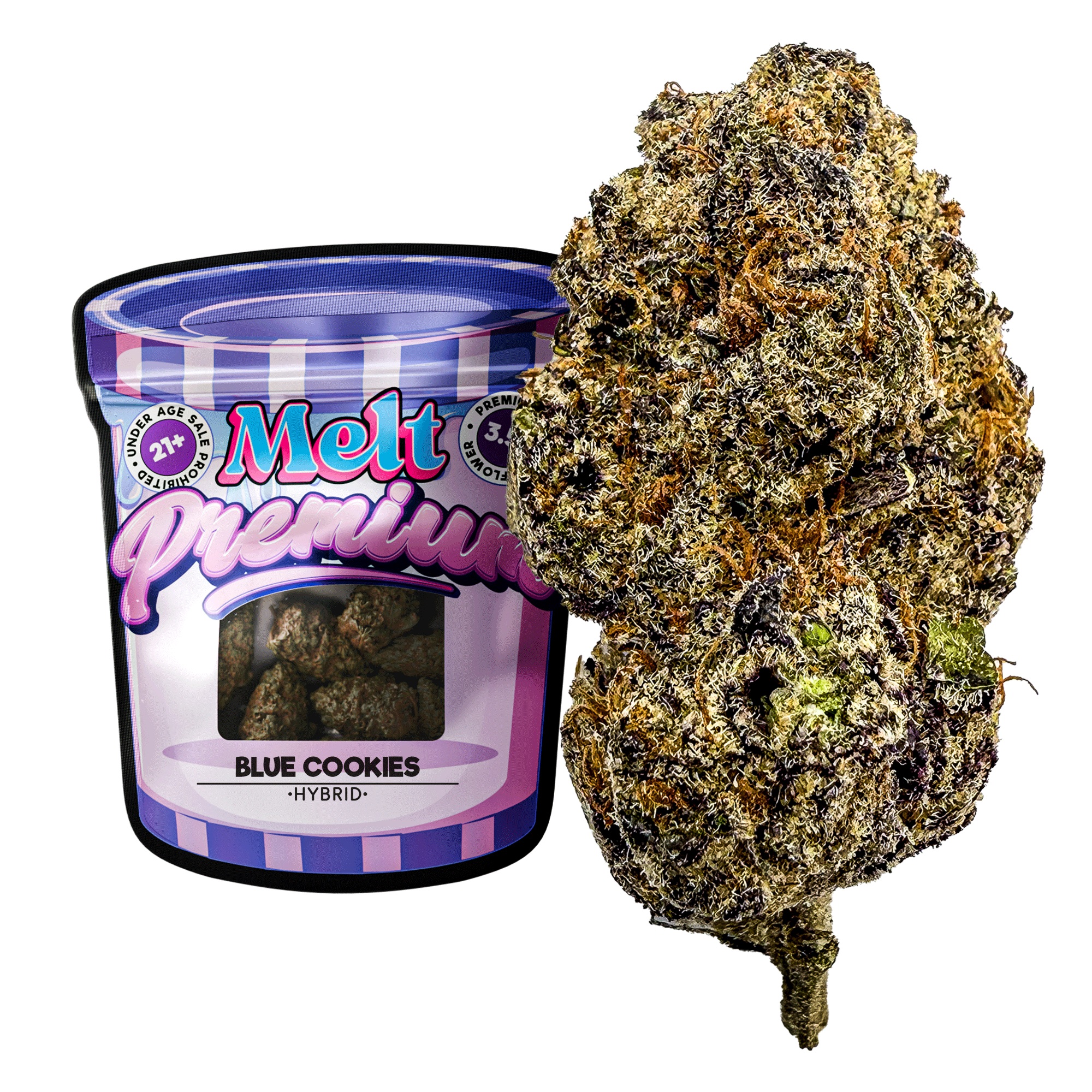
If you want a cleaner way to keep up with shifting cannabis rules, shop from a brand that treats compliance as part of the product, not an afterthought. Melt offers hemp-derived cannabinoids with age-gated checkout, transparent testing, and shipping restrictions that reflect where products can go. Visit Melt to review the current lineup and check the rules before you order.
Your cart is currently empty.