



Free Shipping All Orders Over $95
You're standing in front of a shelf filled with gummies, vapes, tinctures, and jars of flower. One label says CBD, another says THCA, and a third promises hemp-derived Delta-9 THC. You want to know which products are legal, which ones can produce a high, and which are non-intoxicating hemp extracts.
The phrase hemp-derived cannabinoids sounds technical, but the basic idea is straightforward. These are active compounds from Cannabis sativa, including CBD, CBG, CBN, THCA, and compliant Delta-9 THC, obtained from hemp that meets the federal THC definition. The important details are the plant's source, its chemistry, the product's formulation, and the rules that apply where you live.
You are comparing a CBD tincture with a Delta-9 THC gummy when the word hemp-derived appears on both labels. That term describes the plant source, not automatically the product's effects.
Cannabinoids are naturally occurring compounds made by cannabis plants. Hemp-derived cannabinoids come from hemp that fits the federal definition established by the 2018 Farm Bill, including the limit of 0.3% Delta-9 THC by dry weight. The category covers CBD, minor cannabinoids, and hemp-derived THC products sold as oils, edibles, vapes, flower, and drinks. The University of Michigan's overview of emerging hemp-derived cannabinoids includes CBD, Delta-8 THC, CBG, CBN, and other hemp-based products.
The plant is like a coffee bean, while cannabinoids are different flavors produced within it. A CBD molecule remains chemically the same whether it comes from hemp or marijuana. The source plant and THC content determine the legal label, rather than a separate “hemp” version of the molecule.
Hemp therefore does not automatically mean non-intoxicating. CBD usually does not create a traditional high, while compliant hemp-derived Delta-9 THC can. Raw THCA may appear non-intoxicating in flower, yet heating can convert it into Delta-9 THC.
The practical shortcut: Treat “hemp” as a starting point, not a guarantee. Check the cannabinoid panel, serving information, lab report, and rules where you live.
The federal framework created by the 2018 Farm Bill explains why these products can be sold as hemp-derived today. That legal picture may change with the pending November 2026 federal hemp redefinition, so current labeling and future eligibility are not necessarily the same thing.
The major compounds appear below, followed by comparisons with marijuana-derived cannabinoids, the federal THC rule, lab-report basics, product formats, and a cautious buying checklist. For a plain-language explanation of the term, read this guide to what hemp-derived means.
Labels can feel like a chemistry quiz, but each cannabinoid answers a practical question: Will it intoxicate me, what might I notice, and how is it commonly used? Start with the compound name, then look at whether the product contains the active form or an acidic precursor.
Raw cannabinoid acids are like unlit charcoal. They're present, but heat changes what they can do. THCA can become Delta-9 THC when heated, while CBDA can convert into CBD through decarboxylation. Time, processing, and storage can also affect the cannabinoid profile.
CBD, or cannabidiol, is generally non-intoxicating. People commonly choose it for a calm, balanced experience without the traditional high associated with THC. You'll see it in tinctures, capsules, gummies, topicals, drinks, and broad-spectrum or isolate formulas.
CBD isn't a guarantee of relaxation for every person. Dose, body chemistry, other ingredients, and the presence of THC or terpenes can change the experience.
CBG, or cannabigerol, is also generally non-intoxicating. Shoppers often associate it with a clear-headed feeling, daytime use, or focus. CBG appears in oils, gummies, flower extracts, and blends with CBD.
CBG is sometimes called a “minor cannabinoid,” although that label refers mainly to its concentration in many plants, not its importance. For a closer look at its precursor relationship within cannabis chemistry, read this explanation of CBGA and its role in cannabinoid production.
CBN, or cannabinol, is generally non-intoxicating at ordinary product use, though formulas can combine it with THC or other ingredients. Consumers often select CBN products for evening routines and sleep-oriented formulations. The effect depends on the complete formula, so read the label rather than assuming that every CBN product works the same way.
Hemp-derived Delta-9 THC can produce a real high. The word “hemp-derived” describes the source and legal threshold, not the absence of intoxication. Gummies, drinks, tinctures, and other products may contain Delta-9 THC in amounts that feel noticeable, even when the finished product is formulated to meet applicable hemp requirements.
THCA is the acidic precursor to Delta-9 THC. Raw THCA flower generally isn't intoxicating in the same way as heated cannabis, but smoking, vaping, or cooking supplies heat that can convert THCA into Delta-9 THC. That's why a lab report may show substantial THCA alongside compliant Delta-9 THC in an unheated product.
CBC and CBT can also appear on laboratory reports. They're usually present in trace amounts, so their presence doesn't automatically mean they drive the product's main effect.
| Cannabinoid | Intoxicating? | Typical Effect | Common Use |
|---|---|---|---|
| CBD | Generally no | Calm or balanced feeling | Oils, gummies, capsules, topicals |
| CBG | Generally no | Clear-headed or focused feeling | Daytime blends and extracts |
| CBN | Generally no by itself | Evening or relaxing profile | Nighttime formulas |
| Delta-9 THC | Yes, at active doses | Euphoria and altered perception | Edibles, tinctures, vapes, flower |
| THCA | Not before heating, can become intoxicating after heating | Raw, non-intoxicating profile before decarboxylation | Flower, pre-rolls, concentrates |
The molecules don't become weaker or stronger because a label says hemp or marijuana. CBD is CBD, and Delta-9 THC is Delta-9 THC. The meaningful differences involve plant breeding, THC concentration, product composition, and legal status.
Hemp plants are cultivated to remain within the federal hemp definition. Marijuana plants are generally bred to produce much more THC. That difference changes the starting material and the resulting product profile, but it doesn't create a separate chemical species called “hemp THC.”
| Factor | Hemp-Derived | Marijuana-Derived |
|---|---|---|
| Source | Hemp plants and their extracts or derivatives | Marijuana plants and their extracts or derivatives |
| Federal THC threshold | No more than 0.3% Delta-9 THC by dry weight under the 2018 Farm Bill framework | Higher-THC cannabis falls outside that hemp definition |
| Typical profile | CBD and minor cannabinoids are common, with some products containing compliant THC | THC-dominant profiles are common |
| Effects | May be non-intoxicating or intoxicating, depending on the cannabinoid and dose | Often THC-forward and intoxicating |
| Federal status | Hemp and qualifying derivatives are treated differently from marijuana under federal law | Marijuana remains federally controlled under the traditional federal framework |
The middle ground is where shoppers get tripped up. A hemp flower can contain a large amount of THCA, yet its Delta-9 THC result before heating may remain within the hemp definition. Once you light or vape it, heat changes the chemistry and the experience. The product's legal treatment, however, depends on the applicable testing rules and jurisdiction, not solely on what happens in your grinder.
That's why a label showing “high THCA” deserves more attention than a quick glance at the Delta-9 line. You need to know whether the product is being sold as raw flower, how its lab report presents total cannabinoids, and whether local law treats THCA or total potential THC differently.
Under the 2018 Farm Bill framework, federal law defines hemp using a 0.3% Delta-9 THC limit on a dry-weight basis. The definition covers Cannabis sativa L. and its derivatives, extracts, cannabinoids, isomers, acids, salts, and salts of isomers, as long as the Delta-9 THC concentration stays within that threshold. The Congressional Research Service summary of hemp-derived cannabinoid regulation explains why both plant origin and THC testing matter.
Dry weight compares THC with the product's weight after removing water. That calculation can produce different compliance results for flower, concentrates, gummies, and drinks because the finished product contains different amounts of material. A larger product can spread cannabinoids across more weight, so a hemp-derived Delta-9 product may still be intoxicating even while fitting the percentage-based rule.

The federal definition is expected to change, although the timing and practical application should be treated as an upcoming legal development rather than a rule already in effect. According to a recent legal analysis, the definition could shift beginning around November 12, 2026, toward a 0.4 mg total THC per-container cap for certain final hemp-derived cannabinoid products. It may also restrict cannabinoids synthesized outside the plant. The analysis of the 2026 federal hemp redefinition explains why THCA, total THC, container size, and manufacturing method could become central compliance questions.
That possible shift matters because the same cannabinoid may receive different treatment based on its format and packaging. A product that fits the older dry-weight framework might not fit a future container-level limit. State laws can be stricter, affecting manufacturing, sale, possession, and shipping.
For buyers, legal status is location-specific and time-sensitive. Check the current rules where you live, review the product's lab documentation, and avoid assuming that an old label or online listing reflects requirements that could apply after the federal change.
You are holding a gummy package with a QR code, but the code opens only the brand's homepage. That is not enough. A certificate of analysis, or COA, is the laboratory record for a product batch. It cannot prove every unit is identical, but it can show whether the batch was tested and whether the results support the label.
Find the batch or lot number on the package and match it to the COA. The report should name the exact product or batch you have, not just the company. A generic webpage, even when reached through a QR code, does not establish that connection.
Check the laboratory's independence and credentials, including ISO 17025 accreditation where applicable. Review the testing date, too. A genuine report may still be too old to represent a later batch or a product that has been reformulated.
The cannabinoid panel lists the compounds detected and their concentrations. Check total THC, total CBD, THCA, Delta-8 THC, CBG, CBN, and any other cannabinoids highlighted on the label. Flower commonly reports results as percentages. Edibles and tinctures usually require milligrams per serving and per package.
The units matter. To convert milligrams per gram into a percentage, divide the milligrams by the total grams and multiply by 100. A result of 10 mg per gram equals 1%, because one gram contains 1,000 mg. Confirm whether the label and COA describe the amount per serving, per package, or per gram before comparing them.
For a clearer explanation of these units, see how to read a certificate of analysis for hemp products.

A useful COA should include results for heavy metals, pesticides, residual solvents, microbials, and mycotoxins. Look for passing results or clearly stated action limits that apply to the market where the product is sold.
A 2021 analysis summarized by the Congressional Research Service found cannabinoid content ranging from below detection to 143 mg per serving, with a median of 16.7 mg per serving. Fewer than half of the tested products contained CBD within 20% of their label claims. These findings make batch-specific testing a practical check, not just a marketing detail. The label and laboratory record should agree.
Skip products with missing contaminant panels, unexplained gaps, totals above 100%, or QR codes that lead nowhere useful.
The format changes how you use a cannabinoid and how quickly you notice it. It also changes what you need to verify on the label.
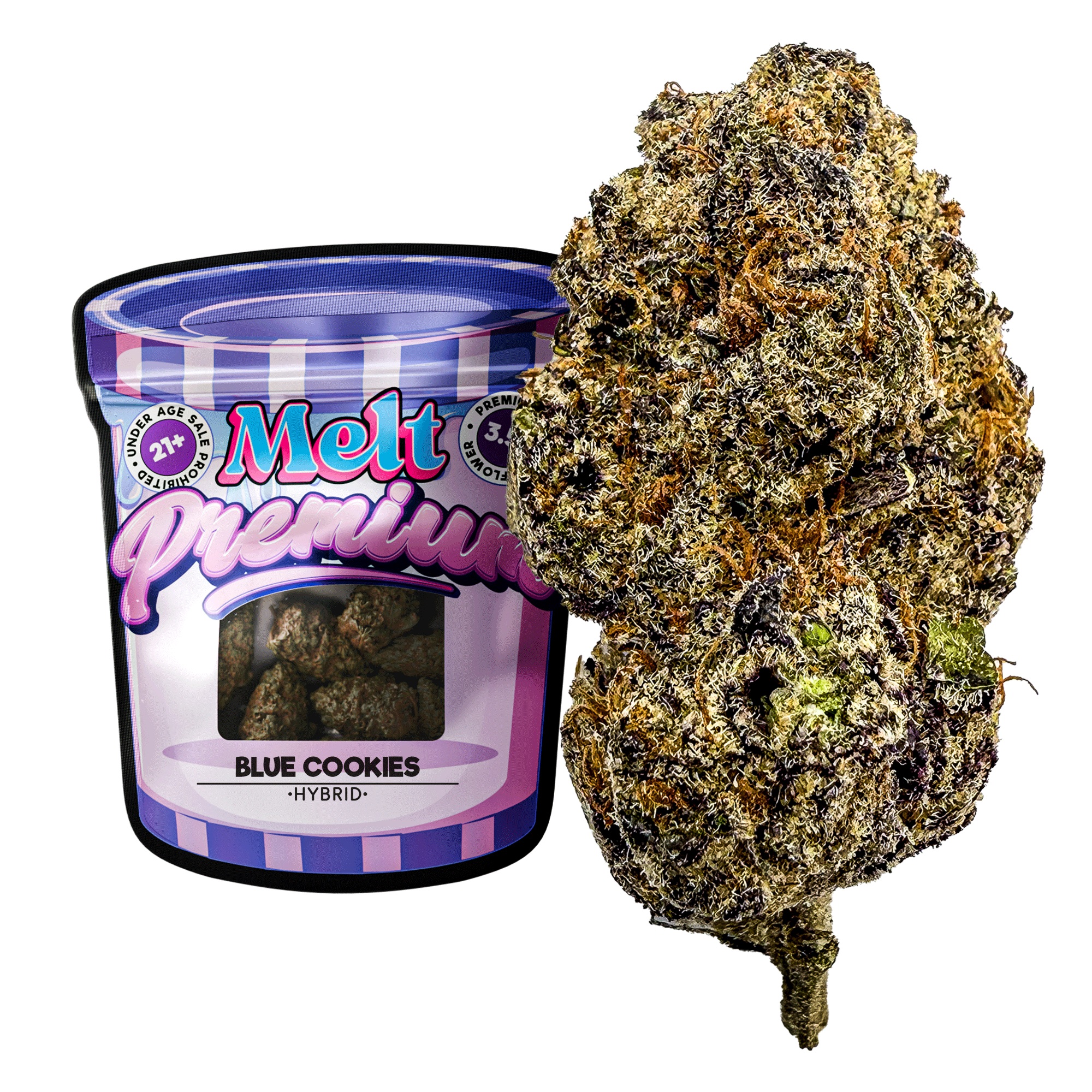
Flower and pre-rolls are the most direct formats. The package usually identifies a strain name, cannabinoid profile, terpene information, and weight. THCA flower is raw bud with THCA as a major listed cannabinoid. Heat converts THCA into Delta-9 THC, so inhalation can produce intoxication even when the unheated product's Delta-9 result is compliant.
Disposables and cartridges contain an extract in a ready-to-use device. A disposable combines the cartridge and battery, while a separate cartridge attaches to a compatible battery. These products can feel fast because inhalation delivers the vapor through the lungs, but the experience can also become intense quickly. Small puffs and pauses are easier to manage than repeated draws taken close together.
Tinctures use a dropper for sublingual or oral dosing. Holding a tincture under the tongue may feel different from swallowing it immediately, but the exact onset depends on the formula and the person. Read the label for milligrams per full dropper and per serving, not just the total milligrams in the bottle.
Edibles include conventional gummies, baked products, drinks, and nanoemulsion formulas designed for faster absorption. Even when a product feels quicker, the safest approach is still to use the smallest labeled serving and wait through the product's listed onset window before taking more.
| Format | Onset | Duration | Beginner Note |
|---|---|---|---|
| Flower or pre-roll | Usually quick after inhalation | Often shorter than an edible experience | Take a small inhalation, then pause |
| Disposable or cartridge | Quick after inhalation | Varies with product and use | Avoid repeated draws before judging the first one |
| Sublingual tincture | Often slower than inhalation | Can outlast a brief inhaled session | Measure with the dropper and track the amount |
| Standard edible | Slower and less predictable | Often longer-lasting | Start with the smallest labeled serving and wait |
| Nanoemulsion edible or drink | May feel faster than a standard edible | Depends on the formula | Don't assume faster onset means lower potency |
A product's appearance doesn't tell you its strength. Potency can vary widely across hemp-derived products, which is why the published analytical survey of hemp-derived cannabinoid products supports checking both the serving label and the batch-specific COA.
People often group hemp-derived cannabinoids together as if they all produce the same experience. They don't. CBD and other generally non-intoxicating cannabinoids can feel subtle, while Delta-9 THC, THCA after heating, and other THC isomers can cause dizziness, confusion, sedation, anxiety, and impairment. A recent NIH-indexed review of Delta-8, Delta-9, and related THC isomers discusses these public-health concerns and reinforces why “hemp” isn't a complete safety description.
A sensible way to think about effects is in three groups:
Start with the smallest labeled serving, especially with THC products. Wait through the product's full stated onset window before redosing, and write down the product, serving, time, and response. A short notes log can reveal whether the issue came from the compound, the dose, the route, or taking more before the first serving had fully developed.
Safety rule: Don't drive, operate equipment, or combine an intoxicating cannabinoid with alcohol until you know how it affects you.
Before purchasing, run through this checklist:

If you're pregnant, nursing, taking prescription medication, managing a significant medical condition, or concerned about mental-health effects, speak with a qualified clinician before using a cannabinoid product. If a product feels overwhelming, stop taking more, move somewhere safe, avoid driving, and seek medical help if symptoms are severe or don't improve.
Not necessarily. Federal hemp rules and state rules can differ, and some states restrict or prohibit intoxicating hemp-derived products. Check the current law in your state and the seller's shipping restrictions before ordering.
They can. A test may detect THC metabolites after using a product containing Delta-9 THC, and some labels may not fully reflect the product's actual cannabinoid content. If you're subject to testing, don't treat the hemp label as a guarantee of a negative result.
Inhaled flower and vapes generally act more quickly than swallowed products. Tinctures vary based on whether they're held under the tongue or swallowed, while standard edibles can take longer and last longer. Nanoemulsion products may feel faster, but you still shouldn't redose early.
Use the smallest serving printed on the product label. For CBD and minor cannabinoids, keep the first trial simple and use one product at a time. With THC, begin cautiously, wait, and record your response rather than relying on another person's preferred amount.
Heat causes decarboxylation, a chemical change that converts THCA into Delta-9 THC. That's why raw flower and heated flower can produce very different experiences.
Travel rules vary by state, airport, carrier, and country. International borders are especially risky because another country may classify the product differently. Confirm the rules for every destination and transit point before traveling.
Keep them sealed in a cool, dry, dark place, away from children, pets, heat, and direct sunlight. Preserve the original packaging and lab information so you can identify the product later.
Stop using the product, don't drive, avoid alcohol or additional cannabinoids, and rest somewhere comfortable. Seek urgent medical care for severe or worsening symptoms. The buying checklist remains your final filter, especially the matching batch number, complete safety panel, and clear serving information.

If you're comparing hemp-derived options, visit Melt to review its THCA flower, disposables, and edibles alongside product details and third-party lab information. Use the same careful process described above, check the current shipping rules for your location, and choose only products whose cannabinoid profile, serving size, and batch documentation are clear.
Your cart is currently empty.