



Free Shipping All Orders Over $95
Why can two cannabis products with similar THC content create noticeably different experiences? If one number on a label explained everything, shoppers wouldn't need to compare aromas, cannabinoid ratios, or lab reports. That everyday mismatch points toward a more complicated idea: cannabis effects may depend on several compounds acting within the same chemical environment, not on THC or CBD alone.
A shopper stands in front of two jars. Both display similar THC content. One smells bright and citrusy, while the other carries a deep, earthy aroma. The labels may look almost interchangeable until the terpene profiles and broader cannabinoid details come into view.
That's where the simple potency model starts to strain. THC matters, but it isn't the only chemical reaching the body. Cannabinoids, aromatic terpenes, and other plant compounds can appear together, and their proportions may influence receptor signaling and the overall character of a product.
The entourage effect is the name commonly given to the possibility that these compounds interact in ways that change one another's activity. It doesn't mean that every compound always helps every other compound, or that a more crowded formula automatically produces a better result. It's a working explanation for why a chemical mixture might behave differently from an isolated ingredient.

Think of cannabis as a small ecosystem rather than a bottle containing one active ingredient. THC and CBD are major players, but a product's chemical profile can also include terpenes such as limonene, linalool, pinene, or humulene. The presence of a compound doesn't prove what you'll feel, but it gives you more information than potency alone.
Two products with comparable THC can differ in:
Practical rule: Treat THC content as one coordinate on the map, not the whole map.
The idea also explains why isolation can miss part of the plant's chemistry. A purified cannabinoid gives researchers and formulators a cleaner way to study one molecule, while a broader extract preserves more of the original chemical conversation. Neither approach automatically wins. The right choice depends on whether you value precision, complexity, repeatability, or a particular cannabinoid and terpene profile.
The phrase what is entourage effect therefore has a more careful answer than “all cannabis compounds work better together.” It refers to a hypothesis that interacting compounds can produce effects different from those of isolated compounds, with the direction and strength of the interaction depending on the exact mixture.
Cannabinoids and terpenes speak different chemical dialects. Cannabinoids such as THC and CBD are closely associated with the endocannabinoid system, while terpenes are aromatic molecules that help create a plant's scent and flavor. Their roles overlap in complex ways, but scientists still can't reduce the relationship to a universal chart of “this terpene always causes that feeling.”
A useful metaphor is a conversation. THC may deliver a strong message to a receptor, while another compound changes how loudly, quickly, or indirectly that message is received. The result isn't necessarily a louder message. It may be a different pattern of signaling.
A key technical point is that the entourage effect isn't more cannabinoids equals more effect. In a 2023 receptor-level study, all tested terpenes activated CB1 at roughly 10% to 50% of THC's activity, and some terpene and THC mixtures increased CB1 activation several-fold compared with THC alone, as reported in the receptor-level study on terpene and THC interactions.
That same study found that some combinations produced a response greater than the sum of their separate responses. Scientists call that synergy. If two ingredients each contribute a measurable response, and their combined response exceeds what simple addition would predict, the mixture may be doing something more intricate than stacking effects.
The ratio matters. A terpene present at a low concentration might still influence signaling if the relationship between terpene and THC resembles a biologically relevant mixture. But a result observed at the receptor level doesn't guarantee a predictable human experience. Absorption, metabolism, delivery method, dose, individual biology, and other pathways all complicate the journey from a laboratory dish to a person.

For a plain-language introduction to aromatic compounds, see how terpenes work. It's helpful to separate what a terpene smells like from what it does biologically. A citrus aroma may tell you that certain compounds are present, but aroma alone cannot prove a specific effect.
Some reviews have found no direct CB1 or CB2 mediation for several terpenes tested in isolation. Other experimental work reports that α-humulene, geraniol, linalool, and β-pinene can show cannabimimetic activity or modulate cannabinoid receptor behavior, as summarized in the review of terpene and cannabinoid pharmacology.
Those findings don't necessarily cancel each other out. They may indicate that different terpenes behave differently, that experimental models produce different results, or that indirect pathways deserve more attention. The careful conclusion is that chemical context matters, but a terpene list is not a guaranteed effects menu.
What would persuade you that the entourage effect is real rather than merely plausible? The responsible answer includes uncertainty. Some experiments support interactions among cannabis compounds, yet the evidence does not establish a universal rule for whole-plant cannabis.
The term began outside modern discussions of cannabis flower. In 1998, Mechoulam and Ben-Shabat used “entourage effect” for a biochemical phenomenon in the body's own endocannabinoid system. In their example, inactive lipids such as 2-linoleoylglycerol and 2-palmitoylglycerol increased the activity of 2-arachidonoylglycerol, or 2-AG. The historical review of the entourage effect identifies this as the original foundation and explains how a 2011 Russo review later extended the idea into a hypothesis about cannabis and terpene synergy. For a closer look at the body's own signaling network, see our guide to the endocannabinoid system explained.
That history prevents a common misunderstanding. The original term did not mean that every cannabis flower automatically produces a superior experience. Later cannabis-focused interpretations applied the broader biochemical idea to mixtures of phytocannabinoids and terpenes.
A convincing case could take several forms, with each test addressing a different question:
These forms of evidence answer different questions. A receptor interaction does not equal symptom relief, and a change in blood concentration does not automatically mean a better lived experience. Proof would need a chain connecting molecular behavior to a repeatable human outcome.
A 2024 systematic review concluded that terpene-driven synergistic or additive enhancement of cannabinoid efficacy remains unproven. A 2023 scoping review described the research as contradictory and equivocal, with relatively few original studies, according to the systematic review of the entourage effect evidence.
The practical conclusion is measured. The entourage effect remains a testable hypothesis, not a finished scientific fact. Laboratory findings can suggest mechanisms, while preclinical results may not predict human efficacy or safety. Consumers can therefore look for measured cannabinoid and terpene profiles, clear testing, and claims tied to specific evidence. A transparent label reflects what is known. A confident promise that skips those limits does not.
The shopping decision becomes clearer when you compare full-spectrum formulations with isolates. A full-spectrum product aims to preserve a broader plant chemical profile, potentially including multiple cannabinoids and terpenes. An isolate removes that surrounding chemistry and focuses on one purified cannabinoid.
Neither format proves the entourage effect. Full-spectrum chemistry may align more closely with the hypothesis because it retains more interacting compounds, but complexity alone doesn't guarantee a better outcome. An isolate can offer a cleaner, more controlled way to evaluate one cannabinoid or avoid compounds you don't want.

A full-spectrum extract resembles a recipe with several ingredients left in place. Its potential advantage is chemical breadth, which gives cannabinoids and terpenes more opportunity to interact. Its challenge is that a broader profile can make it harder to identify which compound contributed to a particular response.
An isolate resembles a single spice measured without the rest of the recipe. That simplicity can help consumers who need a focused formula, want to avoid THC, or prefer fewer variables. It also makes the product easier to compare with another isolate, assuming both products are accurately labeled and consistently made.
| Product format | What it prioritizes | What to verify |
|---|---|---|
| Full-spectrum | A broader mixture of cannabinoids and plant compounds | Cannabinoid and terpene reporting, THC disclosure, contaminant testing |
| Isolate | A single purified cannabinoid | Purity, identity, potency, and absence of unwanted compounds |
| Broad-spectrum | Multiple compounds with selected components removed | Which compounds remain and which were removed |
The full-spectrum cannabis guide offers useful terminology, but consumers should still inspect the individual certificate of analysis rather than relying on a category label.
A poorly documented full-spectrum product is less useful than a well-tested isolate. If the manufacturer doesn't disclose the actual cannabinoid and terpene profile, “full-spectrum” may function as a marketing phrase rather than meaningful chemical information.
Likewise, an isolate isn't automatically inferior because it lacks terpenes. A person seeking a narrow formulation may reasonably prefer it. The important distinction is between what the product contains and what the seller claims those contents will do.
Choose the format that matches your priorities. If you want a broader chemical profile, look for transparent testing. If you want precision, choose an isolate with clear identity and purity data. In both cases, consistency and accountability matter more than a fashionable label.
A thoughtful purchase starts with a question more useful than “What has the highest potency?” Ask, “What information would let me compare this product with another one?” The answer usually includes a current third-party certificate of analysis, a readable cannabinoid profile, and meaningful terpene reporting.

A lab report should identify the product or batch clearly and show more than a single headline potency figure. Look for cannabinoid results, terpene details when available, and screening for contaminants relevant to the product type.
Pay attention to whether the report is easy to access and whether the brand explains how the label connects to the tested sample. A polished package can't replace traceable evidence.
A terpene profile can help you compare products with different aromas and formulations. It can't guarantee that limonene will make you feel focused, that linalool will make you relaxed, or that pinene will cancel an unwanted effect. Those interpretations remain too dependent on dose, ratios, biology, and the model used to study them.
Use the profile to ask better questions:
A useful filter: The more specific the promise, the more specific the supporting chemistry should be.
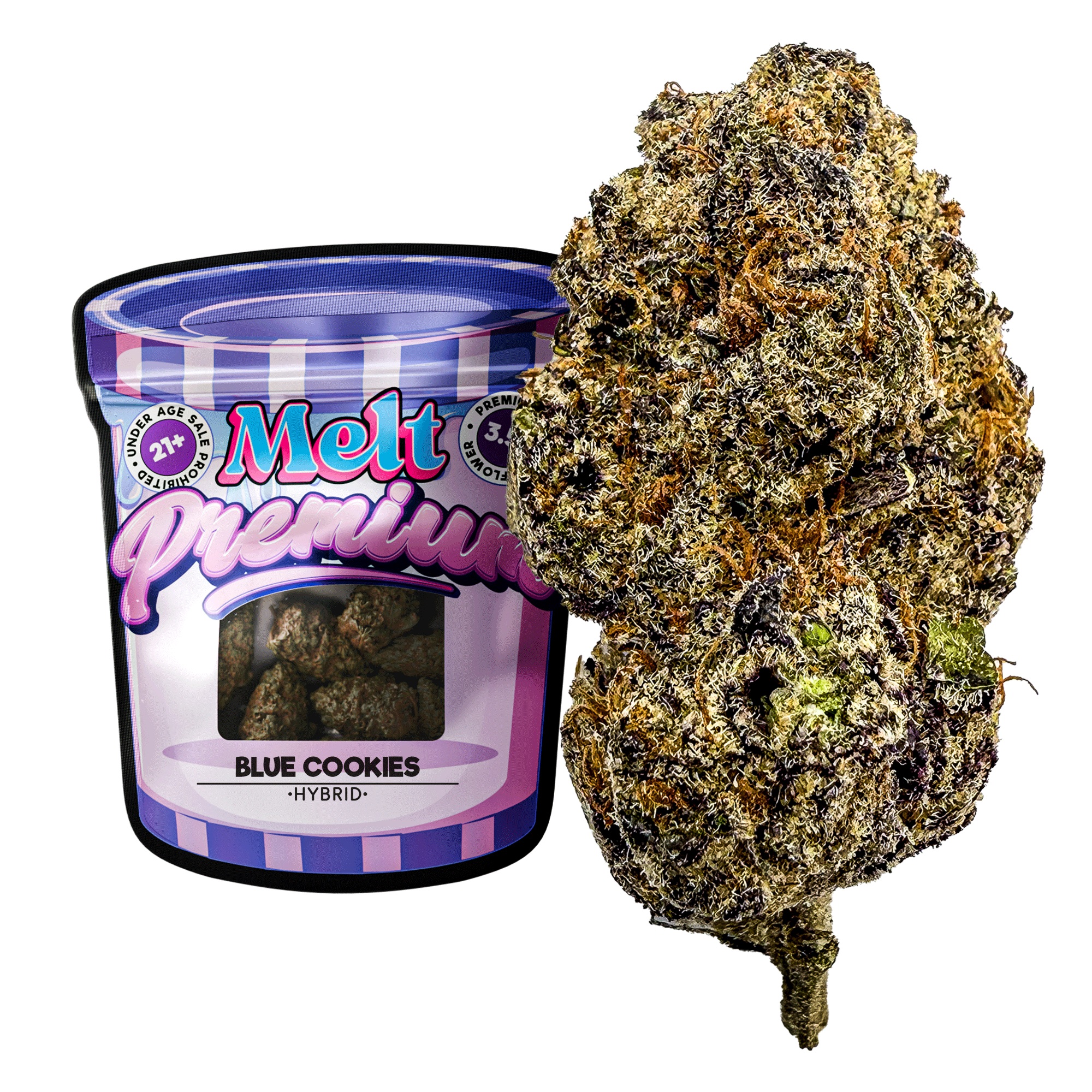
Melt offers legal hemp-derived cannabinoid products, including THCA flower, all-in-one devices, and edibles, with product education and third-party lab reporting presented as part of its shopping experience. Treat it as one option to compare, not as proof that a particular formula will produce a guaranteed entourage effect.
If you want to explore broader plant chemistry, choose a product that reports its cannabinoid and terpene composition instead of relying only on the word “full-spectrum.” If you need a narrow formula, an isolate may make comparison easier. If you're new to a product, follow its serving guidance and start low, go slow, especially when the formula contains intoxicating cannabinoids.
Keep notes on the product name, batch, amount, timing, and your response. That simple record helps you separate a repeatable pattern from a one-time impression.
The entourage effect began as a description of interacting compounds in the body's endocannabinoid system. Later cannabis research used the idea to ask whether cannabinoids and terpenes could influence one another. That question remains valuable, but the answer isn't a blanket claim that whole-plant products always outperform isolates.
The strongest current interpretation is narrower: specific compounds may interact under specific conditions. Receptor-level studies support the plausibility of terpene and THC interactions, while reviews continue to find that consistent, predictable clinical synergy hasn't been established. Some terpenes may act through indirect pathways, and several direct receptor claims remain inconsistent across models.
That uncertainty gives consumers a practical standard rather than a reason for confusion.
The best way to understand what is entourage effect is to hold two ideas at once. It's a useful lens for studying cannabis as a chemical ensemble, and it's still an open scientific hypothesis. You don't need to choose between enthusiasm and skepticism. You can appreciate the molecular conversation while asking whether a brand has shown you the actual ingredients, ratios, tests, and limits behind its claims.
Melt offers hemp-derived cannabinoid products such as THCA flower, terpene-forward vapes, and edibles, with product information and third-party lab reports available for comparison. Visit Melt to review the available formulas and choose a product based on transparent chemistry rather than entourage-effect hype.
Your cart is currently empty.