



Free Shipping All Orders Over $95
You’re packing for a flight, staring at a pouch of gummies, and doing the same mental math most experienced cannabis consumers do. Can TSA detect edibles? If the answer were simple, there wouldn’t be so much bad advice floating around.
The confusion usually comes from two different questions getting mixed together. One is technical: can airport screening equipment identify a gummy as cannabis? The other is legal: what happens if security finds a product that contains THC? Those are not the same question, and treating them like they are is where people get into trouble.
The practical reality is this. TSA is built to find threats to aviation, not to chemically test your snacks. But federal law still matters, and the line between federally compliant hemp edibles and federally illegal marijuana edibles is the part most travelers need to understand clearly. If you know that distinction, your decision-making gets much easier.
A familiar scene: charger, hoodie, toiletries, wallet, ID, headphones. Then your hand lands on your edibles. You pause.
Maybe they’re gummies you use to unwind after a long day. Maybe they’re sour belts you take instead of drinking when you travel. Maybe they’re hemp-derived products you bought specifically because you wanted something federally compliant. Either way, the same worry hits. If these go through security, will TSA know exactly what they are?
Many travelers picture airport security as a kind of chemical truth machine. They assume the scanner can tell the difference between a standard fruit chew and a THC gummy instantly. That’s the first myth to drop. Airport screening is much more limited than people think.
The second myth is just as common. Some travelers assume that because TSA isn’t actively hunting for edibles, any cannabis product is effectively fine. That’s not right either. Low detection focus doesn't equal legal protection.
Practical rule: Don’t think in terms of “getting away with it.” Think in terms of whether the product is federally compliant if someone actually looks at it.
That’s where people often get lost. A hemp edible that meets the federal limit for Delta-9 THC sits in a different category than a marijuana edible purchased from a state dispensary. They may look similar, smell similar, and even feel similar in use. Under federal law, they are not treated the same.
Your best move is to stop asking one broad question and ask three smaller ones:
Once you separate those issues, the airport question gets much less mysterious.
Airport screening feels invasive because it’s highly visible. Bins, scanners, swabs, officers, bag checks. But the equipment has a narrow purpose.

TSA’s standard screening technology cannot detect cannabis edibles like THC-infused gummies because X-ray machines are designed solely to identify physical density and shapes, not chemical compositions. TSA also states that officers “do not search for marijuana or other illegal drugs,” and if something is found incidentally, it gets referred to law enforcement. A July 2025 NIST study did achieve the first detection of THC in breath from edibles, but that technology is for impairment detection and doesn't apply to current TSA checkpoint methods, as described by this report on TSA screening and edible detection limits.
That means a gummy is read by the machine as an object with a certain mass and shape. It is not read as “THC.” Think of the scanner like a tool that can tell you there’s a wad of organic material in a bag, not a lab instrument that can identify the precise cannabinoid content of candy.
If you put a standard gummy bear and a THC gummy side by side in similar packaging, the scanner doesn’t gain magical insight into which one contains cannabis. It sees physical properties, not a cannabinoid profile.
Travelers also worry about the little cloth swabs officers use during bag checks. Those are tied to explosive detection methods, not THC testing. They are part of aviation security screening.
K9 units create even more confusion. In airport settings, dogs are generally part of security operations. For the ordinary traveler carrying personal-use edibles, the bigger issue isn't a dog somehow identifying a single gummy from across the terminal. The bigger issue is still incidental discovery during a search that started for another reason.
Here’s what usually prompts closer attention:
Airport screening is good at finding suspicious objects. It is not built to perform cannabinoid analysis on food.
The answer to “can tsa detect edibles” is technical before it’s legal. TSA equipment is not designed to identify THC in an edible by scanning it. That lowers the chance of systematic detection. It doesn't remove the consequences if an officer opens the bag and sees a cannabis product clearly labeled or otherwise recognizable.
That distinction matters because it changes how a smart traveler thinks. This isn't a game of invisibility. It's a question of whether the product would remain compliant and explainable if it came under direct human review.
The legal side starts with TSA’s mission. TSA officers screen for threats to aviation safety. They are not drug investigators. But if they encounter cannabis during screening, they don’t get to create a personal exception for you.

TSA policy prohibits marijuana products that exceed 0.3% Δ9-THC under the federal hemp standard. At the same time, its proactive detection rate for drugs is described as effectively zero, and only 0.01-0.05% of the 2.5 billion annual U.S. passenger screenings are referred to law enforcement for drugs, typically after visual identification. TSA guidelines also permit CBD and other hemp products with ≤0.3% THC, reflecting a security-first role rather than a drug enforcement one, according to this explanation of TSA marijuana rules.
The key legal shift came from the 2018 Farm Bill, which created a federal category for hemp and hemp-derived products that stay within that Delta-9 THC limit. That’s the line that changes the travel conversation.
A compliant hemp edible and a marijuana edible might both be “THC gummies” in casual conversation. Under federal law, they are not interchangeable. One may fit within a federally lawful hemp framework. The other remains federally illegal.
A lot of consumers buy from licensed state dispensaries and assume legality follows them into the airport. It doesn’t. State legality and federal legality are separate systems.
That creates a common mismatch:
By contrast, hemp-derived products that meet the federal standard have documentation on their side. That’s why labeling, packaging, and accessible lab verification matter so much more for hemp travelers than people often realize.
The smartest question at the checkpoint isn't “Will they care?” It’s “Can I prove this product is compliant if someone asks?”
For compliant hemp products, carry-on often makes more sense because you can access the package and supporting documentation if needed. A checked bag may separate you from the exact item and label you’d want to show.
For marijuana edibles, neither carry-on nor checked baggage solves the federal problem. The legal issue follows the product, not the compartment.
Most airport advice treats all edibles like one category. That’s sloppy and it leads to bad decisions. The important distinction is whether you’re carrying a federally compliant hemp edible or a marijuana edible that exceeds the federal Delta-9 THC threshold.
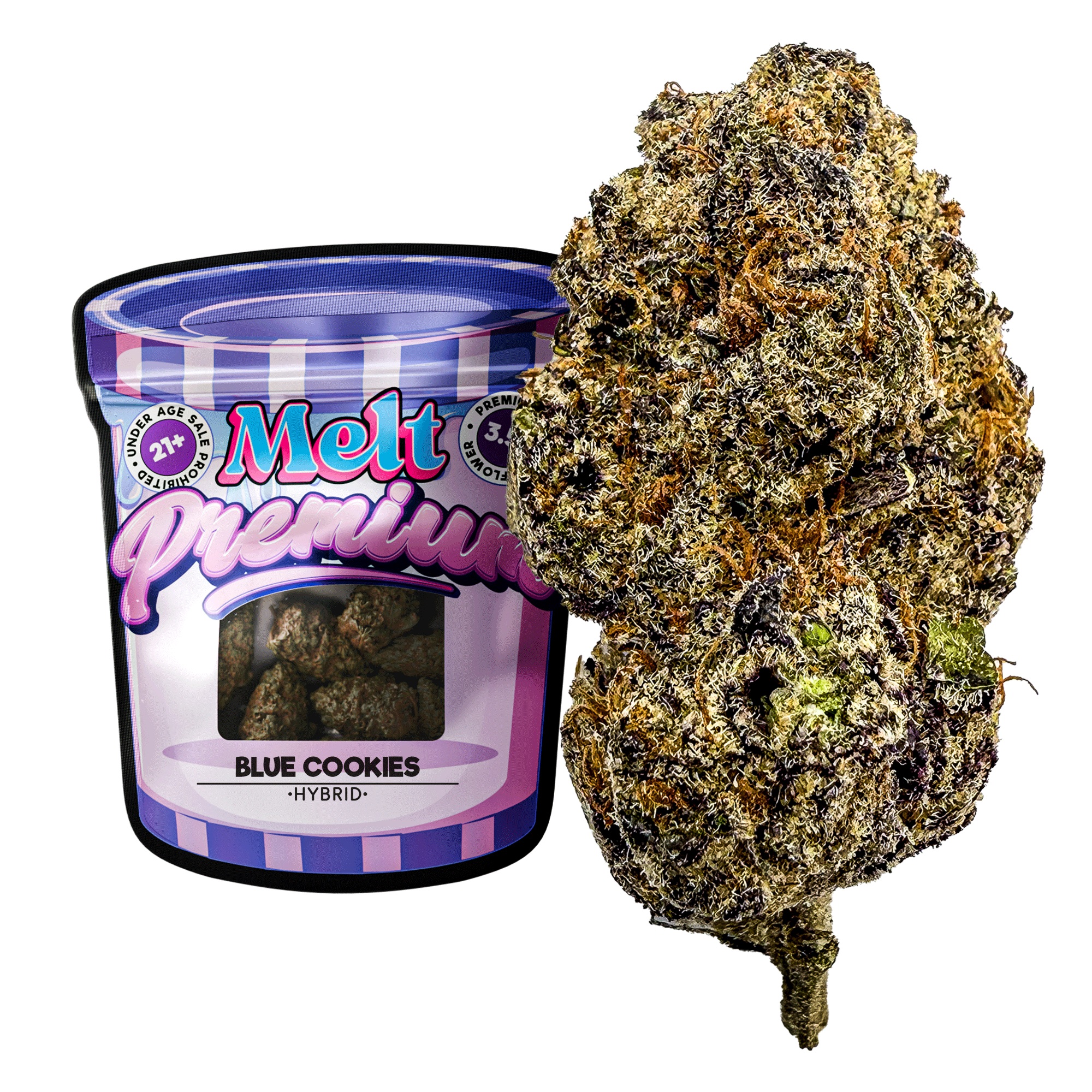
| Feature | Compliant Hemp Edibles (e.g., Melt) | Illegal Marijuana Edibles |
|---|---|---|
| Federal status | Federally compliant if the product stays within the hemp limit for Delta-9 THC | Federally illegal |
| Why documentation matters | Packaging and lab verification can help show lawful hemp status | Documentation doesn't convert marijuana into hemp |
| Best packaging approach | Original sealed retail packaging with clear labeling and accessible test results | Retail packaging may identify the item more clearly, but doesn't fix legality |
| Airport risk profile | Lower practical risk when product is compliant and verifiable | Higher legal risk if discovered |
| Main checkpoint issue | Whether you can quickly show the product is hemp-derived and compliant | Whether law enforcement is contacted after incidental discovery |
| Traveler mindset | Transparency and proof of compliance | No documentation strategy changes the federal status |
The biggest mistake I see is people focusing only on potency or format. They’ll compare gummies, belts, chews, or chocolates as if the edible type is what controls travel risk. It doesn’t. What matters first is the product’s legal category.
If you want to identify a compliant hemp edible correctly, focus on the records attached to the product, not the marketing language.
Look for:
Consumers also get confused by products with high total cannabinoid content. A product can be strong and still be sold as hemp-derived if it remains compliant with the relevant Delta-9 standard. Dosing is a separate topic from travel legality, and if you need a refresher, this edible dosing guide is useful before you decide what to bring at all.
A state dispensary gummy may be perfectly legal to buy where you live and still create a federal problem at the airport. A compliant hemp gummy is different because it starts from a different legal position.
That doesn’t mean you should be casual. It means your travel decision should be based on verifiable compliance, not wishful thinking or “everyone does it” logic.
Once you understand the technology and the legal categories, the risk becomes easier to assess. It’s not mainly about a machine identifying THC inside candy. It’s about whether your bag gets more attention and whether the item can stand up to that attention.
TSA’s operational mandate creates a distinction between detection likelihood and legal consequence. An edible is not a primary search target, but if found, TSA must report it. That means the risk is probabilistic, not definitive. Packaging integrity and discretion matter because discovery is circumstantial rather than systematic, while federal law applies uniformly regardless of the departure state, as explained in this analysis of TSA risk and cannabis discovery.
That’s the cleanest way to think about it. Low screening focus does not erase legal exposure.
A compliant hemp edible generally carries lower practical risk because it can be documented and explained. A marijuana edible has the opposite problem. It may not be actively hunted, but if it comes to light, the legal position is much weaker.
Most edible-related problems start with something else triggering inspection. The edible just happens to be there when the officer opens the bag.
Common triggers include:
International travel changes the equation entirely. Once you leave the domestic U.S. context, you’re dealing with customs, border rules, and local criminal law. That’s not the place for assumptions.
If your plan depends on nobody opening your bag, it isn't a good plan.
There’s another layer people forget. Even if your product clears security, you still need to think about destination law, product labeling, and your own use timeline. If you’re carrying hemp-derived cannabinoids and also driving later, impairment and testing issues become their own separate problem. If that’s relevant to you, this breakdown of how long THCA can stay in your system is worth reviewing before your trip.
The smart takeaway is simple. Don’t measure risk only by “Can TSA detect edibles?” Measure it by what happens if someone physically looks at the product.
If you’re traveling with a legal hemp edible, your strategy should be based on clarity, not concealment. You want the item to look legitimate because it is legitimate.

For legal hemp edibles with ≤0.3% Δ9 THC, travelers should keep them in original sealed packaging with QR codes linking to third-party lab tests. That allows quick verification and can reduce inspection friction. The better approach is transparent proof of compliance, not hiding the product, and keeping it in a carry-on is preferred so documentation is easy to access, according to this guidance on flying with compliant hemp edibles.
That one point solves a lot of problems before they start. If an officer sees a professionally labeled, sealed hemp product with accessible testing, the conversation is very different from what happens with loose gummies in a sandwich bag.
Use this as your standard before heading to the airport:
If odor control matters for your setup, especially with other hemp items in your luggage, this guide to smell-proof containers can help you organize without making your bag look improvised.
People often borrow tactics from advice meant for illegal products. That’s the wrong mindset for lawful hemp.
Avoid these moves:
Bring products you can document. Leave behind products you’d have to explain away.
Calm, organized, factual. If no one asks, keep moving. If someone does ask, show the sealed packaging and the batch-specific lab information. That’s the advantage of buying compliant products from brands that treat testing and packaging seriously.
If TSA pulls your bag, your job is to stay boring. Calm voice, simple answers, no jokes, no panic.
A lot of people make the interaction worse by trying to over-explain. TSA officers are dealing with a screening process, not a debate. If the item is a compliant hemp product, the goal is straightforward. Show what it is, show that it’s sealed, and show the documentation that supports its status.
Use a short sequence:
That keeps the issue grounded in verifiable facts. You’re not trying to convince anyone with a personal theory about cannabis law. You’re showing a product that’s labeled and documented.
The process is less favorable. TSA’s role is to refer the matter if the product is discovered incidentally. From there, local law enforcement decides what happens next under the applicable jurisdiction.
That’s why the difference between hemp and marijuana matters so much before you ever leave home. One product category may be explainable with documentation. The other remains exposed to federal illegality even if it was lawfully purchased at the state level.
Respectful, brief, and organized beats defensive every time.
If you’re carrying a compliant item, the best-case interaction is usually uneventful because the product can be verified. If you’re carrying a marijuana edible, there is no packaging trick that changes the legal category once someone identifies it.
So, can tsa detect edibles? Not in the way one might assume. Standard screening equipment looks at shape and density, not THC content. The bigger issue is what happens if an officer physically encounters the product.
That’s why the dividing line isn’t “gummy versus candy.” It’s marijuana versus federally compliant hemp. If your product is compliant, sealed, and backed by accessible lab results, you’re in a much better position to travel smart and answer questions cleanly. Clarity beats guesswork every time.
If you want hemp-derived products built around compliance, clear labeling, and accessible third-party testing, browse Melt. Their lineup is designed for adult consumers who care about potency, transparency, and packaging that holds up under real-world scrutiny.
Your cart is currently empty.