



Free Shipping All Orders Over $95
You're probably here in a very specific moment. Your mind won't settle, your chest feels tight, and you're wondering whether cannabis might help you calm down without making things worse. Then you open a menu and hit a wall of options: THCA flower, gummies, live resin vapes, “indica,” “sativa,” limonene, myrcene, hemp-derived, compliant Delta-9. It's a lot.
Cannabis for anxiety isn't a simple yes or no. Some adults do feel relief. Some get more anxious. Some do well with tiny amounts and do badly with larger ones. The practical question isn't “Does cannabis work?” It's “Which compound, which format, which dose, and under what conditions?”
This guide is built for that real-world decision. It takes the legal cannabis market seriously, including THCA products, edibles, and vapes, but it keeps safety at the center. If you're anxiety-prone, the details matter more than the hype.
A common scenario looks like this. Someone has had a long week of poor sleep, constant mental chatter, and that familiar edge of dread before meetings or social plans. They don't want to feel knocked out. They don't want a racing heart. They just want the volume turned down.
That's often how interest in cannabis for anxiety starts. Not as a party drug decision, but as a self-management question.

People talk about cannabis as if it were one thing. It isn't. A THCA flower jar, a high-THC disposable, and a CBD-forward edible can feel completely different. Anxiety-sensitive users usually learn this the hard way. The same person can feel calmer with one product and overstimulated with another.
The evidence reflects that complexity too. A large retrospective analysis covered by Psychiatry Advisor found that over 7,000 adults had cannabis use associated with improved anxiety scores over 12 and 18 months, with the steepest declines between 1 and 3 months. That matters because it moves the conversation beyond pure anecdote. It also comes with an important limit. Retrospective data can show association, not prove causation.
Practical rule: If a product helped once, that doesn't mean cannabis in general helps your anxiety. It means that product, in that setting, at that dose, may have fit your nervous system.
The adults who tend to do better usually approach cannabis with restraint. They don't chase intensity. They pay attention to lab reports, product type, and terpene profile. They understand that “calming” and “sedating” aren't the same thing, and that panic can come from taking too much too fast.
A useful way to think about it is this:
If you want to use cannabis for anxiety responsibly, don't start from strain names or marketing language. Start from chemistry, dose control, and your own risk profile.
Cannabinoids work through the endocannabinoid system, often shortened to ECS. The simplest way to understand it is as a signaling network involved in stress response, mood, and internal balance. Your body already makes its own endocannabinoid compounds. Cannabis adds plant-derived cannabinoids into that system.

Think of cannabinoids and receptors like keys and locks. THC interacts strongly with receptors that influence perception, mood, and arousal. CBD behaves differently. It doesn't create the same intoxicating high, and it doesn't follow the same anxiety pattern seen with THC.
That difference explains why user reports are all over the map. Two products can both be called cannabis, while one feels grounding and the other feels mentally loud.
The key concept is dose dependence. A review in NIH's PubMed Central notes that low doses of THC can be anxiolytic, while higher doses are anxiogenic. The same review also notes that CBD has shown anxiolytic effects without the same anxiety-raising pattern at tested doses.
If you're anxiety-prone, the line between “just enough” and “too much” can be thin. That's especially true with inhaled products because they hit quickly and can invite repeated use before you've evaluated the first puff.
Here's the practical translation:
A short explainer can help if you want a visual overview before buying.
Cannabis doesn't “treat anxiety” in one uniform way. It shifts a system that responds differently depending on compound, dose, and person.
The science lines up with what experienced consumers already know. Someone using a low-dose, terpene-aware product on a quiet evening may report real relief. Someone hitting a potent THC vape repeatedly before a crowded event may feel far worse.
That's why smart cannabis use starts with respect for the biphasic nature of THC. The market rewards potency. Anxiety management usually doesn't.
A common mistake happens at the menu. Someone asks for an indica for anxiety, gets a high-THC product with a soothing name, and ends up more keyed up than before. Product names are marketing. For anxiety, the label that matters is the one showing cannabinoids, terpenes, and the lab report behind them.
THC has the narrowest margin for error. In the right amount, it can feel settling or soften stress. Push the dose higher, especially if you are already anxious, and the same compound can turn racy, self-conscious, or uncomfortable.
CBD is often the safer first test for anxiety-sensitive adults because it does not produce the same intoxicating effect. Research reviewed earlier found anxiety-related benefits from oral CBD in some settings, but the practical takeaway is simpler. CBD-forward products usually make more sense if you want a clearer head, daytime function, or a wider buffer against taking too much.
THCA needs plain-language handling because it shows up everywhere in the legal hemp market. In raw flower, THCA is not intoxicating in the same way as THC. Once you heat that flower in a joint, bowl, or dry herb vape, much of that THCA converts to THC. So if you buy THCA flower for anxiety relief, treat it like a THC product from a dosing and side-effect standpoint.
Terpenes are the aromatic compounds behind citrus, pine, fuel, pepper, and floral notes. They do not override dose, but they can shape the experience enough to matter, especially with THC.
A Johns Hopkins news release on a terpene study described findings where d-limonene given with THC lowered ratings of feeling anxious, nervous, and paranoid compared with THC alone. That does not mean limonene makes every THC product anxiety-friendly. It does mean terpene content is worth checking instead of shopping by strain name alone.
If you want help reading those labels, this guide explains what terpenes in weed are and how they show up on product reports.
| Compound | Psychoactive? | Primary Anxiety-Related Effect | Best For |
|---|---|---|---|
| THC | Yes | Can feel calming at lower doses, but can worsen anxiety at higher doses | Adults who tolerate THC well and can control dose carefully |
| CBD | No, not in the intoxicating THC sense | Often the gentler option for anxiety-sensitive users | Daytime use, lower-intensity support, people avoiding a strong high |
| THCA | Not in raw form, but becomes psychoactive THC when heated | Depends on whether it's heated and how much is consumed after conversion | Buyers who want flower in the legal hemp market and understand decarboxylation |
| d-Limonene rich profile | Not a cannabinoid | May soften THC-related anxiety and paranoia in the acute experience | Users who want THC but are sensitive to its sharper edges |
Use a simple screen before you buy:
That process is less romantic than picking a strain name you like. It is also how careful buyers avoid products that look calming on the shelf and feel awful in real life.
The same formula can feel different depending on how you take it. For anxiety, that matters because onset time and duration often determine whether a product feels manageable or overwhelming.

Flower is often the easiest way to learn your limit if you're disciplined. One inhale, then wait. That rhythm gives you a chance to notice whether your shoulders drop or your thoughts start racing.
Flower also tends to preserve a broader terpene expression, which some consumers care about when they're trying to avoid a flat, one-note THC effect. THCA flower sits in this category. If you smoke or vape it, you should still think of it as a THC experience and dose it accordingly.
Flower fits best when:
Vapes are the quickest feedback loop. That can be helpful for adults dealing with a sharp spike in anxiety who want to assess effects within minutes. It can also be the easiest way to overdo THC, because the convenience encourages extra hits.
A strain-specific disposable with a transparent terpene profile is usually a smarter choice than a mystery cart with vague branding. If you're browsing legal hemp options, one example is a product like Melt's AMF Blend all-in-one device, which is sold as a disposable format with strain-specific terpene information. That's useful mainly because you can compare the label and lab report before using it.
Fast onset is a tool, not a free pass. The faster a product hits, the more disciplined you need to be after the first pull.
Vapes make the most sense when:
Edibles are often the better fit for people looking for longer coverage rather than immediate interruption of a stress spike. The trade-off is delayed onset. That delay causes many bad experiences because users assume nothing is happening and take more.
For anxiety, edibles reward patience. If you get the dose right, the experience can feel smoother and longer-lasting than inhalation. If you get it wrong, you're committed for a while.
A simple decision framework helps:
| Need | Usually the better match | Why |
|---|---|---|
| Rapid relief in a moment of acute stress | Vape or flower | Effects arrive quickly, so you can stop early |
| Tight dose control while learning tolerance | Flower | Small inhalations are easier to titrate |
| Longer, steadier effect | Edible | Slower onset, longer runway |
| Lowest odor and highest discretion | Edible | No smell, easy to carry |
The best form isn't the strongest one. It's the one that matches the problem you're trying to solve.
You buy a legal hemp product for anxiety, take a dose that looked modest on the label, and 45 minutes later you feel more alert, more self-conscious, and less in control than before. That pattern is common. The problem is rarely cannabis in the abstract. It is usually the combination of too much THC, the wrong product form for the situation, or redosing before the first dose has fully declared itself.
For anxiety, dosing discipline matters more than bravado. People with the same body size can respond very differently to the same product, especially with THC-forward flower, THCA products that convert with heat, fast-acting vapes, or edibles that arrive late and last for hours.
With inhaled cannabis, begin with one small puff. Then wait long enough to judge the effect before taking another. The goal is to find the lowest dose that takes the edge off without pushing you into a racing, overaware headspace.
With edibles, go smaller than your instincts tell you. A very small portion is often the better first test, particularly if the product is high in THC and low in CBD. Newer consumers and anxiety-prone consumers get into trouble by assuming a standard serving is a beginner serving. It often is not.
If you want a practical framework for smaller edible doses, this guide to microdosing THC gummies lays out a sensible starting approach.
Write down what you took, how you took it, and when effects started. That simple habit helps you separate a useful product from a bad fit. It also helps you compare one vape, gummy, or flower strain against another instead of guessing from memory.
Anxiety-sensitive users should watch for more than paranoia. A product can technically relax your body while still making you less functional or less comfortable.
Pay attention to these reactions:
One practical rule helps here. If you are asking yourself whether to take more, wait.
Cannabis can relieve anxiety in the short term and still become a problem if you start reaching for it every time your stress rises. I see this most often with high-THC products that work quickly, because quick relief can train frequent use.
Tolerance can develop gradually. Then the same dose feels weaker, the dosing gets less careful, and days without cannabis can feel more irritable or uneasy than they used to. That does not happen to everyone, but it is a real trade-off, especially with repeated THC-heavy use.
A safer pattern is to treat cannabis like a tool with limits. Use the smallest effective amount. Build in cannabis-free time. Reassess if your dose keeps climbing or if relief lasts less and less.
Self-management has limits.
Get clinical input before continuing if any of these apply:
A careful approach protects the upside. It also lowers the odds that a legal vape, edible, or THCA flower product turns a manageable anxiety pattern into a harder one to control.
If you buy hemp-derived cannabis products online, legality and transparency matter as much as the effect. In the current market, many THCA and CBD products are sold under federal hemp rules tied to the 2018 Farm Bill framework and the requirement that compliant products contain no more than 0.3% Delta-9 THC by dry weight. State laws still vary, so you need to check your local rules before ordering.

A Certificate of Analysis, or COA, is the product's report card. If a brand doesn't provide one, that's a problem.
Here's what I'd check first:
If you want a step-by-step walkthrough, this guide on how to read a Certificate of Analysis breaks down the basics clearly.
A transparent COA won't guarantee a perfect experience, but it does remove some avoidable uncertainty. That's valuable for anxious consumers. You want to know what's in the product, how strong it is, and whether the chemistry supports the effect you're aiming for.
When the label is vague, the odds of a mismatched experience go up.
Usually, that's not a safe assumption. Cannabis is not a proven replacement for standard anxiety treatment, and some research warns that chronic THC use can worsen depression or suicidality in certain individuals, as discussed in this review on cannabis and mood-related risks. If you take prescription medication, talk with your clinician before making changes.
Not reliably. Those labels are often too broad to guide an anxiety decision. Potency, cannabinoid ratio, terpene profile, and dose usually matter more than the shelf category.
Raw THCA is different from active THC, but once you heat THCA flower, it converts into THC. If you smoke or vape it, the usual THC caution still applies. Treat it like a THC product in practice.
That can happen. Short-term calm doesn't always predict good long-term results. If you find yourself needing more, using more often, or feeling more anxious when you're not using, step back and reassess.
For many adults, that means a low-dose, carefully labeled product with transparent testing, ideally with gentler THC exposure or a CBD-forward profile. Use it in a calm setting, not before a stressful event, and don't mix it with bravado.
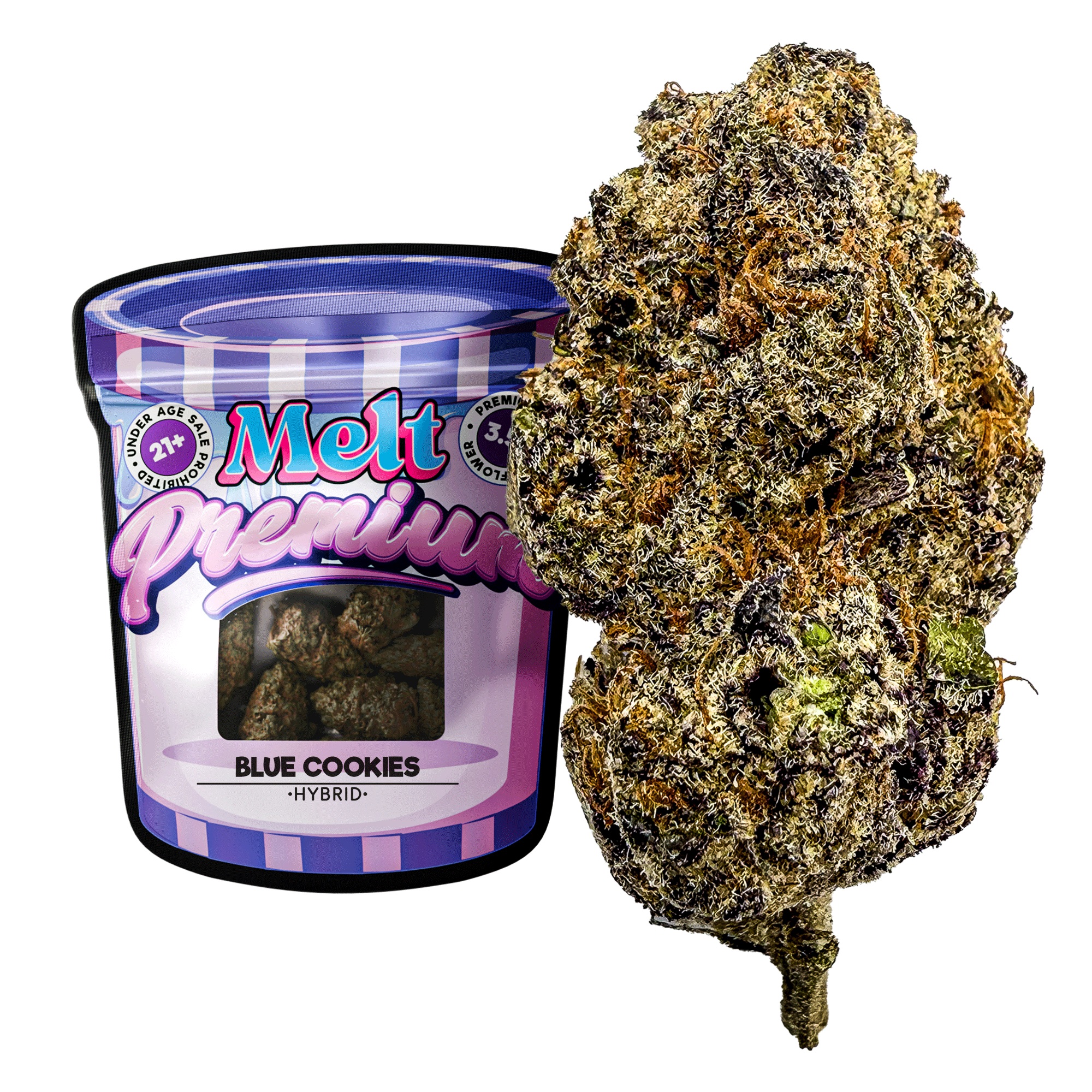
If you want to shop with that safety-first mindset, Melt is one place to compare legal hemp-derived options like THCA flower, disposables, and edibles while reviewing product details and third-party lab information before you buy.
Your cart is currently empty.