



Free Shipping All Orders Over $95
You're up late, still not ready to shut it down. Maybe you've got a game going, a playlist on, a half-finished project open, or a group chat that isn't slowing down anytime soon. An energy drink promises focus. Weed promises a smoother mood. Put them together and it can sound like a smart compromise.
That idea is why energy drinks and weed get paired so often. People want alert but relaxed, social but not wired, calm but still functional. On paper, it sounds balanced.
In the body, it often isn't.
The biggest mistake I see is treating this combo like simple math, as if the stimulant cancels the cannabis haze and cannabis smooths out the caffeine edge. That's not how the brain or the cardiovascular system works. You're not mixing opposites into neat equilibrium. You're layering two active drugs that push different systems at the same time, and some of the worst effects are the ones people least expect.
A common version looks like this. Someone opens an energy drink because they want to stay engaged for a few more hours. Then they take a hit, eat a gummy, or light a preroll because they also want the night to feel better. They're not trying to get wrecked. They're trying to fine-tune the mood.

That logic shows up in a lot of settings. Late-night studying. Gaming sessions. Creative work. Parties where someone wants to stay talkative without feeling too tense. People who already lean toward uplifting cultivars often assume this pairing will sharpen the effect, which is part of why guides on sativa strains for energy get so much attention.
The appeal is easy to understand:
That's the sales pitch your own brain gives you.
Practical rule: If a mix sounds like it will let you override normal limits, assume it deserves more caution, not less.
The problem starts when “energized chill” gets mistaken for control. Plenty of people can feel subjectively okay while still becoming less coordinated, more distractible, more anxious, or more forgetful. The mix can also hide warning signs. You may feel less sleepy, but that doesn't mean your judgment is cleaner.
That matters most when the night includes anything with consequences. Driving. Sending important messages. Making purchases. Taking another edible because the first one “isn't hitting.” Mixing energy drinks and weed can make you feel more willing to keep going while your performance imperceptibly gets worse.
Think of this mix like two drivers fighting for the wheel. One driver is trying to push the car faster. The other is changing your perception of speed, timing, and control. Neither one cleanly takes over. You get a jerky ride.

Caffeine works mainly by blocking adenosine receptors. Adenosine is one of the body's fatigue signals. When caffeine blocks that signal, you feel less sleepy and more switched on.
THC works differently. It activates cannabinoid receptors, especially CB1 receptors, which affect perception, coordination, mood, and memory. That's why cannabis can feel relaxing, immersive, funny, floaty, or mentally slippery, depending on the dose and the person.
This is the trap. People often confuse alertness with better cognition. They are not the same thing.
You can be awake and impaired. You can be energized and still make worse decisions. You can be chatty and still miss details. Mixing energy drinks and weed tends to create exactly that kind of mismatch. The body feels revved up, while parts of your thinking may be less reliable.
A simple way to think about it:
| System | What caffeine tends to do | What THC tends to do | What the mix can feel like |
|---|---|---|---|
| Arousal | Pushes wakefulness | May change your sense of calm or stimulation | Wired but not steady |
| Attention | Can make you feel more “on” | Can make attention drift or narrow | Locked in on the wrong thing |
| Judgment | May increase confidence | Can alter timing and perception | More willing, less accurate |
| Body cues | Masks tiredness | Can dull self-monitoring | Harder to read your own limit |
There's a receptor-level reason this combination can get messy. The same broad neural circuits that shape attention, memory, and response control are being influenced from different directions. In plain language, your nervous system is trying to reconcile “speed up” with “alter perception” at the same time.
That's one reason product details matter. A fast vape, a strong edible, a large energy drink, or a terpene profile that already leans stimulating can all change how intense the clash feels. If you've spent time learning how terpenes work, you already know that cannabis effects aren't one-note. Add caffeine, and the overall result gets even less predictable.
The mix doesn't create balance by default. It often creates noise.
Most users don't stop and say, “My central nervous system is receiving conflicting signals.” They say, “Why am I jittery and spaced out at the same time?” Or, “Why do I feel awake but weirdly off?”
That “off” feeling is the important part. It's why this combo can derail a task that seems simple on paper. Replying to messages. Cooking. Following a conversation. Tracking game strategy. Remembering whether you already took another dose. The conflict is practical, not theoretical.
The most serious risk isn't just mental. It's physical, and sometimes it hides behind ordinary sensations like jitters, warmth, or anxious energy.
Both caffeine and THC can raise heart rate and blood pressure. When people combine them, the cardiovascular load stacks. According to medical guidance on mixing energy drinks and cannabis, the combination is associated with additive tachycardia, palpitations, chest pain, and more severe cardiovascular complications, especially in people with existing heart issues. The same guidance notes that the FDA considers up to 400 mg of caffeine daily safe for healthy adults, while energy drinks can exceed that, and that even 1 to 2 energy drinks daily can raise blood pressure and heart rate.

People notice the psychoactive side first. They think about being too high, too buzzy, too anxious, too quiet, too unfocused. They don't usually think, “My heart is working harder right now.”
That's part of the danger. A person can write off warning signs as normal overstimulation:
Some groups need a much firmer boundary with energy drinks and weed.
| Situation | Why the combo is riskier |
|---|---|
| Known heart condition | Both substances can push heart rate and blood pressure upward |
| Family history you're not clear on | Undiagnosed issues don't announce themselves in advance |
| History of panic attacks | Physical arousal can tip quickly into panic |
| You're already dehydrated | Energy drinks and long sessions often pair with poor hydration and poor judgment |
| You plan to be active | Dancing, walking long distances, sex, or stress can add another layer of strain |
If your chest feels wrong, your heart is pounding hard, or your anxiety feels physically overwhelming, the move is to stop adding substances. More caffeine is not the fix, and more THC usually isn't either.
When someone starts feeling rough, they often make the session worse by chasing the opposite effect. Too wired, so they take more weed. Too foggy, so they slam another can. That ping-pong approach is common and it's one of the least useful responses.
Safer choices are boring, which is why they work:
The heart side of this mix deserves respect because it can escalate faster than people expect.
A lot of users still believe caffeine can “straighten out” a THC high. It might make you feel more awake, but awake is not the same as less impaired.
The most important finding here is counterintuitive. In a peer-reviewed review of caffeine and cannabinoid interactions, researchers describe rodent data showing that a subthreshold dose of THC, one that normally would not produce short-term memory loss, caused memory deficits equivalent to high-dose THC when it was given with caffeine. The proposed mechanism involves antagonistic interactions between adenosine A₁ receptors and cannabinoid CB₁ receptors in the hippocampus, the brain region heavily involved in memory.
Caffeine doesn't reliably rescue your memory from THC. In this context, it can make memory impairment worse.
That matters because many people dose cannabis conservatively on purpose. They take a little, wait, and assume a small amount stays small. But if caffeine is in the picture, especially from an energy drink, the old “low and slow” intuition can get less reliable for tasks that depend on short-term memory and mental tracking.
You can feel like you've only taken a light edge off the night and still perform like you took much more.
This doesn't only show up as dramatic forgetfulness. More often it looks ordinary:
That's why this combo is a poor fit for anything that depends on working memory. Studying, coding, writing, budgeting, planning travel, online shopping, and handling conflict all get riskier when recall and judgment soften at the same time.
For some people, the mental impairment is only half the problem. The stimulant push from caffeine can make the THC experience feel less mellow and more edgy. A person may become hyper-aware of their heartbeat, thoughts, or surroundings. Once that starts, they often blame one substance and forget that the pairing itself may be driving the discomfort.
The practical lesson is simple. Don't use an energy drink as if it were a cannabis antidote. It isn't.
If you're going to combine them anyway, harm reduction starts with one principle: change your normal dose plan. Don't use your usual amount of cannabis and your usual amount of caffeine at the same time and expect a normal result.
Here's a practical framework I use. Treat caffeine as something that can make your cannabis session less predictable, not more manageable.
| Product Format | Standard Dose (Example) | Recommended Dose with Caffeine | Key Precaution |
|---|---|---|---|
| Edible | Your usual single serving | Less than your usual edible dose | Delayed onset makes impatience dangerous |
| Vape | Your usual session length | Fewer pulls than usual, then wait | Fast onset can tempt rapid redosing |
| Flower | Your usual bowl or joint share | Smaller amount than usual | Potency can sneak up once stimulation fades |
Edibles are where I tell people to slow down the hardest. The energy drink hits fast. The edible doesn't. That split timing is exactly how people talk themselves into taking more.
There's another wrinkle with oral products. A 2024 discussion of cannabis, caffeine, and CBD interactions notes that adding CBD to THC in the presence of caffeine can produce stronger perceived euphoria and poorer psychomotor performance than THC alone, likely because CBD increases blood THC concentrations. The write-up emphasizes that this interaction was observed with oral dosing, which makes it especially relevant for gummies and other edible formats.
That means a “balanced” edible with THC and CBD is not automatically the safer choice when an energy drink is involved.
With inhaled products, the issue usually isn't delayed onset. It's momentum.
Start lower than your pride wants to. Most bad mix sessions begin with “I can handle my normal amount.”
Use practical controls, not vibes:
If you want a refresher on patient, measured oral use, this guide on how to dose edibles covers the pacing mindset that becomes even more important once caffeine enters the picture.
There are situations where mixing energy drinks and weed isn't a “be careful” issue. It's a skip it issue.
Say no if you need reliable memory, clean judgment, or steady coordination. Say no if you've got a heart condition, unexplained palpitations, or a history of panic attacks. Say no before driving, before work, before school tasks, before conflict-heavy conversations, and before anything that could go sideways if your confidence stays high while your performance drops.
The reason is simple. This combo can be deceptive. Caffeine may make you feel more alert without making you less impaired. THC may make you feel more relaxed without reducing the cardiovascular load. Put them together and you can end up both overstimulated and less capable.
A good rule is to ask one question before mixing: Do I need this session to be functional, or just enjoyable? If the answer is functional, don't combine them. If the answer is enjoyable, lower the stakes, lower the dose, and remove driving from the plan.
Impairment is still impairment, even when it feels energetic.
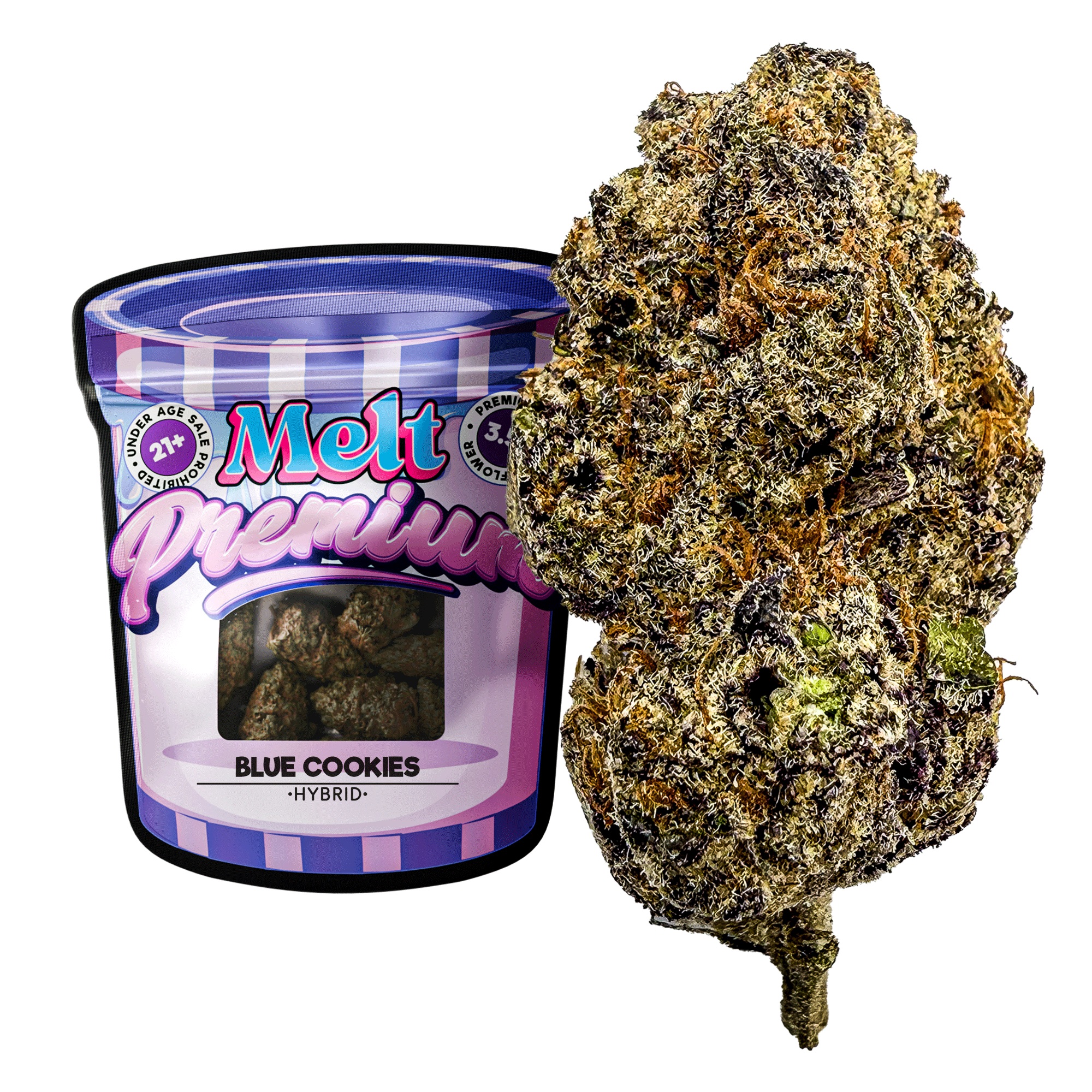
If you want cannabis products with clear information, reliable formulation, and a more intentional approach to the experience, explore Melt. Thoughtful dosing starts with knowing exactly what you're taking.
Your cart is currently empty.