



Free Shipping All Orders Over $95
You're probably here because you've looked at a gummy jar or pouch that says things like “extra strength,” “high potency,” or a huge total milligram number, and the label somehow made things less clear instead of more clear.
That confusion is normal.
A lot of adults shopping for hemp edibles don't struggle because the products are too advanced. They struggle because the packaging mixes together dose per gummy, total cannabinoids per package, and hemp legality in a way that's easy to misread. One product may sound weak but hit hard. Another may look massive on paper but be easier to control. If you're cautious, that mismatch matters.
High potency hemp gummies can be useful. They can also be easy to overdo if you treat them like ordinary candy or assume a bigger number automatically means a better product. The safest way to approach them is to understand two things first. How the law defines hemp, and how much of the active cannabinoid is in one serving.
This guide is written for the careful buyer who wants plain English, not marketing spin. You'll learn what “high potency” usually means, why some hemp gummies can deliver strong effects while still fitting under federal hemp rules, how edible timing works, how to titrate safely, and how to shop like someone who reads the fine print for a reason.
A common buying mistake starts with a simple assumption: the biggest number on the package must tell you how strong the experience will be.
It usually doesn't.
If a pouch says 1000 mg, that may describe the total cannabinoid content in the entire package, not what you get from a single gummy. For a cautious consumer, that's the difference between a manageable serving and a very long evening. High potency hemp gummies aren't confusing because the math is hard. They're confusing because the most important numbers often sit in smaller print.
Individuals want answers to practical questions:
Those are the right questions. They focus on use, not hype.
Another point of confusion is the word hemp itself. Some shoppers hear “hemp gummy” and assume it must be gentle or non-intoxicating. That's not always true. The legal category depends on how the product is formulated and classified, not on whether the effects are automatically light.
A careful buyer doesn't ask, “What's the strongest gummy?” They ask, “What's the right serving for me, and how do I verify it?”
Start with one rule. Potency is only useful when it's tied to serving size.
If you don't know the amount in one gummy, the total number on the bag won't help much. And if you don't understand how the product stays within hemp rules, the label may seem contradictory.
That's where most of the mystery disappears. Once you understand per-serving dose, total package content, and the 0.3% Delta-9 THC dry-weight rule, high potency hemp gummies become much easier to evaluate.
“High potency” can mean different things depending on who's using the term. For a consumer, the useful definition is simple: it refers to a gummy that delivers a larger dose per serving than the common everyday range.
A coffee analogy helps. Think about the difference between a single espresso and a big bottled coffee drink. One number tells you how much caffeine is in one serving. Another tells you how much caffeine is in the whole bottle. Gummies work the same way. A pouch can have a big total number and still be easy to portion, or it can hide a strong per-piece dose behind flashy packaging.

When you evaluate high potency hemp gummies, separate these two label claims:
| Label term | What it means | Why it matters |
|---|---|---|
| Milligrams per serving | The amount in one gummy or one stated serving | This tells you what you'll actually feel from one dose |
| Total cannabinoids per package | Everything combined in the entire bag or jar | This helps with value and total supply, but not immediate dosing |
That difference is the heart of smart edible shopping.
Industry guidance commonly places ordinary retail gummies around 10 to 25 mg per gummy, while high potency often starts around 50 mg and can extend to 100 mg or more per unit, with some packages carrying very large total milligram amounts, according to the cited guidance from this industry reference on higher-dose gummy formulation. In practical terms, that's where the product shifts from casual use to something that demands careful portioning.
The legal mechanism surprises a lot of people.
Under the federal standard created by the 2018 Farm Bill, hemp is cannabis with less than 0.3% Delta-9 THC by dry weight. A 2023 NIH analysis of 53 hemp Delta-9 edible products found 96.2% stayed under that legal threshold. In that same analysis, advertised serving strengths ranged from 0.5 mg to 40 mg per serving, with an average labeled dose of 12.98 mg per serving. The strongest lab-measured product reached 36.68 mg per serving, and the average measured potency was 0.154% Delta-9 THC.
That sounds strange until you picture the law like a recipe rule based on concentration, not just total milligrams. If the gummy is heavy enough, the formula can include a meaningful amount of Delta-9 THC while still staying under the dry-weight cap.
A gummy's legal status depends in part on its mass.
Cornbread Hemp gives a simple example: a 5 g gummy can legally contain up to 15 mg of THC and still fit under the federal less than 0.3% Delta-9 THC by dry weight limit, as explained on their THC gummy compliance page. That's why gummy size matters so much. A heavier gummy gives formulators more room to work with.
Practical rule: Don't ask only “How many milligrams are in this gummy?” Ask “How heavy is the gummy, and is the product using weight to stay compliant?”
That's the legal engine behind many high potency hemp gummies. The law measures the product by dry-weight concentration. The consumer experiences it by milligrams per serving. Both are true at the same time.
Edibles don't behave like inhaled cannabis. That's the single biggest safety issue with potent gummies.
When you smoke or vape, you usually notice the change quickly. With a gummy, the experience can feel delayed, uneven at first, and then much stronger once digestion and metabolism catch up. That lag is where people get impatient and make bad decisions.
A high potency gummy doesn't just increase the chance of a stronger peak. It can stretch the whole experience. The climb may feel slow, but the full effect can arrive later than expected and stay around for hours.
That's why people often say, “I didn't feel anything, so I took more,” and then regret the second serving.
If you want a basic overview of edible timelines, this guide on how long edibles last is useful for setting expectations. The exact timeline varies by body size, meal timing, tolerance, product formula, and your own metabolism, but the big lesson is consistent: edibles reward patience.
Instead of thinking in exact clock times, use a phase model:
With edibles, “not yet” doesn't mean “not working.”
A potent gummy is best used when you've cleared your schedule and can stay in a familiar environment. Avoid treating a trial dose like something you can squeeze in before errands, social obligations, or bedtime if you don't yet know how your body responds.
A cautious user also avoids stacking variables. Don't test a new high-potency gummy at the same time you're drinking heavily, taking more because dinner was late, or assuming your last experience with a different edible applies perfectly to this one. Same category, different formula.
High potency hemp gummies should be approached like a strong kitchen knife. Useful, efficient, and not something you handle casually.
The safest strategy is still the oldest one: start low and go slow. Not because it sounds responsible, but because high-dose edibles punish guesswork. Once you swallow more, you can't dial it back.
A recent review of hemp and CBD gummy content noted that many brands market 30 to 33 mg pieces as “extra strength,” but often don't explain whether splitting a gummy is smarter than taking a full serving. The same review also points out a consumer risk many buyers care about: these products can still trigger a positive drug test, as discussed in this review of high-potency CBD gummy marketing and dosing gaps.
That's why “take one and see” isn't good enough advice for a potent product.

If the gummy is strong, cut it.
A lot of shoppers fixate on the biggest number because they assume stronger means more effective. It often just means less margin for error.
For a closer look at how buyers think about very strong edible packages, this breakdown of 1000 mg edibles and gummies can help put package totals in context.
Here's a simple visual walkthrough:
Don't increase just because:
Split first. Learn second. Increase later.
That approach isn't timid. It's how experienced consumers avoid turning a useful edible into an unnecessarily rough ride.
A strong gummy can be a good product or a sloppy one. The label alone won't tell you. Smart shopping means checking three things before you buy: the label, the lab report, and the legal fit for where you live.

The front of the package is marketing. The side panel is where the truth usually lives.
Look for these basics:
A third-party Certificate of Analysis should help you verify what the product claims.
You want a COA that is easy to find and easy to read. At minimum, it should support the product's cannabinoid claims and help you confirm the formula matches the label. Many careful shoppers also look for screening related to contaminants such as pesticides, heavy metals, and residual solvents.
Red flags include:
Federal hemp rules are only part of the picture. A product can be framed around hemp compliance and still face different treatment depending on state or local rules.
Use this quick decision table:
| Checkpoint | Green flag | Red flag |
|---|---|---|
| Federal positioning | The product clearly references hemp compliance and serving details | The product leans on vague “legal everywhere” language |
| State awareness | The seller acknowledges shipping or legal restrictions where relevant | The seller acts as if location never matters |
| Consumer clarity | Dosing and formulation are explained plainly | Labels rely on hype terms like “extreme” without context |
A smart buyer doesn't need every product to be the strongest. They need the product to be legible. If the label, the COA, and the legal explanation line up, you're dealing with a much more trustworthy option.
A good real-world example is a brand that makes potency easy to verify instead of hard to decode.
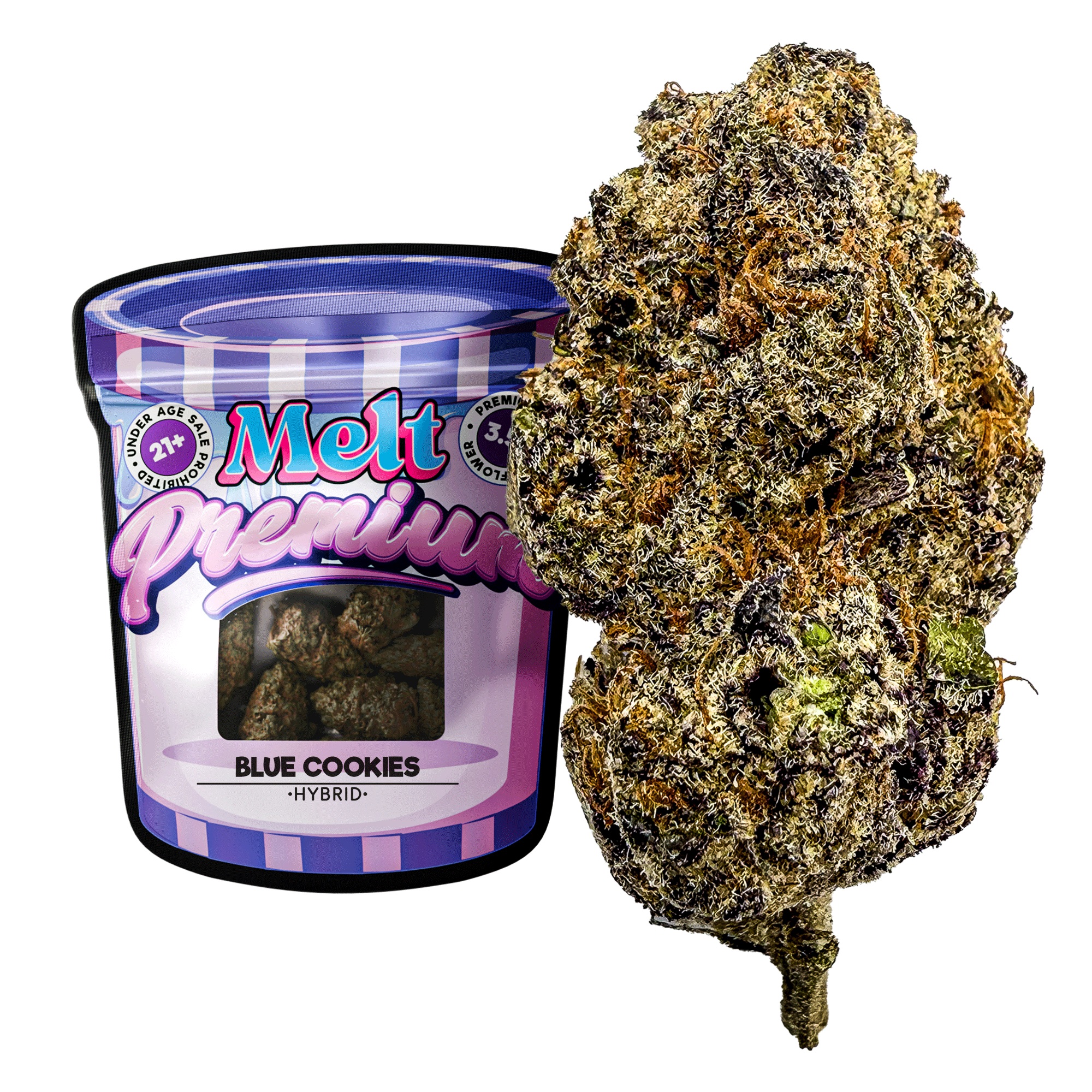
Melt presents its edible lineup in a way that matches what careful buyers want: clear product identity, strong emphasis on third-party testing, and a visible commitment to compliance-focused hemp formulation. That matters more than flashy language because high potency products need to earn trust through precision.

Melt Bites, including the brand's sour belts and worms, give shoppers a concrete example of what a transparent high-potency edible category can look like. The key isn't just that the products are strong. It's that they're presented as products that should be understood, not just chased.
That means a responsible shopper can ask the right questions:
If you want to get better at verifying those details yourself, Melt's guide on how to read a Certificate of Analysis is worth reviewing. It helps turn the COA from a scary PDF into a practical buying tool.
Strong edibles become much less intimidating when the brand shows its work.
For a cautious consumer, that's the right benchmark. Not just flavor. Not just potency. Transparency plus potency.
Yes, they can.
That risk is especially relevant with full-spectrum products and products that include hemp-derived Delta-9 THC. Even when a gummy fits hemp rules, that doesn't guarantee it's invisible to drug testing. If drug testing is a serious concern for your job or situation, the safest move is to avoid products that create uncertainty rather than assuming “hemp” equals “no risk.”
For a potent product, splitting is often the smarter move.
A divided gummy gives you room to learn how your body responds without locking yourself into a stronger dose than you wanted. This matters most when the product is marketed as extra strength or when the package total is large enough that the serving size can be easy to misunderstand.
Keep them in a cool, dry place, sealed, and clearly separated from ordinary snacks.
The safety issue is just as important as freshness. Potent gummies can look like candy, so they should be stored where children, guests, and distracted adults won't grab them casually. Original packaging is often best because it preserves the label, serving information, and batch details.
The short version:
For cautious buyers, the practical question is less about which term sounds premium and more about what fits your goals. If you want the simplest label and the least ambiguity, isolate products are the easiest to interpret. If you want a fuller hemp profile, full-spectrum may appeal more, but it also deserves more attention to testing and personal risk tolerance.
If you want a brand that treats potency with the seriousness it deserves, explore Melt. Their lineup of legal hemp-derived products, including high-potency edibles, is backed by transparent lab reports, compliance-minded formulation, and the kind of clear product presentation that helps careful shoppers buy with confidence.
Your cart is currently empty.