



Free Shipping All Orders Over $95
When you feel too high, the fastest way to get rid of it isn't some magic trick—it's about getting back to basics. The best first move is to find a safe, quiet space and focus on slow, deep breathing. Sipping some water and having a simple snack can also help ground you and manage the intensity.
These actions won't sober you up instantly, but they are crucial for calming down anxiety and helping your body process the THC more comfortably.
That first wave of panic from feeling 'too high' is a real, overwhelming sensation, but you can absolutely regain control. The key isn't to fight it, but to guide your body and mind back to a more comfortable place.
Instead of obsessing over how to get rid of a high fast, shift your focus to managing the immediate symptoms of anxiety and discomfort.
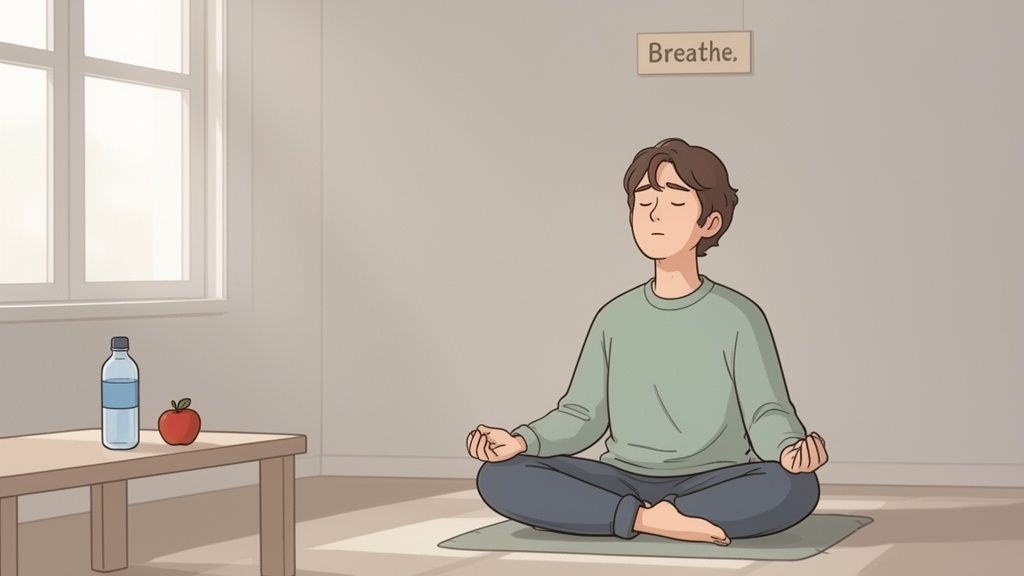
The first few moments are the most important for setting a calmer tone. Your main goals should be to soothe your nervous system and give your body what it needs to stabilize itself. Here's a simple, actionable plan to get you there.
When you’re feeling overwhelmed, it's tough to remember what to do. This table breaks down the most effective first steps into a simple, easy-to-follow guide.
| Action | Why It Helps | Practical Example |
|---|---|---|
| Change Your Environment | Reduces sensory overload and gives you a sense of control. | If you're at a loud party, step into a quiet bedroom or go outside for fresh air. |
| Focus on Your Breath | Calms your nervous system by signaling to your brain that you're safe. | Try the 4-7-8 technique: Inhale for 4 seconds, hold for 7, and exhale for 8. Repeat 3-5 times. |
| Sip Cold Water | Fights dehydration, which worsens anxiety, and grounds you in a physical sensation. | Keep a glass of ice water nearby and take slow, deliberate sips. Avoid alcohol or caffeine. |
| Have a Light Snack | Stabilizes blood sugar and provides a simple, welcome distraction. | Grab a handful of nuts, a few crackers, or a piece of fruit. Focus on the taste and texture. |
Keep these steps in mind, and you’ll have a clear path to follow the next time you feel things getting a little too intense.
Your surroundings have a massive impact on your mental state. If you're in a loud, crowded, or overstimulating place, the first thing to do is move. Find a quiet room, step outside for fresh air, or just find a space where you feel secure and can be alone for a few minutes.
This change of scenery does two things:
For instance, just moving from a chaotic party to a quiet bedroom with dim lighting can immediately lower your heart rate and reduce that feeling of sensory overload.
I know, it sounds like a cliché, but there's a real physiological reason why controlled breathing works. When you panic, your breathing becomes shallow and rapid, which basically tells your brain you're in danger. By consciously slowing it down, you reverse that signal.
Try the 4-7-8 breathing technique:
Repeat this cycle three to five times. This simple exercise forces your body into a state of relaxation and grounds you in the present moment, pulling you out of those racing thoughts.
Key Takeaway: You can't "think" your way out of a panic-inducing high. Use your body—specifically your breath—to tell your brain that everything is okay. This physical action is almost always more effective than any mental gymnastics.
Dehydration can make feelings of dizziness and anxiety so much worse. Sipping on a glass of cold water can be incredibly grounding. The simple act of swallowing and feeling the cool liquid helps you reconnect with your body. Just be sure to avoid caffeine and alcohol, as those can make things worse.
Similarly, a light snack can help stabilize your blood sugar and give you something simple to focus on. A piece of fruit, a handful of nuts, or a few crackers are all great choices. The goal isn't a big meal; it's to engage your senses with familiar tastes and textures, providing a welcome distraction and a sense of normalcy.
Once you’ve navigated the initial anxiety of being too high, a few natural methods can help dial down the intensity. There’s no magic “off” switch, but these strategies work with your body to get you feeling more grounded and back in the driver's seat.
Think of them as practical, accessible tools that countless people rely on when a high feels like it's gotten away from them.
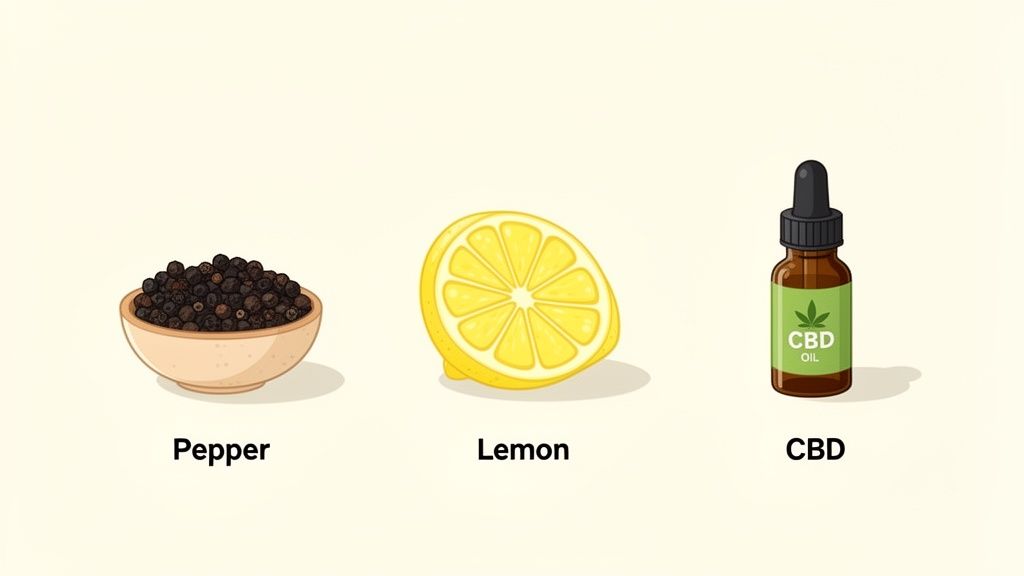
From cannabinoids that calm things down to simple sensory tricks, you have options.
One of the most reliable tools for taming an overwhelming THC experience is its non-psychoactive cousin, cannabidiol (CBD). It interacts with the same endocannabinoid system as THC but without the high.
CBD is thought to modulate cannabinoid receptors, potentially blocking or weakening some of THC's more jarring effects. This can make a huge difference in reducing the anxiety and paranoia that often come with taking too much.
Expert Insight: Keeping a CBD tincture or some CBD-rich flower on hand is a smart move. If things ever get too intense, a dose of CBD can act as a buffer, smoothing out the rough edges and bringing you back to a more manageable headspace.
Believe it or not, your kitchen pantry probably holds a couple of surprisingly effective aids for coming down. Certain aromatic compounds called terpenes—which are also found in cannabis—can influence your high.
Two common terpenes have a reputation for helping people feel more grounded:
While the science is still catching up, these simple remedies are sworn by in the cannabis community.
Shifting your physical state can have a powerful impact on your mental one. A few simple actions can redirect your focus and even help your body process the THC a bit faster.
A cool (not freezing!) shower is a fantastic sensory reset. The sensation of the water is an immediate distraction from racing thoughts and can help you feel refreshed and present in your body again. It pulls you out of your head and back into the moment.
Gentle movement is another great option. A short, slow walk can do wonders for clearing your head. Research even suggests that a brief 10-minute walk can help your body metabolize endocannabinoids, potentially taking the edge off the high. To learn more about how exercise and other factors impact your experience, check out industry insights on Flowhub.com.
The goal isn't a workout—it's just a simple change of pace and scenery. This gentle activity gets your circulation going and gives your mind a new focus, helping you break out of a mental loop.
Knowing what to do when you're too high is only half the battle. Just as important is knowing what not to do. When you’re feeling overwhelmed, your first instinct might be to do something—anything—to make it stop. But some of the most common "fixes" can actually make things a lot worse.
When panic starts creeping in, it's easy to overreact. But grabbing a beer or forcing yourself to sleep can backfire, amplifying your anxiety and trapping you in a negative thought loop. Avoiding these common mistakes is key to getting back to a comfortable headspace.
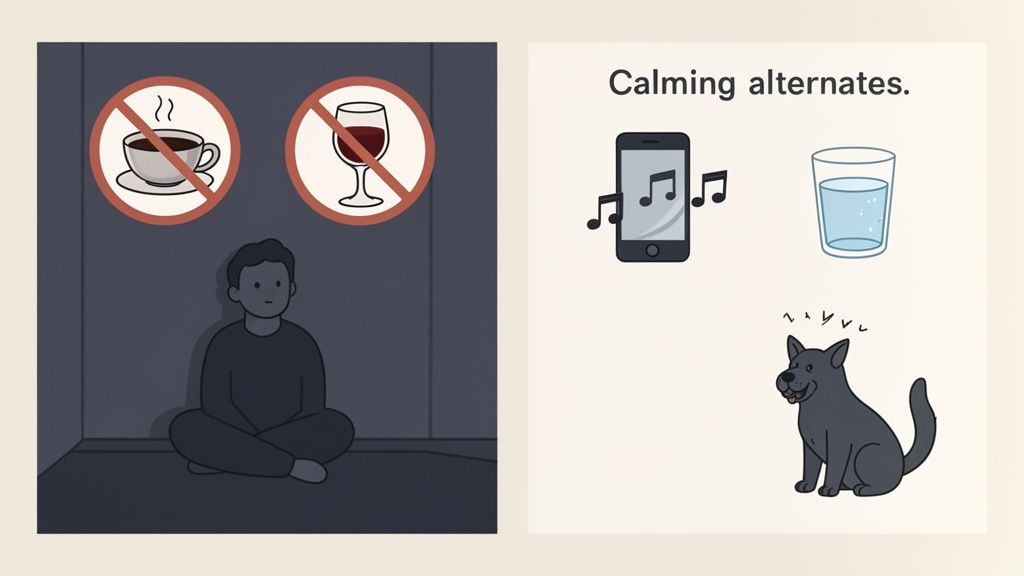
It might sound logical—a beer to calm down or a coffee to "sober up"—but trust me, mixing substances is a bad idea. Alcohol is a depressant and can deepen any feelings of confusion or sedation. Caffeine, on the other hand, is a stimulant that can crank your heart rate and anxiety up to eleven.
This push-pull effect, sometimes called a crossfade, is totally unpredictable. Instead of leveling you out, it often just makes paranoia and physical discomfort more intense. Your best bet is to stick to plain old water.
"Sleeping it off" seems like a simple solution, right? The problem is, when your mind is racing a mile a minute, forcing yourself to sleep is next to impossible. You'll likely end up frustrated, which only adds to the anxiety.
Instead of fighting for unconsciousness, just focus on resting. Lie down somewhere comfortable, put on some chill music, and let your mind wander. The goal is relaxation, not a full-blown nap. This gentler approach is way more effective at helping you ride out the peak.
Key Takeaway: The goal isn't to kill the high—it's to make it more comfortable. Trying to force a solution, whether it's with another substance or with sleep, usually just adds more stress.
Being alone is fine, but locking yourself away to spiral into a black hole of anxious thoughts is a recipe for a terrible time. Your mind can become an echo chamber, making every paranoid thought feel like a fact. This is especially true with edibles, where the long-lasting effects can be heavily influenced by your mindset. For example, understanding how an empty stomach can change the game is vital—you can learn more about taking edibles on an empty stomach in our guide.
Instead of hiding, find a simple, comforting distraction.
These little activities give your brain a safe place to land. It pulls your focus out of the internal chaos and grounds you in something pleasant and real. It’s one of the most powerful ways to steer an uncomfortable high back toward a calmer state.
To keep this from happening again, it helps to understand what got you here in the first place. A little knowledge is the best way to prevent an uncomfortable experience down the road. It usually comes down to a few key things that influence how cannabis affects you.
It's not just about what you consumed, but how you consumed it, how strong it was, and even your own body chemistry and mindset at the time.
The way you take cannabis completely changes the experience. When you smoke or vape, THC hits your brain almost instantly, with the high peaking in just a few minutes. That fast onset makes it much easier to feel what's happening and stop before you go too far.
Edibles are a different beast entirely.
When you eat cannabis, your liver converts THC into 11-hydroxy-THC—a much more powerful compound. The catch? It's a slow process. You could be waiting anywhere from 30 minutes to two hours to feel anything. This delay is a classic trap; people think it’s not working, take a second dose, and then both hit like a freight train later on.
Cannabis potency has skyrocketed, which makes proper dosing more important than ever. A strain with 30% THC is worlds apart from one with 15%. If you don't know the strength of what you're using, you're basically flying blind.
This is especially true with edibles. As the U.S. cannabis market continues to grow—with sales expected to reach $45.3 billion by 2025—stories of overconsumption have become more common. To learn more about this trend, you can check out these cannabis market statistics from PayBotic Financial.
Brands like Melt tackle this problem head-on with precisely dosed products, like our Melt Bites gummies, which are third-party tested for accuracy. This kind of quality control helps you skip the guesswork that often leads to greening out.
Finally, your personal variables play a huge role. These are the wild cards that can change your experience from one session to the next.
Knowing these factors gives you the power to make better choices. It helps you control the variables for a safer and more enjoyable experience every time. Understanding how different cannabinoids work with your system is a game-changer, too. For instance, you can dive into our guide on the duration of an HHC high to learn more.
Honestly, the best way to handle getting too high is to avoid it in the first place. A little foresight goes a long way, turning your sessions from a game of chance into a consistently good time.
Knowing how to sober up fast is a useful skill, but not needing it is even better. It all comes back to the golden rule of cannabis.
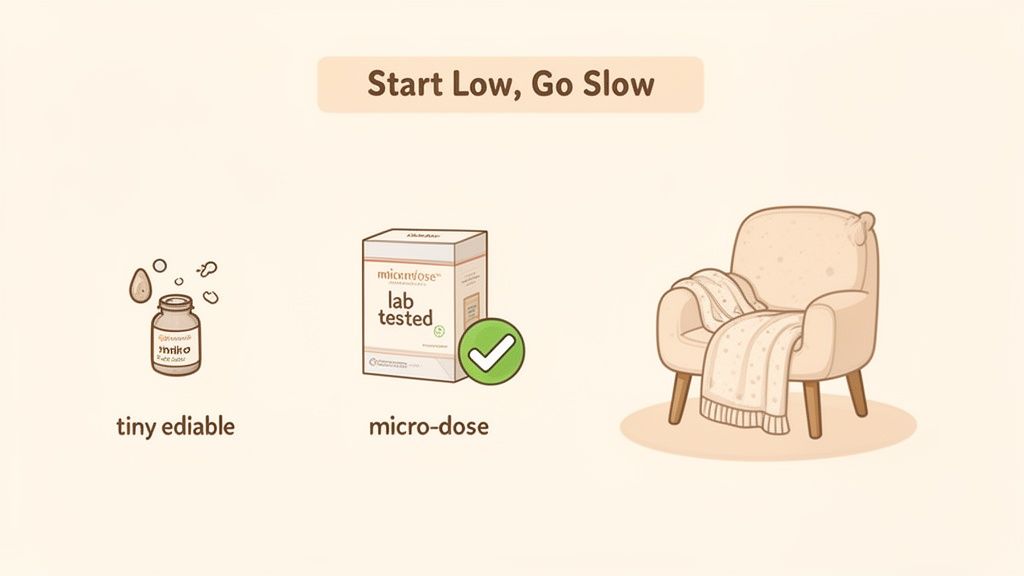
This isn’t just some catchy phrase—it’s the single most important piece of advice for avoiding a bad time. "Starting low" means exactly that: begin with a tiny amount. Think one small puff from a vape or a microdose edible of 5mg or less.
"Going slow" is about patience. You have to give your body time to process what you’ve consumed before even considering more. This is absolutely critical with edibles, where you should wait at least two full hours before taking another dose. For faster-acting methods like vaping, giving it 15-20 minutes is a smart move. If you want to get your pacing right, our guide on how to vape weed breaks it down perfectly.
Not all cannabis is created equal. I can't stress this enough: stick with brands that provide transparent, third-party lab reports. That piece of paper is your only real guarantee of what you're getting, confirming both potency and purity.
Your environment and headspace—often called "set and setting"—also play a huge role. Make sure you’re in a comfortable, safe spot where you feel relaxed. Being around friends you trust in a chill environment can make all the difference and set you up for a positive experience.
Key Takeaway: Preparation is everything. By controlling the things you can—your dose, your product's quality, and your environment—you massively reduce the risk of feeling overwhelmed.
Even with the best planning, sometimes a high just hits harder than you expect. This is where having a little "rescue kit" on hand gives you both peace of mind and a practical out if things get too intense.
A quality CBD product is a great addition to your kit. It's interesting how it works: combining CBD with THC in a 1:1 ratio can actually dial down THC's psychoactive effects, sometimes by 25-50%, because it interacts with your 5HT1A receptors. Keeping some CBD oil or gummies nearby is a smart, proactive step. For a deeper dive into market dynamics like this, you can check out some of the cannabis industry statistics from Bizplanr.ai.
When things get a little too intense, you don't have time to sift through complicated explanations. You need clear, straightforward answers. Here are some of the most common questions people have when trying to come back down to earth.
Honestly, it all comes down to how you consumed. This is the biggest factor in figuring out your timeline.
If you smoked or vaped, you’re in luck—the most intense part of the experience usually fades within 1 to 3 hours. The peak hits fast and leaves relatively quickly, making it a bit easier to ride out.
Edibles are a whole different ballgame. Since your body processes the THC through your liver, the effects can hang around for 6 to 12 hours, and sometimes even longer. The craziest part? The peak might not even show up for a couple of hours, which is why starting low and going slow with edibles is a non-negotiable rule.
While there's no magic food that will instantly end your high, certain snacks can absolutely help you feel more grounded and in control. Think of it less as an "off" switch and more as a way to stabilize the ride.
The Takeaway: You can't just eat your high away, but you can definitely snack your way to a more manageable experience. The right food helps your body find its balance, making the whole thing feel a lot less jarring.
Let's be clear: most of the time, a weird high is just that—uncomfortable, but manageable at home with the tips we've covered. But your safety is always priority number one.
There are a few red flags that mean it's time to get professional medical help. Don't try to tough it out if you or a friend is experiencing:
These symptoms could signal a more serious reaction, and it's always better to be safe. Never hesitate to call for help or head to an urgent care clinic if you're genuinely worried.
For a premium cannabis experience that prioritizes safety and consistency, explore the curated selection at Melt. Our third-party tested products ensure you know exactly what you're getting, every time. Visit us at https://meltofficial.com to find your perfect session.
Your cart is currently empty.