



Free Shipping All Orders Over $95
Making pot tea with stems is surprisingly straightforward. All you really need to do is collect your stems, give them a quick clean and grind, then let them simmer in water with a fat source like coconut oil or whole milk for about 20-30 minutes. If you want to kick the potency up a notch, decarboxylating the stems in an oven beforehand is a game-changer.
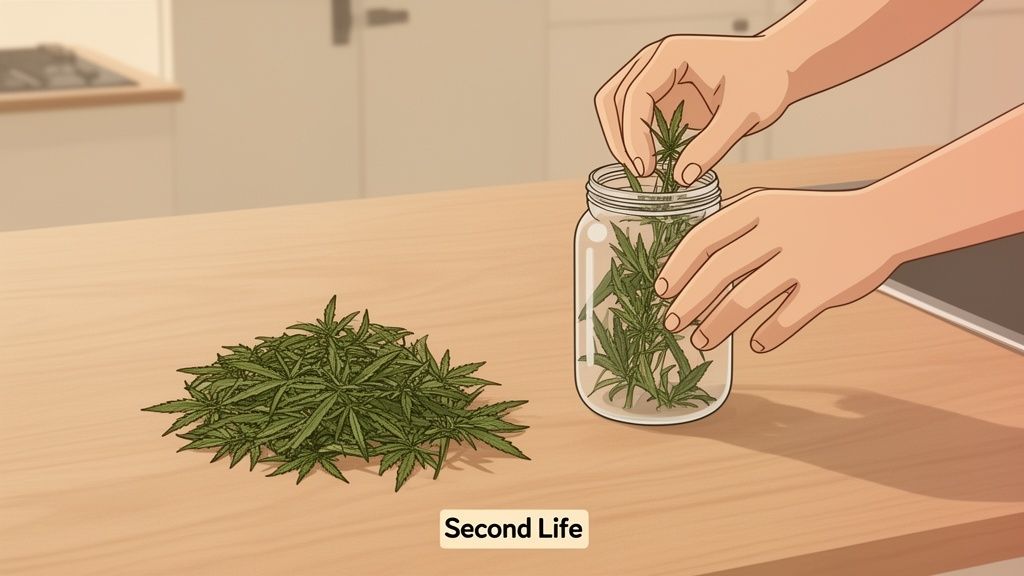
Before you toss those leftover cannabis stems, hold on a second. Most people throw them away, assuming all the good stuff is in the flower, but stems actually hold a decent amount of cannabinoids and trichomes. This guide is all about turning what you thought was trash into a soothing, effective cup of cannabis tea.
It’s a smart and sustainable way to use the entire plant and make sure nothing goes to waste. Whether you're just curious or a seasoned pro looking to get the most out of your stash, you’ll find everything you need here to create a custom-infused drink right in your own kitchen.
Let's be real—the buds are obviously the most potent part of the plant. But the stems and leaves still have valuable compounds. They won't hit you like a joint, but when prepared correctly, they can create a mild, relaxing, and genuinely pleasant experience. Think of it as a gentle, body-focused vibe instead of a heavy high.
Learning how to make pot tea with stems is a great move for anyone looking for:
This isn't just about being frugal; it’s about appreciating what the whole cannabis plant has to offer. A well-made cup of stem tea delivers a uniquely calming session that’s totally different from smoking or vaping.
We’ll walk you through the whole process, starting with how to collect and prep your stems. We’ll also cover a crucial step: decarboxylation. It's a simple heating process that "activates" the cannabinoids, and without it, your tea just won't have the desired kick.
From there, we'll dive into different simmering methods and explain why adding a fat source is a non-negotiable for a successful infusion. We’ll even get into flavoring your brew to make it a delicious, custom drink. By the time you're done reading, you'll know exactly how to turn those leftover stems into a delightful and effective cup of cannabis tea.
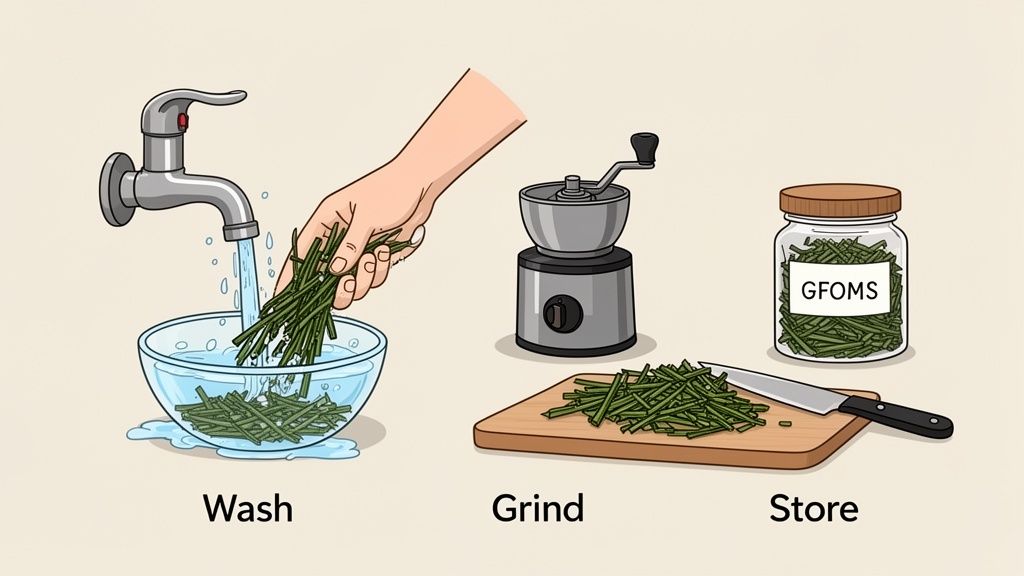
A great cup of stem tea all starts with good prep work. Just like in the kitchen, how you handle your ingredients directly impacts the final result. The main goals here are simple: get the stems clean and break them down for the best possible infusion.
First up, give those stems a quick, gentle wash. They can easily pick up dust and other small particles you don’t want steeping in your tea. A simple rinse under some cool running water is really all it takes.
Just be careful not to get too aggressive—the trichomes, those tiny crystals holding the cannabinoids, are delicate. Too much force can wash them right down the drain. Once they're clean, pat them completely dry with a paper towel. Any lingering moisture can mess with the next steps.
With your stems clean and dry, it’s time to break them down. This step is non-negotiable. Grinding or chopping the stems creates way more surface area, which is key to pulling the cannabinoids out and into your tea. Throwing whole stems in just won't work; they won't release their good stuff efficiently into the water and fat.
You’ve got a few different ways to tackle this.
Whichever method you pick, the goal is the same: create smaller pieces to brew a more potent tea. For a deeper dive into different grinding methods, check out our guide on how to grind your herb for the best results.
Pro Tip: If you save your stems over time, keep them in a cool, dark, and dry spot. An airtight glass container like a mason jar is ideal. This stops them from degrading and keeps them fresh until you've collected enough for a batch of tea—aim for at least a quarter-cup.
For a single cup, a good starting point is about 1-2 grams of ground stems, which usually looks like a heaping tablespoon. Of course, this is just a general guideline. Feel free to adjust the amount based on how big your stash of stems is and how strong you want your tea.
The bottom line is that a little prep work goes a long way. Spending a few extra minutes cleaning and breaking down your stems will reward you with a cleaner, more effective, and much more enjoyable cup of tea. It’s those small details that make all the difference.
If there’s one step you absolutely cannot skip when making tea with stems, this is it. Decarboxylation might sound overly scientific, but it’s really just a simple heating process that “activates” the good stuff in your plant material. Think of it as flipping a switch to turn on the potency.
Raw cannabis stems contain cannabinoids in their acidic, non-psychoactive form—primarily THCA (tetrahydrocannabinolic acid). While THCA has its own wellness benefits, it won't produce the classic effects most people are after. Applying gentle, controlled heat is what converts this THCA into the well-known psychoactive compound, THC.
Skip this, and you’ll end up with a cup of hot water that just tastes a bit woody. It might be mildly relaxing, but it won’t deliver the desired effects because the key compounds are still locked in their inactive state.
The difference between a tea made with raw stems and one made with properly decarbed stems is night and day. Without this step, you're missing out on the full potential of your material. It’s the key that unlocks the psychoactive and therapeutic properties you’re probably looking for.
This process is what makes edibles, tinctures, and potent teas work. The science is simple: heat removes a carboxyl group from the THCA molecule, chemically transforming it into THC. It’s a tiny chemical change with a huge impact on your final brew.
By taking the time to decarb, you gain complete control over your tea's potency. It’s the difference between a weak, ineffective drink and a reliably potent, soothing infusion.
The oven method is easily the most reliable and consistent way to decarb your stems at home. You just need a baking sheet, some parchment paper, and your oven.
Here’s how to do it right:
After cooling, your stems are fully activated and ready to be infused into your tea. This same principle is the foundation for other homemade products; for example, learning how to make a coconut oil infusion is a great next step if you want to try making edibles.
To really drive the point home, it helps to see a side-by-side comparison of what you get with raw stems versus properly heated ones. The difference in the final product is significant.
| Feature | Raw Stems (Non-Decarboxylated) | Heated Stems (Decarboxylated) |
|---|---|---|
| Primary Compound | THCA (Tetrahydrocannabinolic Acid) | THC (Tetrahydrocannabinol) |
| Psychoactivity | None to very low | Fully activated and present |
| Expected Tea Effect | Mildly herbal, no significant effects | Noticeable relaxation and psychoactive effects |
As you can see, taking the extra 40 minutes to decarb your stems is what truly unlocks the effects you’re looking for in your tea. It’s a simple but critical step for a worthwhile brew.
Okay, so your stems are cleaned, ground, and decarbed. Now for the fun part—actually brewing the tea. The golden rule here is that you need a fat source. Cannabinoids like THC are fat-soluble, not water-soluble, which means they need to bind with fat to get into your system.
Simply steeping stems in hot water is a waste of time and good stems. You have to add something like coconut oil, butter, or whole milk to act as a carrier. This isn't optional; it's the key to making sure all those activated compounds end up in your mug.
This is the old-school, go-to method for a reason. It’s straightforward, gives you total control over the heat, and is pretty much foolproof for beginners. The goal is a gentle simmer—never a rolling boil. Boiling your tea will just degrade the cannabinoids and terpenes you worked so hard to activate.
Here’s a simple recipe for a standard batch:
The image below gives you a quick visual on the prep work that leads up to the brewing stage.
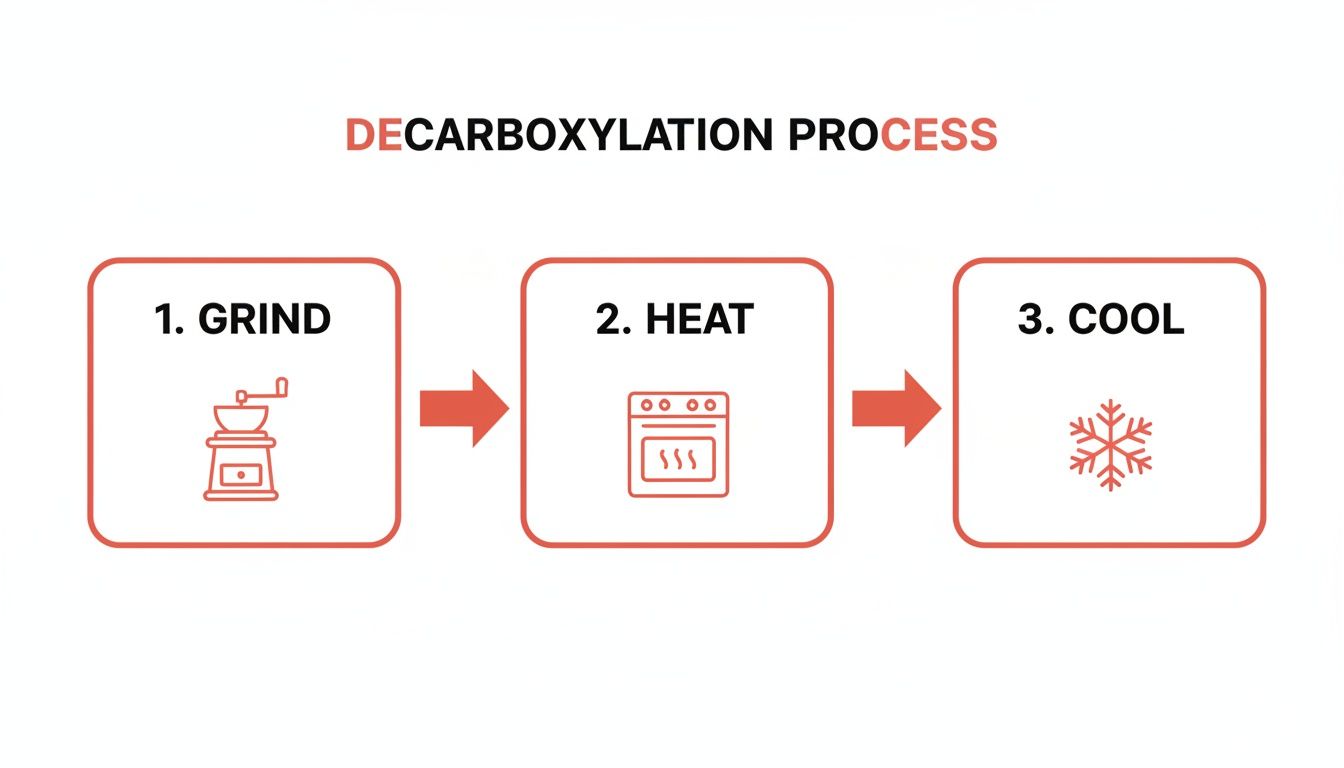
Think of it as the essential workflow—grind, heat, cool—that unlocks your stems’ full potential before they ever hit the water.
If you're more of a "set it and forget it" kind of person, the slow cooker is your best friend. This method uses super low, consistent heat over several hours, which is fantastic for preserving the delicate terpenes and flavors from your stems.
Just throw your stems, water, and fat source into the slow cooker, set it on low, and let it do its thing for 2-4 hours. The longer infusion often creates a more potent tea with a fuller, more rounded flavor. When it's done, just strain it like you would the stovetop version.
Personal Insight: I’m a big fan of the slow cooker method because it makes a smoother, less "plant-y" tasting tea. The long, gentle heat seems to mellow out any harshness, giving you a much cleaner base for adding things like honey or ginger.
In a rush and just need one quick cup? A tea ball or infuser will get the job done. It’s not quite as efficient at extracting everything compared to a long simmer, but it's perfect when you're short on time.
The trick here is to infuse the fat first.
Because the stems are contained, you won't get a full extraction. But it's a super clean and easy way to make a single serving without a big mess, making it a great option for a quick wind-down at the end of the day.
Let’s be honest—cannabis stem tea on its own can taste a bit woody and, well, earthy. But don't think of that as the final product. See it as a blank canvas. This is where you get to be creative and turn a simple infusion into something you'll actually look forward to drinking.
Experimentation is your best friend here. The goal isn’t just to mask the natural flavor but to balance or complement it. A little effort at this stage transforms the experience from purely functional to genuinely enjoyable.
You don't need to be a master herbalist to seriously upgrade the flavor. Most of the best ingredients are probably already hiding in your kitchen pantry.
A super simple trick is to add a traditional tea bag to the saucepan during the last 5-10 minutes of simmering.
Here are a few combinations that always work well:
The right additions do more than just improve the taste—they can introduce their own complementary terpenes. For instance, the limonene in lemon peel or the linalool in lavender can work synergistically with the cannabis compounds. This is a core idea behind what’s known as the "entourage effect."
Beyond adding other teas, think about how your choices interact with the natural cannabis terpenes. These are the aromatic compounds that give the plant its unique scent and flavor profile. Adding ingredients with similar terpenes, like citrus or pine, can create a much more complex and pleasant aroma.
If you want to dive deeper into how this works, you can explore the entourage effect explained in our detailed guide.
Finally, don't forget a touch of sweetness to balance everything out. Natural sweeteners are a great choice because they bring their own subtle flavor notes to the party. A spoonful of honey can offer floral undertones, while agave nectar provides a clean, neutral sweetness. Maple syrup can even add a rich, caramel-like depth.
Just remember to start small, stir it in, and taste before you add more. This final step is often what ties all the flavors together for a perfect cup.
Even with the best instructions, a few questions always come up when you’re trying something new. Let’s clear the air on some of the most common things people wonder about when brewing tea from cannabis stems.
This is the big one, right? The honest answer is: it depends. The potency of your tea is a mix of a few things—the original strain’s strength, how many stems you tossed in the pot, and whether you took the time to decarb them.
Generally speaking, stem tea gives you a mild, body-focused high. Don't expect a heavy, cerebral experience like you'd get from a potent edible. Think more along the lines of a gentle, soothing buzz that helps you unwind. If you’re a regular user, it'll probably feel pretty mellow. For someone new to cannabis, it's actually a great starting point since the effects are much more manageable.
The key is managing your expectations. Stem tea isn't going to send you to the moon like a brownie made with top-shelf flower. It's a different vibe—subtle, relaxing, and a smart way to use every part of the plant.
Yeah, it will, but it's not as bad as you might think. You'll notice the classic cannabis aroma at two main points: when you're decarbing the stems and while the tea is simmering. The decarb step in the oven is definitely the most fragrant part, pretty similar to the smell of baking cannabis into anything else.
To keep the smell from lingering, try a few simple tricks:
The smell from simmering the tea is way less intense than the smell of smoking and usually fades pretty quickly once you're done.
Once you’ve brewed your tea, pour it into an airtight container like a glass jar or bottle and stick it in the fridge. It’ll stay fresh for about 3-5 days. After that, the flavor starts to go downhill, and you risk it spoiling.
Made a big batch? No problem. You can freeze it. Just pour the tea into an ice cube tray. Once the cubes are solid, pop them into a freezer bag. This way, you can grab a pre-dosed cube or two anytime you want a quick serving. Frozen tea will hold onto its potency for several months.
Ready to explore premium, lab-tested cannabis products delivered right to your door? From high-quality THCA flower to potent edibles, Melt offers a curated selection for the modern connoisseur. Discover your new favorite at https://meltofficial.com.
Your cart is currently empty.