



Free Shipping All Orders Over $95
Infused coconut oil is a beautifully simple concept: it’s just a versatile fat that’s been combined with active plant compounds, like THC, CBD, or CBN from cannabis. The process is a lot like steeping tea—the warm oil soaks up the botanical material, pulling out all its beneficial properties to create a potent, do-it-all product. It's this straightforward, effective method that makes it a staple for homemade edibles and topicals.
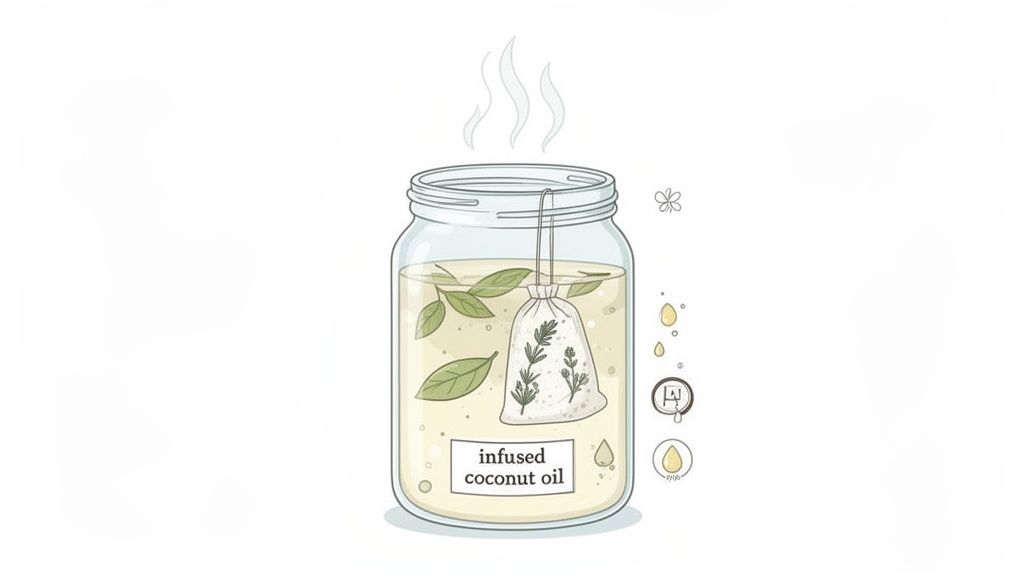
At its heart, infused coconut oil is the result of a perfect partnership between fat and cannabinoids. Cannabinoids are naturally lipophilic, which is just a scientific way of saying they’re "fat-loving." They bind easily to the fatty acids in coconut oil, making it an incredible vehicle for delivering these compounds into your system, whether you eat it or rub it on your skin.
The buzz around this infusion isn’t just hype; it's rooted in the oil’s unique chemical makeup. Coconut oil is packed with Medium-Chain Triglycerides (MCTs), a type of saturated fat your body can metabolize much faster than the long-chain fats in other oils. When cannabinoids latch onto these MCTs, they get absorbed more efficiently, which can really amplify their effects.
To give you a quick snapshot, here’s a look at what makes infused coconut oil stand out.
| Attribute | Description |
|---|---|
| Primary Use | A carrier fat for delivering cannabinoids like THC, CBD, and CBN. |
| Key Property | High in Medium-Chain Triglycerides (MCTs) for better absorption. |
| How It Works | Cannabinoids are fat-soluble and bind readily to the oil's fatty acids. |
| Common Forms | Edibles (gummies, baked goods), topicals (balms, salves), and cooking oil. |
| Benefit | Enhances bioavailability, meaning your body can use the cannabinoids more effectively. |
This table really just scratches the surface, but it shows why this simple oil has become such a powerhouse in the world of cannabis.
The synergy between coconut oil and cannabis has made it a favorite in wellness circles and home kitchens. Its popularity is also tied to a bigger trend: people want natural, unprocessed ingredients. In fact, the global coconut oil market is on track to hit US$6.8 billion by 2033, largely because health-conscious consumers are ditching heavily processed fats. You can dive deeper into this growing market demand on persistencemarketresearch.com.
Here’s a quick rundown of why this pairing is a match made in heaven:
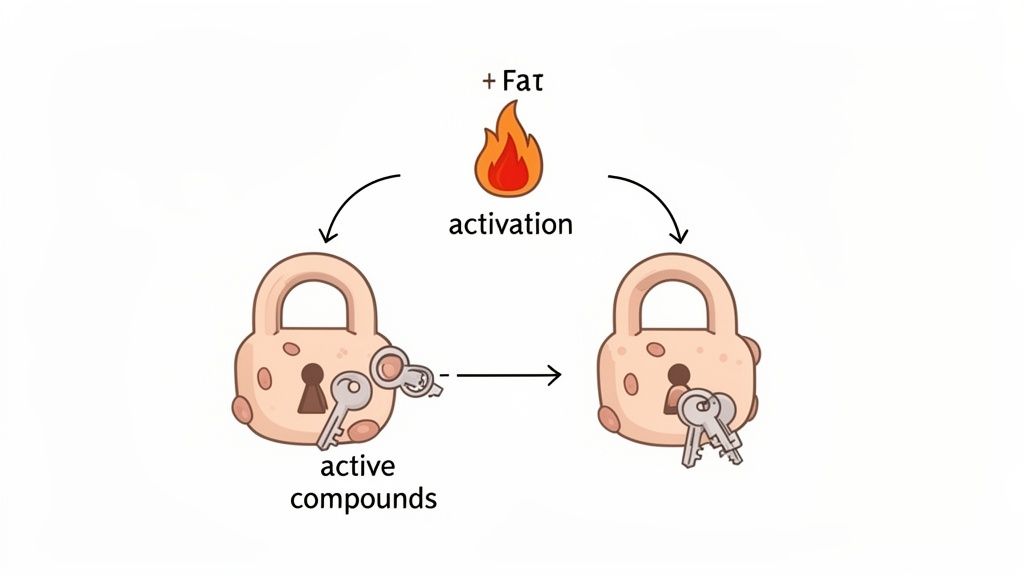
Ever wonder why cannabis and oil are such a perfect match? The secret is simple chemistry. Cannabinoids like THC and CBD are lipophilic, which is a fancy way of saying they are “fat-loving.” They’re naturally drawn to fat molecules, which makes coconut oil the perfect partner for creating potent infusions.
Think of it like this: cannabinoids are keys, and the fatty acids in coconut oil are the locks. They’re designed to fit together. Coconut oil is packed with around 82% saturated fat, creating a rich environment where cannabinoids can easily dissolve and feel right at home. The end result is a stable, effective infused coconut oil that holds onto all those valuable compounds.
This natural attraction is the core principle behind any good infusion. Without a fatty carrier, cannabinoids can’t be easily absorbed by your body. It’s the reason you can’t just eat a raw cannabis flower and feel much—the active compounds need that fatty vehicle to unlock their full potential.
Before the infusion magic can even happen, there’s a critical first step: decarboxylation. Raw cannabis doesn’t actually contain much of the THC or CBD you’re familiar with. Instead, it’s full of their acidic precursors, like THCA (tetrahydrocannabinolic acid) and CBDA (cannabidiolic acid).
In their raw forms, these compounds aren't psychoactive and offer different effects. To activate them, you need to add heat.
Decarboxylation is just the process of gently heating cannabis to “switch on” its compounds. This heat removes a specific part of the molecule (a carboxyl group), turning non-psychoactive THCA into the powerful, psychoactive THC.
This is exactly what happens instantly when you smoke or vape—the flame or coil does the work for you. For edibles and topicals made with infused coconut oil, this has to be done as a separate, controlled step beforehand. Get it right, and you ensure your final product delivers the potency and effects you’re looking for.
Skipping this is one of the most common mistakes people make. Without proper decarboxylation, your oil will be full of unactivated cannabinoids, and it just won't deliver the relaxation, relief, or euphoria you expect.
Once your cannabis is decarboxylated, you’re ready to start infusing. This involves combining the activated flower with coconut oil and applying low, steady heat over a few hours. This gentle warmth encourages the fat-loving cannabinoids to leave the plant material and bond with the oil’s fatty acids.
Here’s a quick look at what’s happening during this stage:
Understanding this science—from the molecular attraction to the essential activation step—is what turns making infusions from a guessing game into a reliable craft. It empowers you to create consistent products perfectly tailored to your needs.
The real magic of infused coconut oil is just how incredibly versatile it is. Its biggest advantage comes down to one key term: bioavailability. Think of the fats in coconut oil—specifically Medium-Chain Triglycerides (MCTs)—as an express lane for cannabinoids, helping your body absorb them faster and more completely. This means you get more bang for your buck out of every milligram.
This natural efficiency makes infused coconut oil a powerful base for everything from edibles to skincare. It’s not just an ingredient; it’s a tool for wellness, relaxation, or just getting creative in the kitchen.
When it comes to making edibles, infused coconut oil is a total game-changer. Its high saturated fat content is fantastic at latching onto cannabinoids, which means you get a potent and super stable infusion every single time. It’s an easy one-to-one swap for butter or other oils in pretty much any recipe you can think of.
Imagine pulling a fresh batch of fudgy brownies from the oven where the coconut oil gives them a perfect texture and delivers a smooth, long-lasting body high. Or crafting your own gummies with the confidence that the dose is consistent in every single piece. You can even borrow ideas from classic cannabutter recipes. For some inspiration, check out our guide on what to make with cannabutter.
The benefits don’t stop in the kitchen. Coconut oil’s natural anti-inflammatory and moisturizing properties make it an amazing ingredient for DIY topicals. When you apply it to your skin, the cannabinoids get to work on local receptors to provide targeted relief without any psychoactive effects.
It’s the perfect base for creating:
Since the cannabinoids are absorbed right where you apply them, topicals are an incredible way to address discomfort directly at the source.
You don’t have to be a baker to work infused coconut oil into your life. It blends seamlessly into everyday cooking, adding a little wellness boost to your favorite meals. Its mild, slightly sweet flavor is surprisingly versatile and works well with a whole range of dishes.
A simple drizzle over roasted veggies, a spoonful mixed into your morning smoothie, or a dose stirred into a warm bowl of soup can turn an ordinary meal into something special. It’s a low-key and straightforward way to make cannabinoids a part of your daily routine.
This adaptability is a huge reason for coconut oil's boom in popularity. The global coconut oil market is on track to hit USD 11.05 billion by 2031, with cosmetics and personal care products leading the charge as more people look for natural, effective ingredients. You can learn more about its massive growth on mordorintelligence.com. From high-end kitchens to skincare labs, its usefulness is clear.
Getting the dose right is easily the most important part of having a great experience with infused coconut oil. While homemade infusions can be a bit tricky to dose with perfect precision, a little back-of-the-napkin math can get you surprisingly close. It takes the guesswork out and helps you avoid those uncomfortable "I took too much" moments.
The golden rule of edibles is simple: start low and go slow. Your body digests cannabinoids differently than when you smoke or vape them, which means the effects take longer to kick in but are often more intense and last much longer. Patience is your best friend here.
Let's walk through the math with a common scenario. Say you have one gram of cannabis flower that tests at 25% THCA.
This means your entire batch of infused coconut oil contains roughly 175 mg of THC. If you use that oil to bake 24 cookies, each cookie will have about 7.3 mg of THC (175.4 mg ÷ 24 servings).
If you want to go deeper on edible strength, check out our full guide to understanding a 100 mg edible dose. Knowing your numbers is the key to creating predictable and safe experiences every single time.
The right dose really depends on what you're using your infusion for. From edibles to skincare, the possibilities are pretty wide open.
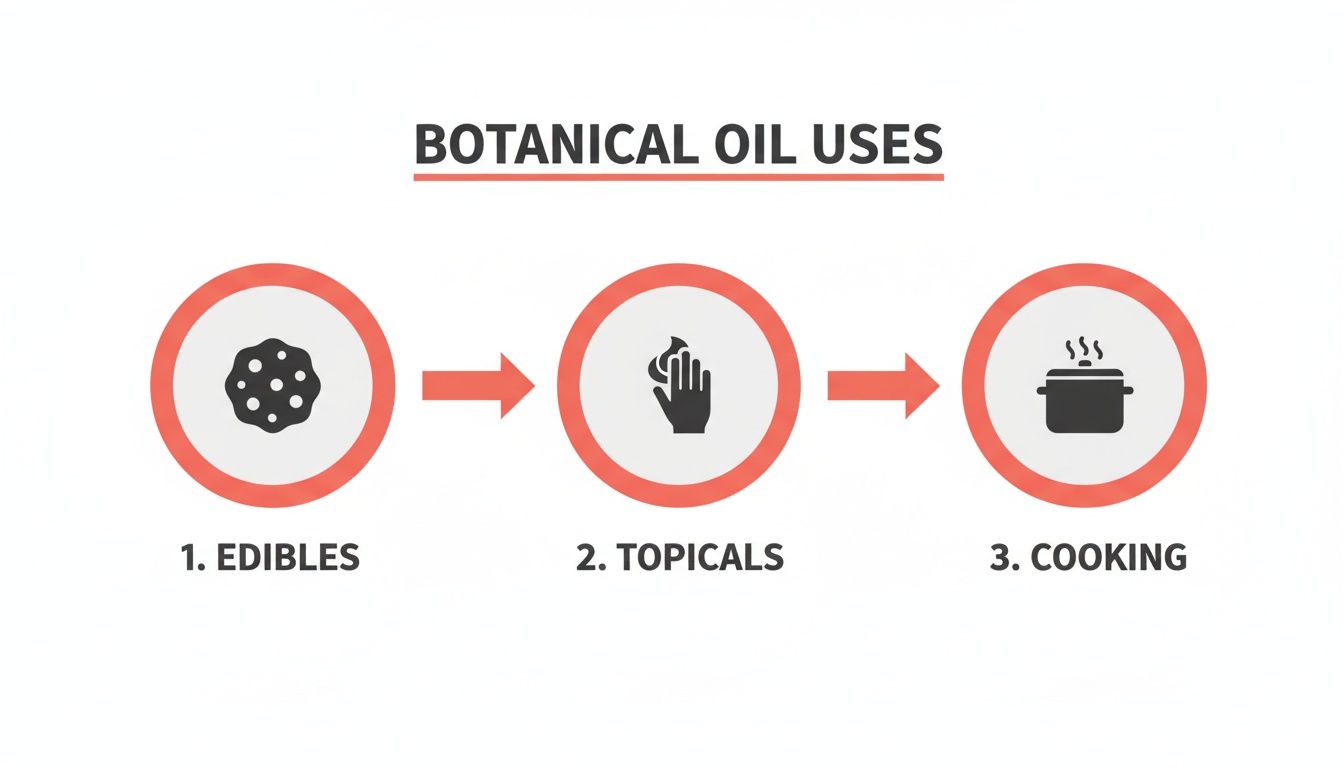
This just shows how incredibly versatile the oil is, acting as a perfect base for everything from brownies to soothing balms. The high fat content is what makes it work so well.
In fact, recent studies have noted virgin coconut oil can achieve a 75.6% encapsulation efficiency for certain compounds, which hints at its massive potential for cannabinoid delivery. You can read more about this organic virgin coconut oil research at globalmarketstatistics.com.
Ultimately, whether you're aiming for a gentle 5 mg dose in a gummy or a potent topical, knowing your base potency is the foundation for success.
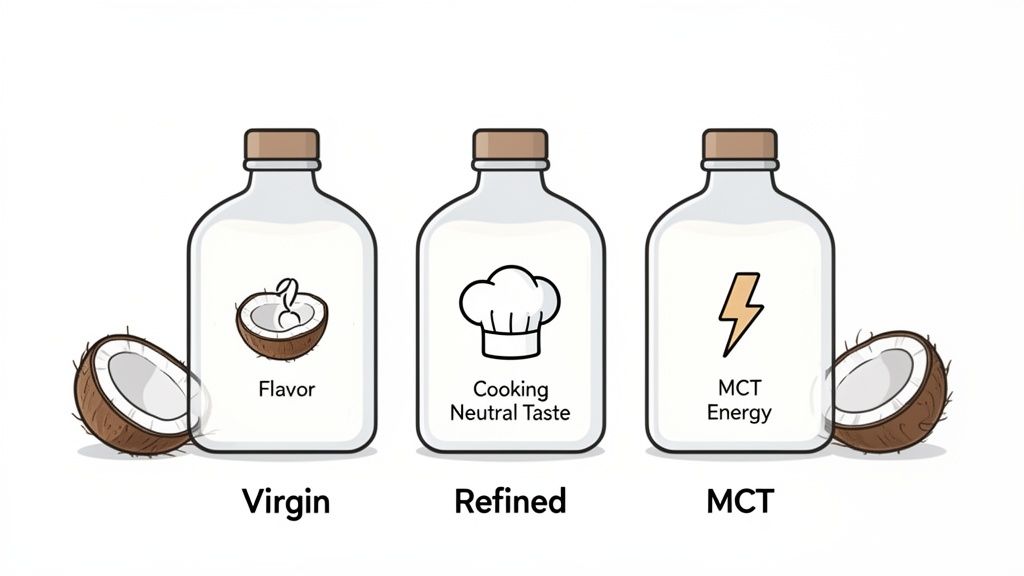
The quality of your infused coconut oil really boils down to the base you start with. Not all coconut oils are created equal, and picking the right one depends entirely on what you want to achieve with your final product. Everything from flavor and cooking temperature to the final effects can be traced back to your initial choice.
Getting familiar with options like virgin, refined, and MCT oil will elevate your infusions from pretty good to absolutely amazing. Each one brings something different to the table, whether you're prioritizing authentic culinary flavor, clean topical benefits, or just maximum potency.
For most people making infusions at home, the big decision is between virgin (or unrefined) coconut oil and its refined cousin. Unrefined virgin coconut oil is processed as little as possible, which means it hangs onto that distinct, slightly sweet coconut flavor and aroma. This makes it a fantastic choice when you want the oil’s natural taste to play well with the terpenes in your cannabis, especially in desserts or scented topicals.
Refined coconut oil, on the other hand, goes through more processing to neutralize its flavor and smell. It also has a higher smoke point—around 200°C (400°F)—making it a much better all-rounder for general cooking and savory dishes where you don't want any coconut taste getting in the way.
It's pretty straightforward: go with unrefined for authentic flavor and aroma, but choose refined when you need a neutral base for cooking at higher temps.
Then you've got MCT oil. While it comes from coconut oil, it's really a concentrated version of the Medium-Chain Triglycerides that make coconut oil such a great partner for cannabinoids in the first place. Because it’s made of shorter-chain fats, your body can absorb and process it even faster.
This makes MCT oil the champion if your main goal is maximizing bioavailability and potency for fast-acting tinctures or edibles. It stays liquid at room temperature and is virtually tasteless, giving you a clean, powerful, and efficient base.
To make the choice crystal clear, here’s a quick breakdown of how these oils stack up for infusion purposes.
| Oil Type | Key Characteristics | Best For |
|---|---|---|
| Virgin (Unrefined) | Strong coconut flavor & aroma. Minimally processed. Solid at room temp. | Edibles where coconut flavor is a plus (like baked goods), topicals, and salves. |
| Refined | Neutral flavor & aroma. Higher smoke point (~400°F). Solid at room temp. | Versatile cooking, savory dishes, and any recipe where you want to avoid a coconut taste. |
| MCT Oil | Tasteless & odorless. Stays liquid. Rapidly absorbed for high bioavailability. | High-potency tinctures, fast-acting edibles, and creating a smooth, clean infusion. |
Ultimately, the "best" oil is the one that fits your specific needs. For a sweet edible, virgin oil might be perfect. For a fast-acting tincture, MCT is tough to beat. And for an all-purpose cooking oil, refined is your go-to.
Making a great batch of infused coconut oil is one thing, but protecting your creation is a whole different ballgame. Once you’ve put in the work, proper storage is what keeps it fresh, potent, and safe. Think of cannabinoids as delicate compounds—they don’t play well with their three biggest enemies: heat, light, and air.
Your best friend for storage is a simple airtight container. We’re big fans of glass mason jars with tight lids because they don't hold onto old smells and create a solid seal against oxygen. Just stash the jar in a cool, dark spot like a pantry or cupboard. This simple step is clutch for preserving the integrity of the THC, CBD, and other good stuff in your oil.
Heat and light are the fastest ways to degrade cannabinoids, which will seriously diminish the effectiveness of your infused oil. Sticking it in the fridge can extend its life for several months, which is a great middle-ground.
If you’re planning to store it for even longer, the freezer is your best bet. You can easily preserve your oil’s quality for up to a year or more this way.
And if you're curious about how this applies to edibles in general, check out our guide on how long edibles stay fresh.
Beyond just keeping it fresh, let's talk about safety—especially if you live with other people. Accidental consumption is a serious risk, but it's also completely avoidable with a bit of common sense.
Always, always, always label your infused products. A clear, bold label that says something like “CONTAINS THC - DO NOT EAT” can prevent a dangerous mix-up and is the best way to keep it away from kids and pets.
Finally, you’ve got to stay on top of the local laws. While hemp-derived products with less than 0.3% Delta-9 THC are federally legal in the U.S. thanks to the 2018 Farm Bill, state laws can be a totally different story. Some states have their own specific rules about cannabinoids like THCA.
Before you make or buy any infused coconut oil, take a few minutes to get familiar with your local regulations. It’s the easiest way to make sure you can enjoy your creations responsibly and legally, without any unwanted surprises. After all, responsible consumption starts with knowing the rules of the road in your area.
Even after you've got the basics down, a few questions always pop up. It's totally normal. Here are some of the most common things people ask when they're getting started with infused coconut oil, with clear, simple answers to get you going.
You can, but the starting material is everything—it completely determines the final effect. If you’re looking for that classic psychoactive buzz, you need to start with flower that contains THCA or THC. Just as important, you have to decarboxylate it (a fancy word for heating it up) to "activate" it. Skip that step, and your oil will be seriously lacking in the potency department.
On the other hand, if you're after non-psychoactive benefits, a high-CBD hemp flower is a fantastic choice. The quality of your starting flower, whether it's high-THCA or high-CBD, will make all the difference in the flavor, strength, and overall vibe of your finished infused coconut oil.
When you store it right, infused coconut oil has a surprisingly long shelf life. Just keep it in an airtight container—a simple glass mason jar works great—and stash it somewhere cool and dark like a pantry or the fridge. In those conditions, it'll easily last for several months, often up to a year.
Think of it like regular coconut oil. The real enemies are heat, light, and air, which break down the cannabinoids and can make the oil go bad. Before you use it, just give it a quick sniff and a look-over for any weird smells or mold to make sure it's still good to go.
Pro Tip: Want to really lock in that freshness and potency? Portion your infused oil into smaller containers and pop them in the freezer. This can stretch its life well past a year.
Yep, it pretty much always will. You can expect a noticeable cannabis aroma. How strong it is really depends on the strain you used, how much flower went into the batch, and your infusion method. The natural coconut scent helps mellow it out a bit, but those distinct, earthy notes of cannabis will definitely be there.
If you’re worried about the smell while you're actually making it, make sure your kitchen is well-ventilated. Cranking up an exhaust fan or opening a window can make a huge difference in keeping the aroma from taking over your whole space.
Ready to skip the kitchen prep and get right to the good stuff? Melt offers a curated collection of high-potency edibles and top-shelf THCA flower, all third-party tested for purity and consistency. Explore the best of California-grown cannabis and find your perfect session at meltofficial.com.
Your cart is currently empty.