



Free Shipping All Orders Over $95
So, you unearthed an edible from the depths of your stash drawer and now you’re wondering, "Is this still good?" It’s a common question. For most commercially made edibles, like gummies and chocolates, you can generally expect them to be safe and effective for 6 to 12 months—assuming you've stored them correctly.
But it’s not quite a one-size-fits-all answer. An edible’s true lifespan really comes down to what it’s made of, how it’s packaged, and where you keep it.
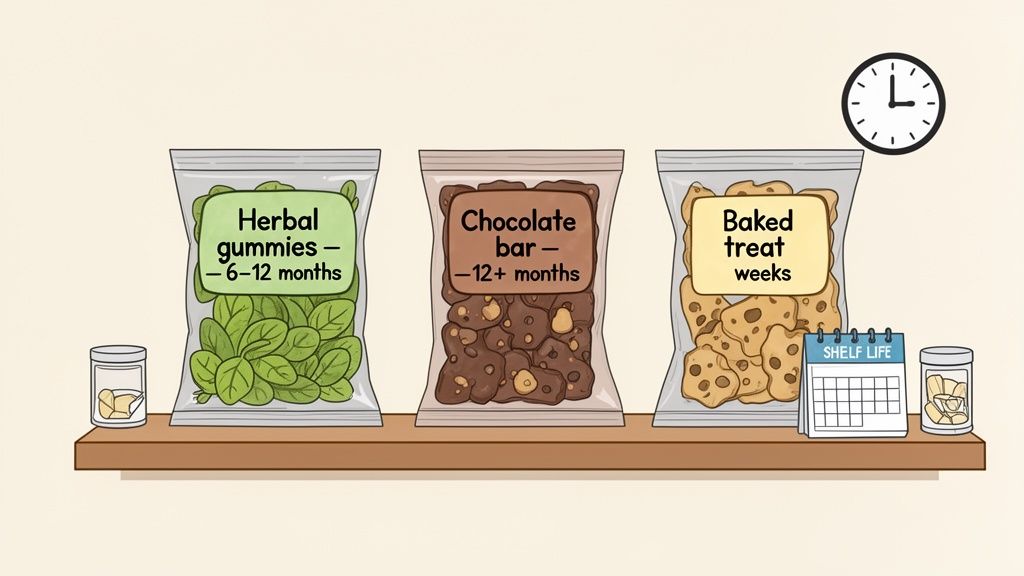
Knowing how long your edibles will stay fresh and potent is key to getting a consistent, enjoyable experience every time. The idea of an edible "going bad" is actually a two-part story: there's food spoilage, and then there's potency loss. One impacts safety, the other affects your high.
Think of it like this: a professionally made gummy is a lot like a sealed jar of jam. It's formulated with stable ingredients designed to last. A homemade brownie, on the other hand, is like fresh bread from the bakery—it has a much shorter window before it gets stale or, even worse, grows mold.
The real difference-maker is the ingredient list. Anything with a lot of moisture or perishable stuff like eggs, butter, and milk is basically an open invitation for bacteria and mold. That’s why homemade treats or fresh-baked goods from a dispensary have a much shorter shelf life, often just a few days to a week.
On the flip side, edibles with low moisture and natural preservatives are built to last. This category includes:
When we talk about an edible's expiration, we're really juggling two questions. First: Is it safe to eat? Second: Is the THC still active enough to work? Both are crucial for a good experience.
To make it simple, here’s a quick-reference guide to the typical shelf life for different types of edibles, assuming they're stored under ideal conditions. This should give you a good baseline for what to expect from your favorite products.
Typical Shelf Life of Common Cannabis Edibles
| Edible Type | Estimated Shelf Life (Ideal Conditions) | Key Factors |
|---|---|---|
| Gummies & Chews | 6-12 Months | Low moisture, sugar content, airtight packaging |
| Chocolates | 6-12 Months | Low moisture, fats, cocoa solids |
| Hard Candies | 12+ Months | Very low moisture, stable sugar structure |
| Baked Goods | 3-7 Days | High moisture, dairy, eggs, fats |
| Tinctures & Oils | 1-2 Years | Carrier oil stability, minimal ingredients |
| Infused Drinks | 3-6 Months (unopened) | Preservatives, pasteurization, packaging quality |
This table gives you a great starting point. Keep in mind that state regulations often add another layer of guidance. For example, Nevada's Cannabis Control Board recommends a 6-month shelf life for gummy products, a timeline based on both food safety data and the rate at which THC degrades. This kind of structured approach helps ensure everyone gets a safe, predictable product.
When you ask, "how long are edibles good for?" you're actually asking two different questions. The first is about food safety, and the second is about getting the experience you paid for. The key is understanding the difference between food spoilage and potency loss to know if that forgotten edible is still good to go.
Think of it this way: potency loss is like a phone battery slowly losing its charge over a year. The phone still works, but it won’t hold a charge as long as it did brand new. An old edible might be perfectly safe to eat, but it just won't deliver the same effects.
Food spoilage, on the other hand, is like finding mold on a piece of bread. It’s no longer safe to eat, period. The same goes for edibles. If the food ingredients have turned, it's a food safety issue, and you need to toss it.
Potency degradation is just a natural chemical process. The main psychoactive compound, THC, is sensitive to its environment. Over time, things like heat, light, and oxygen cause THC molecules to break down and convert into other cannabinoids—most often cannabinol (CBN).
This isn't an overnight thing. You won't open a package one day and find all the THC has vanished. Instead, its concentration just slowly dwindles, which changes the edible's effects.
Key Points on Potency Loss:
This chemical slide is why good manufacturers put a "best by" date on their products. It's not a wild guess—it's an estimate based on data for how long the product will maintain its labeled potency under the right storage conditions.
An edible losing potency is like a fine wine aging past its prime—it’s not spoiled, but it has lost the complex character you were hoping for. The fundamental structure is there, but the magic has faded.
Food spoilage is much more straightforward. It’s the same thing that happens to any regular food in your kitchen. Bacteria, mold, and yeast are the culprits, and they love environments with moisture and nutrients.
This is exactly why a homemade "special" brownie has a much shorter shelf life than a gummy from a dispensary. That brownie is packed with ingredients like butter, eggs, and flour, creating a perfect breeding ground for microbes.
In contrast, products like Melt's high-potency gummies are formulated for a much longer life. They rely on ingredients that are naturally more stable:
Because of this, gummies and hard candies can stay safe and potent for 6 to 12 months or even longer when stored correctly. You can't say the same for baked goods, which might only last a few days. Always trust your senses—if an edible looks, smells, or feels off, it's better to be safe than sorry. Throw it out.
So, what really dictates how long an edible is good for? It's not just a random date on a package—it's a blend of chemistry and environment. To get a real handle on an edible's lifespan, we need to look at four key things: the food ingredients, the cannabinoids themselves, the packaging, and how you store it at home.
Think of it like a fresh apple. An apple left on the counter will go bad way faster than one sealed in a bag in the fridge. The apple is your edible, and the bag and fridge are the protective layers slowing down its inevitable decay. Professional edibles use this exact logic, building products designed to last from the inside out.
The single biggest factor in an edible's shelf life is what it's made of, especially its moisture content. Ingredients with a lot of moisture—like milk, butter, and eggs—are a breeding ground for mold and bacteria. This is exactly why your homemade pot brownies or those fresh-baked dispensary cookies only last a few days before they get sketchy. They're perishable food, first and foremost.
On the flip side, products built for a longer shelf life use stable, low-moisture ingredients.
This is why professionally made products like Melt's gummies can have a shelf life of 6 to 12 months, while a homemade treat is lucky to see the end of the week. The science is simple: less water means less room for spoilage.
Beyond the food ingredients, the active compounds—the cannabinoids—are on their own ticking clock. THC isn't an infinitely stable molecule. It naturally breaks down over time when exposed to its three biggest enemies: heat, light, and oxygen. This isn't an overnight thing; it's a slow, steady chemical transformation.
As THC degrades, it often converts into another cannabinoid called cannabinol (CBN). CBN isn't harmful, but it's way less psychoactive and is mostly known for making you feel sleepy. That means an old edible might not give you that fun, uplifting vibe you were hoping for. Instead, it might just make you want to take a nap.
The journey from THC to CBN is a natural part of an edible's lifecycle. It's a gradual shift, not a sudden loss. Understanding this helps you manage expectations for older products—they might be safe to eat but offer a very different effect.
Packaging is your edible's first line of defense against everything that wants to degrade it. It’s the difference between a product lasting a few weeks and one lasting a full year. Think of it as a high-tech fortress protecting a valuable asset.
That flimsy plastic baggie you sometimes get from a dispensary? It does next to nothing to stop oxygen and light. Professional packaging, however, is engineered to create a stable little micro-environment.
When you see an edible in a resealable, opaque Mylar bag, you're looking at a product that was designed from the ground up for maximum longevity.
The final piece of the puzzle is you. Even the best-made, best-packaged edible will go downhill if you leave it on a sunny windowsill or in a hot car. You have direct control over the three variables that will make or break your edible's shelf life.
The enemies are always the same: heat, light, and oxygen. Keep them in check, and you're golden. For many edibles, using fats like coconut oil as the infusion base helps protect the THC molecules, making the final product more stable. If you want to dive deeper into that, check out our guide on coconut oil infusion techniques.
Did you know that THC edibles don't just "expire" overnight? They gradually lose their punch. Studies have pinpointed about a 10% degradation rate over 12 months for the THC molecule itself under ideal conditions. This benchmark, which was adopted in Nevada's 2018 shelf-life bulletin, sets a hard cap of one year for all edibles, guiding everything from hard candies to cereal treats. Oxygen exposure is a major factor, slowly converting THC to CBN and altering the edible's effects after about six to twelve months. You can learn more about these THC shelf-life findings on CornbreadHemp.com.
Knowing how to store your edibles isn't just a suggestion—it's the single most important factor in keeping them fresh, potent, and safe. The right environment protects against both cannabinoid degradation and good old-fashioned food spoilage.
Think of it as protecting your investment. A few simple steps can be the difference between a three-month shelf life and a full year of reliable effects. This is your playbook for preserving the flavor, texture, and potency of everything from gummies to brownies.
No matter what kind of edible you have, its lifespan comes down to defeating three environmental enemies: light, air, and heat. Get these under control, and you’ll dramatically extend the life of your stash.
Your goal is to create a cool, dark, and airtight home for your products. For shelf-stable items like gummies and hard candies, a pantry or cabinet drawer is perfect. They’re naturally dark and keep a consistent temperature away from the sunny, warm spots in your home.
This simple decision tree breaks down the key factors for keeping your edibles at their best.
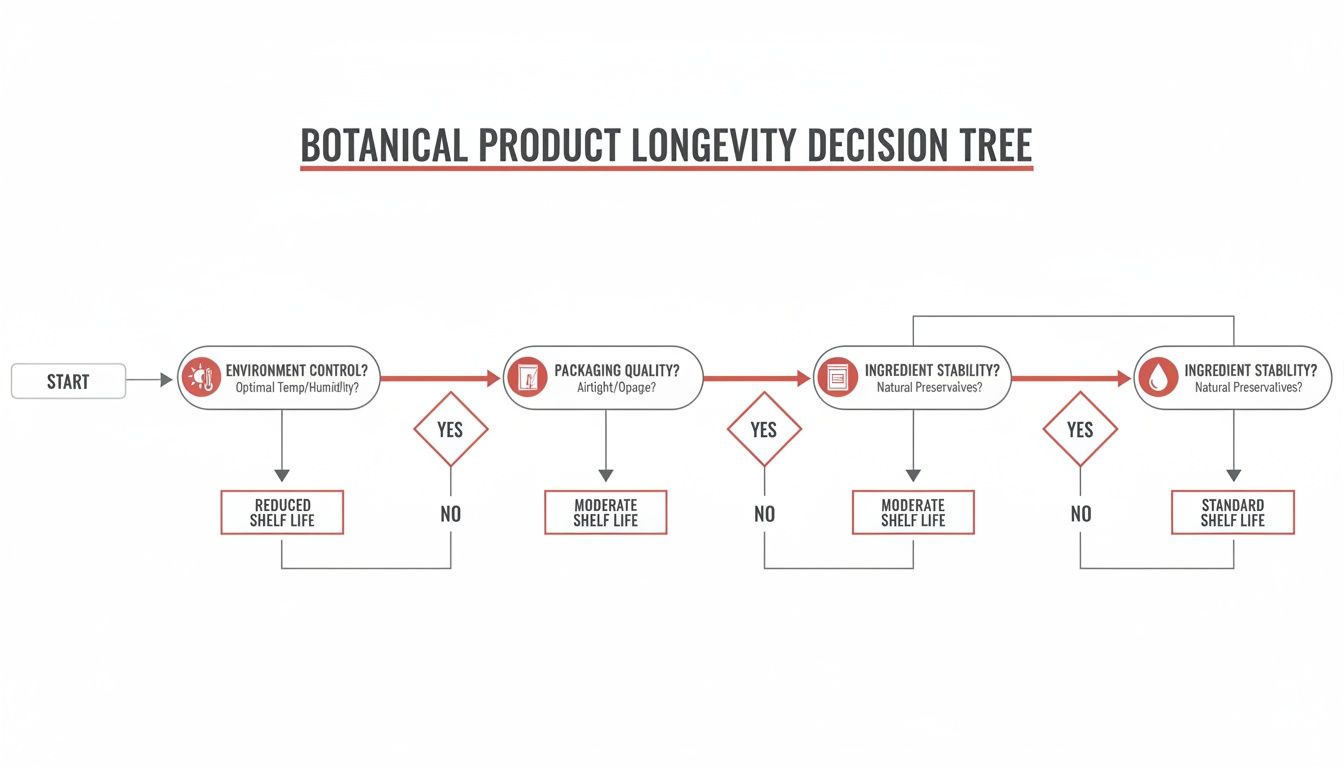
As you can see, controlling the environment with the right packaging is your first and best line of defense. It directly impacts how stable the ingredients inside remain over time.
Not all edibles are created equal, and their storage needs reflect that. A gummy requires a different game plan than a brownie to stay fresh. Let's break down the best practices for the most common products.
These are the marathon runners of the edible world, thanks to their low moisture content. The best way to store them is also the easiest.
Baked goods are a different story. They’re perishable and have a much shorter shelf life, so proper storage is non-negotiable.
Still not sure whether to use the pantry, fridge, or freezer? Each has its place, depending on what you’re storing and for how long. This table breaks down the pros and cons to help you make the right call. For a deeper dive on specific products, our guide to chocolate weed edibles offers more tailored advice.
| Storage Method | Best For | Pros | Cons |
|---|---|---|---|
| Pantry/Cabinet | Gummies, chocolates, hard candies, tinctures | Easy access; stable temperature; maintains original texture | Not suitable for perishable items like baked goods |
| Refrigerator | Baked goods (short-term), opened beverages, some chocolates in warm climates | Slows microbial growth; extends freshness of perishables by a few days | Can introduce moisture/condensation; may alter the texture of some gummies or chocolates |
| Freezer | Baked goods (long-term), homemade edibles, bulk purchases | Massively extends shelf life; halts nearly all degradation and spoilage | Requires proper wrapping to prevent freezer burn; thawing is required before consumption |
Ultimately, matching the storage method to the edible type ensures every dose is as good as the first. A little effort goes a long way in preserving both your money and your experience.
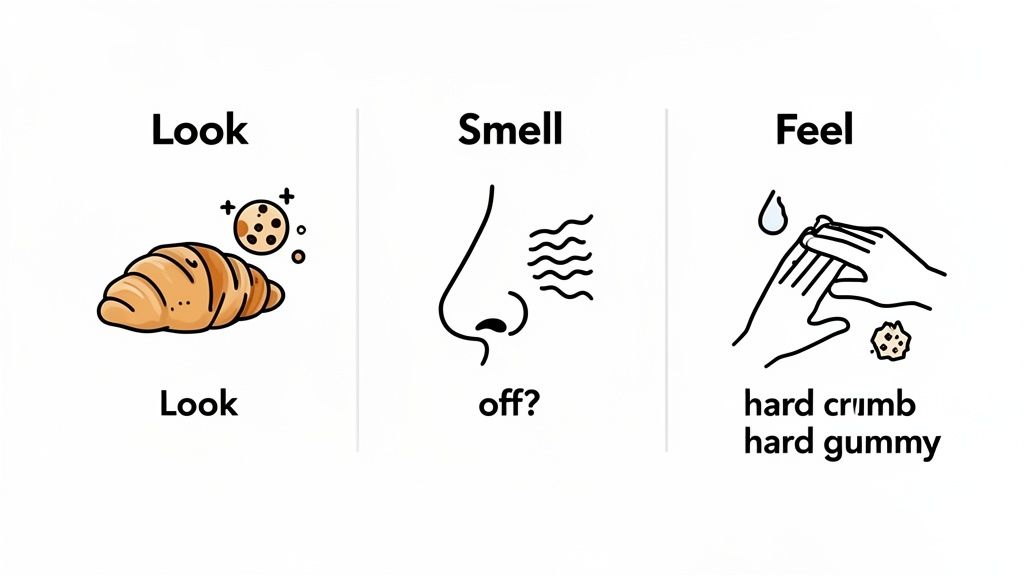
You found an old edible stashed away and now you're wondering—is this still good? The great news is you don’t need a fancy lab to figure it out. Your own senses are the best tools you have. A quick check can tell you if it's just lost some punch or if it's genuinely spoiled and unsafe to eat.
It’s really about spotting the difference between cannabinoid degradation and food spoilage. An edible that’s just less potent might give you a milder, sleepier buzz. But one that's gone bad could actually make you sick. That distinction is key.
Start with your eyes. A simple visual check is the fastest way to spot the most obvious red flags that an edible is officially past its prime. Get it under some good light and take a close look.
If you see even a hint of mold, the decision is easy: toss it. No buzz is worth getting sick over.
Your nose knows. It's an incredibly powerful tool for detecting spoilage, especially when it comes to the oils and fats common in edibles. When those ingredients go rancid, they give off a distinct, unpleasant odor that’s impossible to ignore.
Hold the edible up and give it a sniff. You’re trying to catch any "off" smells that just don't belong.
An edible should smell like its intended flavor—fruity, chocolatey, or sweet. If it smells sour, musty, or like old cooking oil, that’s a clear signal that the food ingredients have spoiled.
The final test is all about texture. How an edible feels can tell you a lot about its freshness. This is especially true for gummies. For more specifics on this popular treat, check out our guide, Do Gummies Expire?.
Here’s what you should be paying attention to:
At the end of the day, food safety follows one simple rule: when in doubt, throw it out. Trusting your senses is the most reliable way to make a smart call on that questionable edible.
Let's clear up some of the most common questions people have about how long their edibles really last. Getting these answers right helps you keep your stash safe and effective.
This is the big one, and it really depends on why the edible is "old." There are two things that can happen.
First, the fun part can fade. If an edible has just lost potency from sitting around too long or being exposed to light and air, it won't be as effective. The THC slowly converts to CBN, which might make you feel more sleepy than high. It's a quality issue, not a safety one—it won't make you sick, but it might not deliver the experience you wanted.
Second, the food itself can spoil. If you see mold growing on a brownie or notice a weird, rancid smell from a cookie, then it can absolutely make you sick. Treat it like you would any other expired food. Always give your edibles a quick once-over before you dig in.
Yes, they matter a lot. That "best by" date from a legit brand isn't just a suggestion; it's your best guide for both safety and potency. It's based on real stability testing to figure out how long the product stays good under the right conditions.
While some well-made edibles might be okay a little past their date, you can expect the effects to be weaker. Sticking to the date is the best way to make sure you get the safe, consistent, and potent experience you paid for.
Freezing is an awesome move for extending the life of many edibles, especially baked goods. It basically hits pause on any nasty microbial growth and seriously slows down cannabinoid degradation.
But it’s not a time machine. A frozen brownie might be safe to eat a year later, but freezer burn can mess with the texture, and the THC will still break down over time, just much more slowly. For the best results, use a vacuum sealer or a proper airtight container. Plan to use your frozen stash within 6 to 12 months for the best quality and potency.
Ready for edibles designed for freshness and a consistent, full-body high? The team at Melt crafts high-potency gummies like our 1000 mg sour belts and worms with stable ingredients and premium packaging to keep every dose as good as the first. Check out the full collection at https://meltofficial.com.
Your cart is currently empty.