



Free Shipping All Orders Over $95
The core difference between rosin and resin is refreshingly simple: rosin is solventless, extracted using only heat and pressure, while resin relies on chemical solvents like butane to pull out cannabinoids. That single distinction sets the stage for everything else, framing your choice as one between artisanal purity (rosin) and potent, efficient extraction (resin).
As you dive into the world of premium hemp and THCA concentrates, you’ll see "rosin" and "resin" everywhere. While they sound similar, they represent two totally different philosophies. Getting a handle on these differences is the first step to picking the right product for your taste, purity standards, and desired experience.
Rosin is the champion of all-natural, mechanical extraction. Think of it like making cold-pressed olive oil—no chemicals, just pure force. This approach preserves the plant's complete, unaltered profile of cannabinoids and terpenes, just as nature intended.
On the other hand, resin production is a lab-based process rooted in chemistry. It uses solvents to efficiently strip all the good stuff from the plant material. It's incredibly effective, but it adds a critical final step called "purging," where any residual solvents are removed to ensure the final product is clean and safe to consume.
This decision tree helps visualize the choice: are you chasing purity and a natural process, or are you after maximum potency and efficiency?
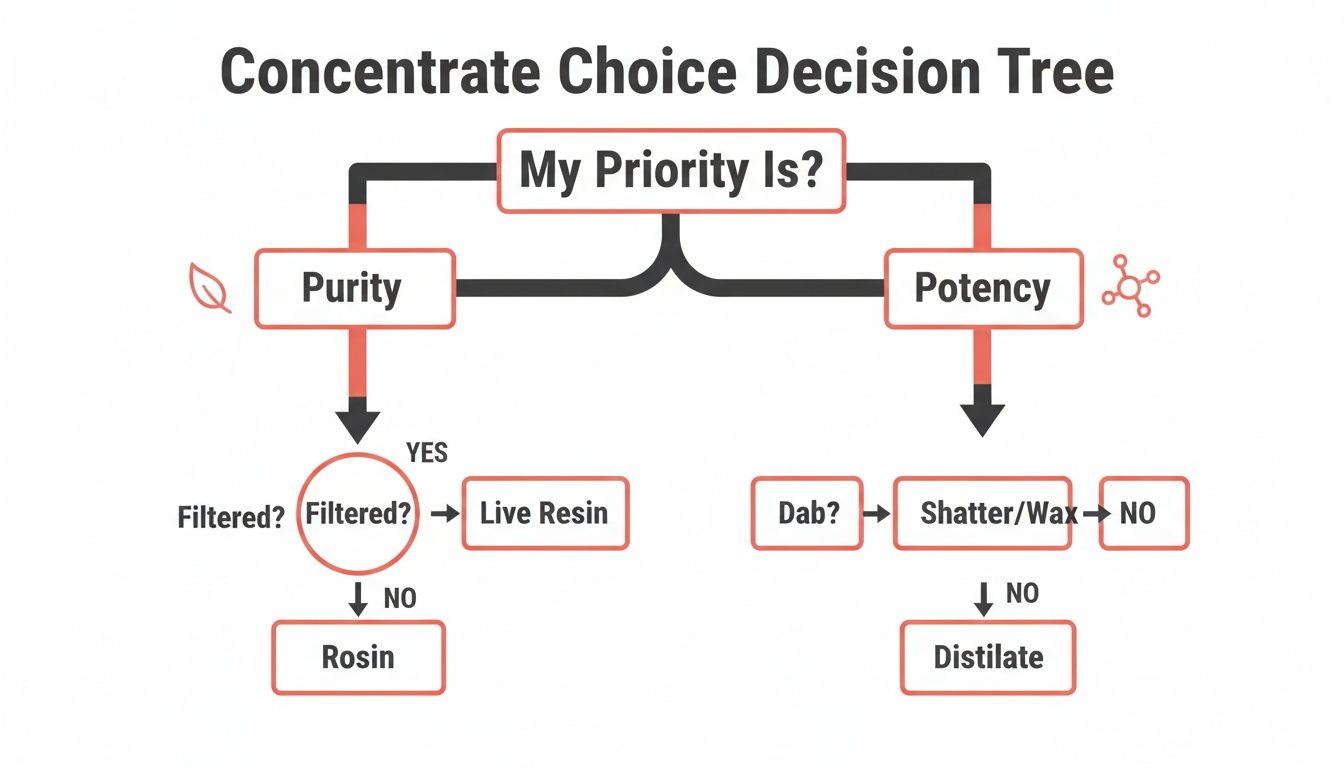
As you can see, if purity is your top priority, rosin is the most direct route. If sheer potency is the goal, you’ll often find yourself looking at resin-based options.
To make this even clearer, let's put the key characteristics of each concentrate side-by-side. This table gives you a quick snapshot of what defines each product, helping you see where your own preferences land.
| Characteristic | Rosin | Resin |
|---|---|---|
| Extraction Method | Solventless (Heat & Pressure) | Solvent-Based (e.g., Butane, CO2) |
| Starting Material | Flower, Kief, or Hash | Trim, Shake, or Whole Flower |
| Purity | Completely free of solvents | Requires purging to remove solvents |
| Flavor Profile | True-to-plant, nuanced, and full-spectrum | Potent and bright, especially in "live" versions |
| Typical Potency | High, but valued for the entourage effect | Often achieves higher peak THC/THCA levels |
| Cost | Generally more expensive due to lower yields | More affordable and widely available |
| Consumer Profile | Purists, connoisseurs, flavor-chasers | Value-conscious users, potency seekers |
Ultimately, your decision in the rosin vs. resin debate comes down to what you value most in a concentrate. Rosin delivers an unadulterated expression of the source plant, while resin provides a powerful and accessible experience built on chemical precision.
The core difference between rosin and resin starts with how they’re made. These two concentrates come from totally different schools of thought—one is all about mechanical purity, while the other is built on chemical efficiency. Getting a handle on these methods is the key to understanding why each one offers such a unique experience.
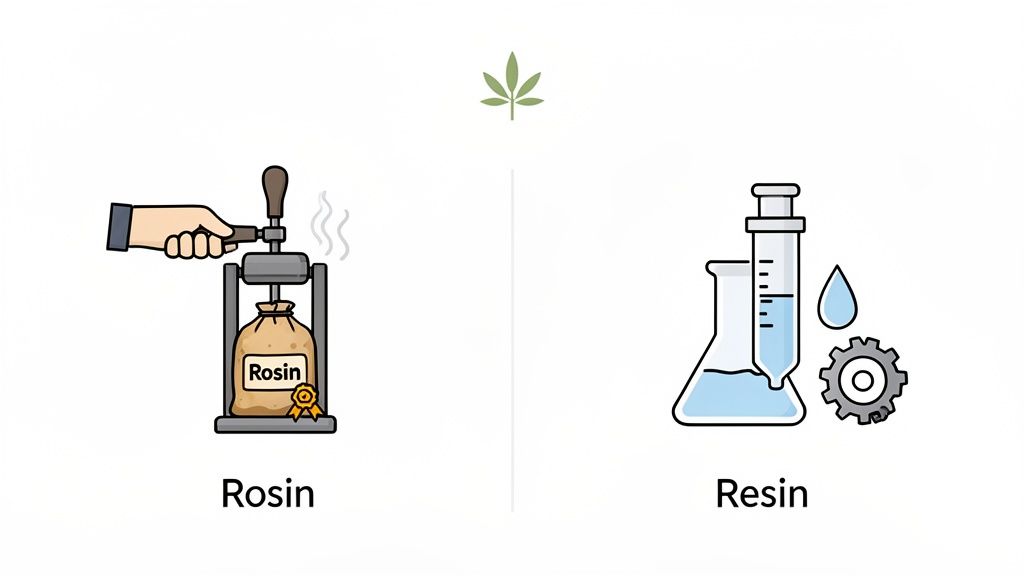
This isn’t just a technical detail; it shapes everything about the final product, from its flavor to its potency. Each approach speaks to different priorities, forcing a choice between natural craftsmanship and high-powered precision.
Rosin extraction is a solventless method that only uses two things: heat and pressure. It’s like a high-tech juicer for cannabis, carefully squeezing out the plant’s precious oils without adding any foreign chemicals. This artisan approach guarantees the final product is a pure, untouched expression of the starting flower.
The process itself is simple, but it demands real skill and top-shelf material:
This mechanical separation is prized for its purity. Since no chemicals are ever used, there’s zero chance of leftover solvents, making it the top choice for anyone wanting a completely natural product.
The beauty of rosin is in its simplicity. The final concentrate has nothing in it that wasn't already in the plant, giving you a true-to-flower experience that's both powerful and incredibly clean.
The quality of rosin is a direct reflection of the flower it came from. Great flower makes for amazing rosin, while mediocre starting material will always lead to a disappointing result. This is a big reason why good rosin often comes with a higher price tag.
Resin, on the other hand, is a product of chemical engineering. This method uses solvents to strip cannabinoids and terpenes from the plant material with incredible efficiency. The most common solvents are hydrocarbons like butane (BHO) and propane (PHO), or sometimes CO2. This technique can pull a huge amount of active compounds from a lot of plant matter at once.
The solvent-based process is more involved and demands a professional lab setting:
While "chemical solvent" might sound a bit intense, a safe, high-quality resin all comes down to a proper purge. Reputable producers use sophisticated equipment to make sure their products meet strict safety standards, with lab reports to prove that any residual solvents are far below acceptable levels.
This efficiency allows labs to create a huge variety of textures, like sticky sauce, sugar, and brittle shatter. It also means they can use more parts of the plant, like trim, making resin more affordable and widely available. That scalability is exactly why resin is so common on the market today.
When you’re at the counter staring down a menu of concentrates, it’s easy to let one number dictate your choice: the THC percentage. Resin products, especially those made with hyper-efficient solvents, often flash sky-high THCA numbers that grab your attention. But real potency is so much more than that.
The true power of a concentrate isn’t just about its main psychoactive compound. It’s about the entire chemical symphony happening inside. This is where you have to understand full-spectrum extracts and the entourage effect to really get the difference between rosin and resin.
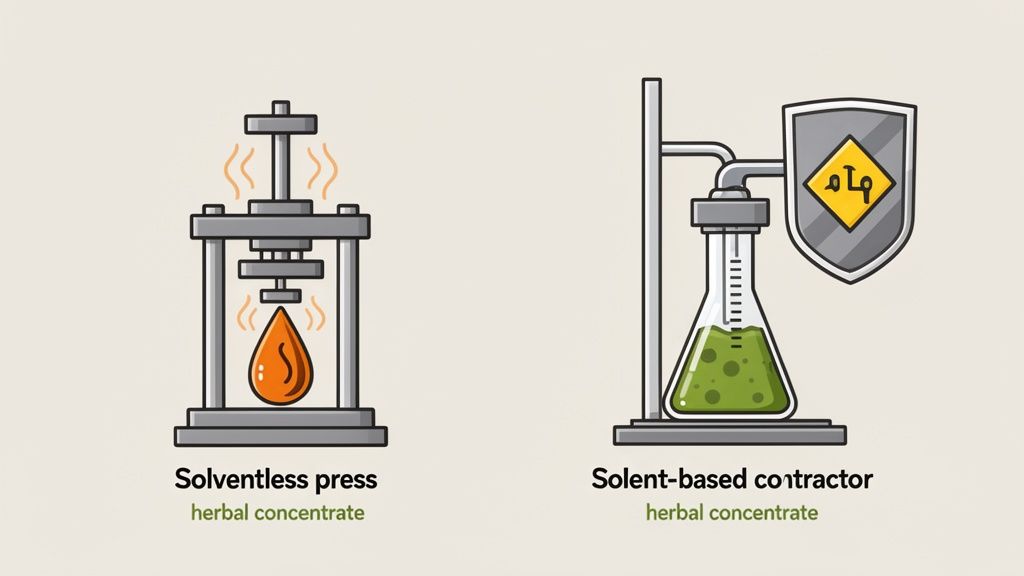
Solvent-based resin extraction is ruthlessly good at isolating and concentrating specific cannabinoids like THCA. That’s why you’ll see products like shatter or diamonds pushing potency levels well over 85% or even 90% THCA. It’s a clean, direct, and predictable high driven almost entirely by that one molecule.
Rosin, on the other hand, usually clocks in with a slightly lower total THC percentage. Its solventless process isn’t about isolating one thing; it’s about preserving everything from the original plant. You get a rich mix of other cannabinoids—like CBD, CBG, and CBN—plus a full-bodied array of terpenes.
While resin often wins the race for the highest THC number, rosin delivers a more holistic and nuanced experience. The entourage effect from its full-spectrum profile can feel more potent and well-rounded than a resin with a higher THC percentage.
This is a critical distinction. A resin with 90% THCA might give you a sharp, intense peak, while a rosin with 75% THCA plus a rich blend of other compounds often delivers a deeper, longer-lasting, and more complex effect that many connoisseurs swear by.
The entourage effect is the idea that all the compounds in cannabis work together to create an experience that’s greater than the sum of its parts. Terpenes don’t just add flavor; they can shape the high. Minor cannabinoids contribute their own unique therapeutic and experiential effects.
So when you're choosing, think about what you’re after. Do you want the straightforward, high-octane impact of pure THCA, or do you prefer a more layered experience that engages your whole system?
The only way to know what you’re really getting is to check a verified Certificate of Analysis (COA), or lab report. Any reputable brand will have these ready for you. When comparing rosin and resin, don’t just stop at the big number on the front.
Here’s what to look for:
Ultimately, navigating the potency debate means becoming a smarter consumer. Learn to look past the headline THC number and appreciate the full cannabinoid and terpene profile. It’s how you choose concentrates based on the holistic experience you want, not just raw power.
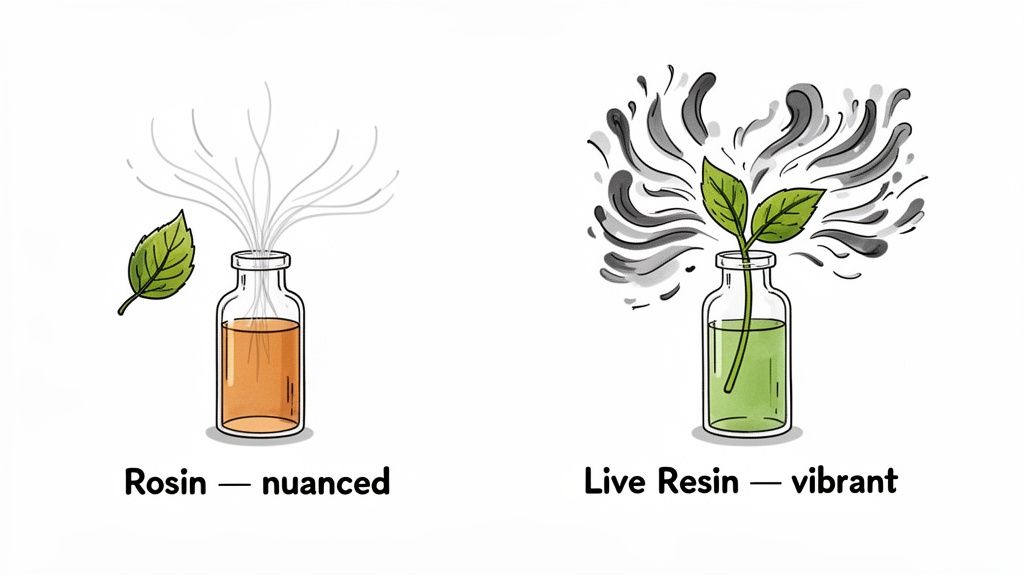
When it comes to cannabis concentrates, the rosin vs. resin debate often boils down to one thing: the sensory experience. For a lot of us, the aroma and flavor—driven by compounds called terpenes—are just as crucial as the potency. This is where the extraction method really shines, creating two very different, but equally incredible, flavor profiles.
The choice isn't about which one is flat-out better. It's about what you're in the mood for. Are you looking for the pure, unaltered taste of the original plant, or a vibrant, flash-frozen snapshot of its living essence?
Rosin is celebrated for delivering a terpene profile that’s an authentic, unadulterated reflection of its source material. Because it’s a solventless process using only gentle heat and pressure, it preserves the most delicate and volatile terpenes that often get lost or warped during chemical extraction. The flavor is nuanced, complex, and true to the cured flower it came from.
This makes rosin the top choice for purists who want to taste the plant exactly as the cultivator intended. The subtle notes of earth, pine, fruit, and spice are all preserved in their natural harmony.
Think of rosin's flavor like a high-fidelity vinyl record. It captures every warm, rich detail and subtlety of the original performance without any digital alteration, offering a pure and complete listening experience.
Live resin offers a totally different kind of flavor experience—one that is intensely vibrant and pungent. This is because it’s made from plant material that is flash-frozen right at harvest, capturing the terpene profile of the living plant instead of the cured flower. This process locks in a higher concentration of monoterpenes, which are the lighter, more aromatic compounds that usually evaporate during drying and curing.
The result is a bright, sharp, and often "louder" flavor that many find incredibly appealing. It’s a hyper-realistic taste that can be strikingly different from the aroma of the same cured strain.
This distinct approach to preserving terpenes has fueled a massive market. In fact, global demand for these aromatic concentrates is clear, with the rosin and resin market valued between USD 1.66 billion and USD 2.60 billion as of 2024. Market growth is expected to continue, reflecting a strong consumer appetite for high-flavor products. To dive deeper into these market trends, you can explore the full rosin resin market analysis.
So, how do you decide which profile fits your palate? Let’s break down the key sensory differences. This isn't about good versus bad; it's about matching a profile to your preference.
Rosin Flavor Profile:
Live Resin Flavor Profile:
At the end of the day, both rosin and live resin are crafted to maximize the sensory experience—just in different ways. Their ability to deliver rich terpene profiles is a key reason they contribute so significantly to the entourage effect, a theory you can learn more about in our guide to how cannabinoids and terpenes work together. Your choice boils down to a simple preference: do you want the refined complexity of a cured bud, or the vivid intensity of a living plant?
When you're comparing rosin vs. resin, safety and purity are everything. For a discerning user, what's left out of a concentrate is just as important as what's in it. This is where the fundamental split between solventless and solvent-based extraction creates two very different conversations around product safety.
The biggest checkmark in rosin’s favor is its solventless nature. Because it’s made with only heat and pressure, there's zero risk of residual chemical solvents ending up in the final product. You simply can't ingest leftover butane or propane if none was ever used in the first place.
This straightforward purity means the only potential contaminants in rosin come directly from the plant it was pressed from. If the original flower was grown with pesticides or in soil with heavy metals, those undesirable elements could get concentrated right alongside the good stuff. It’s why top-tier rosin producers are obsessive about their source material, only working with meticulously grown, clean-tested flower.
For resin, the entire safety conversation hinges on one make-or-break step: the purge. After chemical solvents like butane have done their job stripping cannabinoids and terpenes from the plant, every last molecule of that solvent has to be removed. Reputable producers use advanced lab equipment, like specialized vacuum ovens, to gently and completely evaporate any remaining solvent.
When done right, this process yields a product that's every bit as pure and safe as rosin. The "if," however, is a big one. If the purge is rushed or done improperly, residual solvents can get left behind. This is exactly why choosing a trusted brand with transparent, up-to-date testing is completely non-negotiable when you're buying resin-based products like shatter, badder, or live resin.
The gold standard for ensuring any concentrate is safe—especially a solvent-based resin—is a comprehensive third-party lab test. This impartial analysis is the only way to be 100% certain a product is free from residual solvents, pesticides, and other junk you don't want.
A Certificate of Analysis (COA) is your best friend for verifying what you're buying is safe and legit. It's an unbiased report from an accredited lab that breaks down a product's exact chemical makeup. Any brand worth your money will make these readily available for every single batch. To see what a high standard of transparency looks like, check out the detailed lab reports provided for Melt products.
When you're looking at a COA for a resin product, here’s what you need to zero in on to confirm its purity:
Ultimately, whether you land on rosin or resin, your safety comes down to the producer's commitment to quality. While rosin offers a kind of built-in peace of mind with its solvent-free process, a properly purged and rigorously tested resin is equally safe. Always demand a COA—it’s the only way to make an informed and confident choice.
When you're weighing your options, two very real factors always come into play: how much it costs and whether you can even find it. The price gap between rosin and resin isn't random—it's a direct reflection of how they're made, the labor involved, and the quality of the starting material.
Rosin almost always comes with a premium price tag, and for good reason. Solventless extraction is a hands-on craft. It's a low-yield process that demands serious skill and time, making it more of an artisanal batch than a massive industrial run.
Plus, you can't fake great rosin. It requires top-tier flower to produce a top-shelf concentrate, meaning producers are already investing in the best material from the get-go. This mix of lower yields, higher labor costs, and expensive raw materials naturally drives the price up for us.
Resin, on the other hand, is built for scale. Solvent-based extraction can chew through huge amounts of plant material—including less-expensive trim and shake—and still pump out a potent, high-quality product. This high-yield efficiency makes the whole operation far more cost-effective.
That efficiency trickles down to the price you see on the shelf. Resin and its cousins, like live resin and shatter, are typically much more affordable and easier to find. For a lot of people, resin is the perfect entry point into high-potency concentrates without the sticker shock.
Choosing between rosin and resin is really about what you value most. Rosin is an investment in pure, artisanal craftsmanship. Resin delivers outstanding potency and flavor at a price that's much friendlier on the wallet.
Today's market is interesting because people want both purity and potency. While resin's accessible price has made it a staple, a growing wave of savvy consumers is creating huge demand for solventless products. This has pushed more brands to master their rosin game, so it's becoming more available—though it definitely remains a top-shelf item.
On a global scale, the market for these products is massive. The Asia Pacific region dominates production, with China alone accounting for around 60% of the world's gum rosin output. This just shows the industrial power behind resin products, which explains why they’re so widespread and competitively priced. You can discover more insights about the rosin resin market to see the full breakdown.
As you shop, think about what you’re really after:
Ultimately, your choice in the rosin vs. resin debate comes down to personal preference. Do you see your concentrate as a craft indulgence or a practical, everyday staple? Your answer will point you straight to the right jar.
Even after a deep dive into rosin vs. resin, some practical questions always come up. This section gives you quick, clear answers to the most common queries, helping you solidify your understanding and shop with confidence.
We'll cover everything from how to use these concentrates to which one might actually feel "stronger" in a real-world scenario.
While "healthier" can be subjective, rosin's biggest advantage is its solventless purity. Because no chemicals are used to make it, there's a 0% chance of residual solvents ending up in the final product. That inherent cleanliness gives a lot of consumers peace of mind.
That said, high-quality resin from a reputable brand is perfectly safe. These products go through a meticulous purging process to remove all solvents—a step that’s always verified by third-party lab tests. When you buy tested resin, you're getting a clean product. Rosin just starts that way by design.
This is a tricky one. If you only look at the THCA percentage on a lab report, resin often looks stronger, sometimes pushing past 90% potency. Its extraction method is incredibly efficient at isolating that single cannabinoid.
However, many experienced users will tell you that rosin feels stronger. This comes down to the entourage effect. Rosin’s full-spectrum profile of cannabinoids and terpenes works together to create a more complex, well-rounded, and longer-lasting high. So while resin might have a higher peak THCA number, rosin often delivers a more profound overall experience.
Yes, for the most part. Both rosin and resin are incredibly versatile and can be consumed using the same methods. The most popular ways to enjoy them include:
Rosin's higher price tag really comes down to three key factors:
Resin, with its efficient, high-yield process, is just more economical to produce. That makes it a more budget-friendly option for many.
At Melt, we believe in providing premium, California-crafted experiences, whether you're exploring our meticulously grown THCA flower or our potent, flavor-packed disposables. Discover the quality and transparency that sets our products apart. Shop the full collection at Melt
Your cart is currently empty.