



Free Shipping All Orders Over $95
You're standing in a shop, comparing a slim, colorful vape with a refillable device that looks more like a small piece of electronics. The disposable seems simple: open the package, inhale, and put it aside when it stops working. But that compact shape hides a battery, a heating system, e-liquid, plastic, and a disposal problem many buyers never consider.
Understanding what is a disposable vape means looking beyond convenience. You need to know what sits inside the casing, why puff counts often disappoint, how disposable and refillable devices differ, and what to do with the hardware when the liquid or battery runs out.
A disposable vape is a self-contained vaping device that combines a pre-filled liquid reservoir, a battery, and a heating system in one housing. Most are draw-activated, so the device detects your inhale and powers the heater automatically. There's no separate tank, coil installation, or liquid bottle to manage.
The word “disposable” can cause confusion. Some products are designed for a single use from the factory, while others may include a rechargeable battery that lets the user consume more of the pre-filled liquid. The defining feature is that the main hardware isn't designed for routine refilling or long-term reuse. Once the liquid, battery, or heating element reaches the end of its usable life, the complete device normally needs replacement.
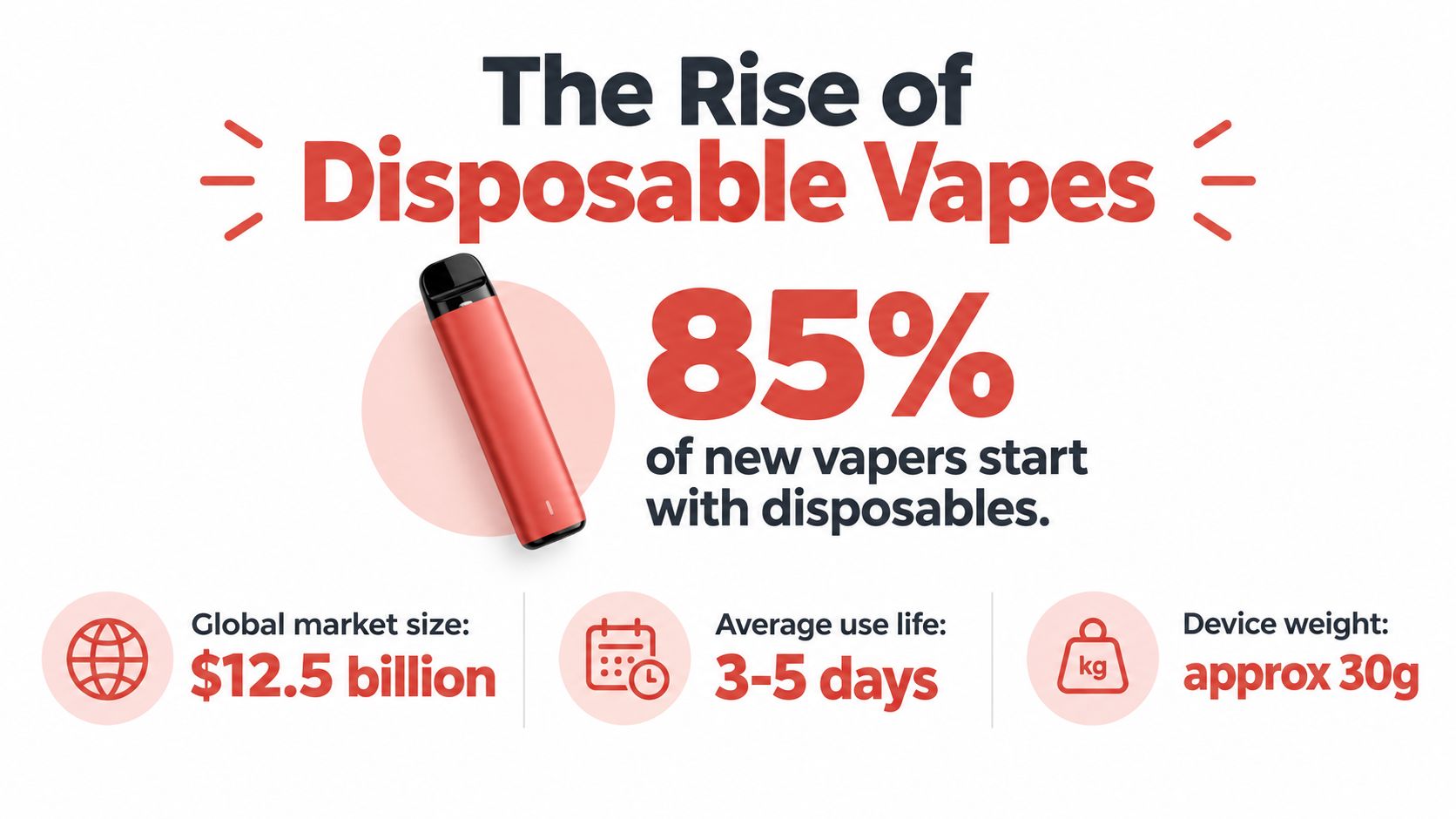
Disposable devices have moved from a relatively minor product type to the leading device category among young people who vape in several major English-speaking markets. In the International Tobacco Control Youth Tobacco and Vaping Survey, disposables were the least commonly used product type in 2017 among past-30-day youth vapers in Canada, England, and the United States. By 2023, they were the leading type in all three markets, reaching 58.5% in Canada, 83.2% in England, and 67.3% in the United States.
That shift matters for adult cannabis consumers because the same all-in-one format now appears in hemp-derived and cannabis-adjacent products. The underlying idea stays the same: the manufacturer pairs the power source and filled cartridge, so the consumer receives a ready-to-use device rather than a collection of separate parts.
The format also scaled quickly in retail channels. A South Carolina public health summary reported a 204.4% increase in tracked disposable e-cigarette sales between February 2, 2020 and June 18, 2023, from 4.1 million units to 12.4 million units. That growth helps explain why convenience, product design, youth access, and waste have become closely connected policy concerns.
A disposable vape looks like one object, but it works as a small system of matched components. The usual arrangement includes a sealed e-liquid reservoir, a lithium-ion battery, and an aerosol generator made from a heating element and wick.
Think of the device as a miniature kitchen appliance. The battery supplies energy, the coil acts like the heating surface, and the liquid reservoir supplies the material being heated. The mouthpiece directs the resulting aerosol toward the user.
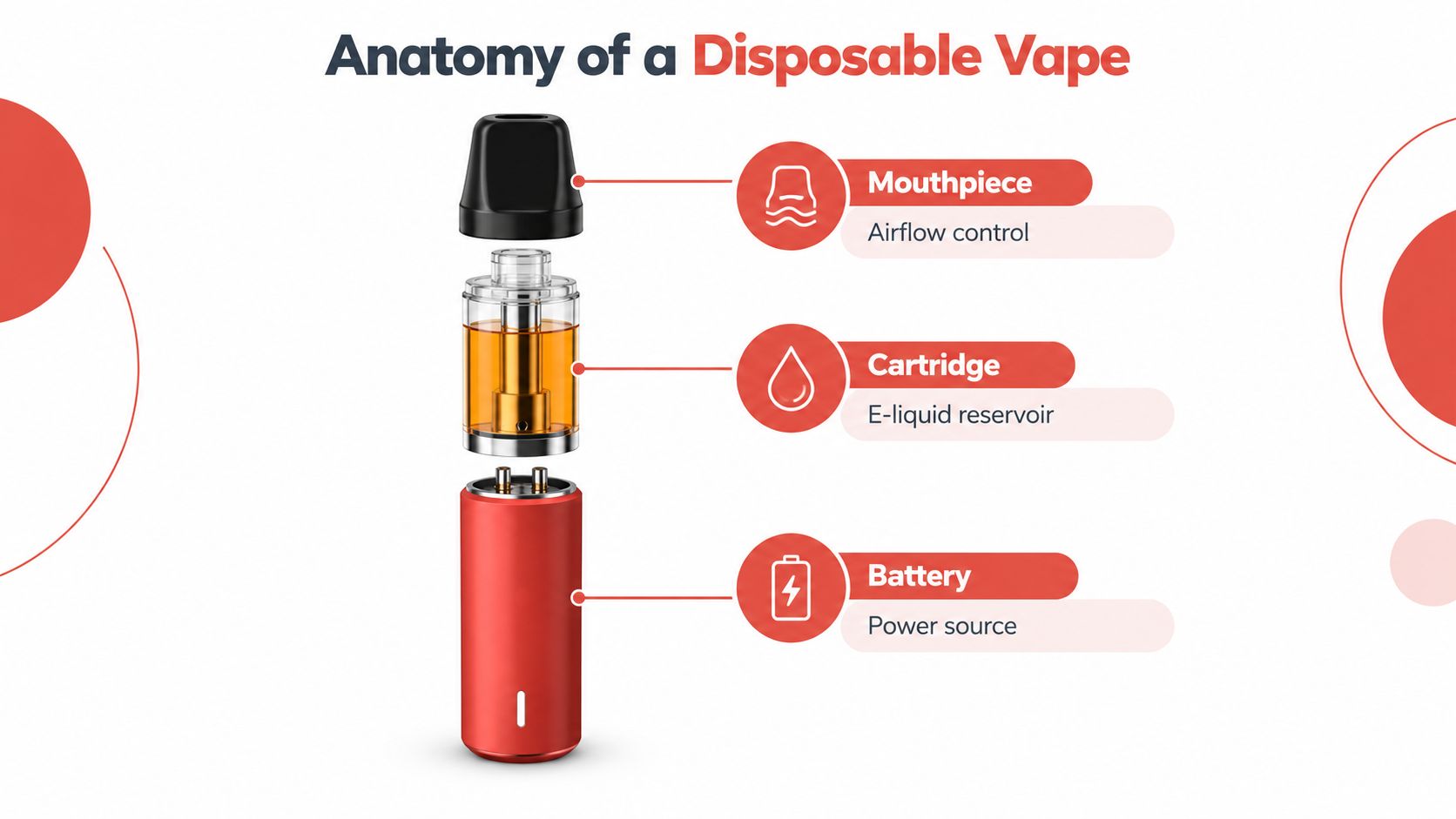
The technical explanation of e-cigarette construction describes the core relationship clearly:
The wick has to remain saturated while the coil heats. If the coil draws more power than the liquid can support, the wick may dry out or scorch. If the battery output is too low, the device may produce weak vapor and muted flavor. The manufacturer therefore has to match coil resistance, battery output, liquid volume, and airflow.
Practical rule: A disposable vape isn't just a container of liquid. It's a carefully matched battery, heater, wick, and airflow system.
The balance also explains why performance changes near the end of a device's life. The battery may still have energy after the reservoir is empty, or the coil may deteriorate before all the liquid has been used. In either case, the device has reached its practical endpoint.
For a broader look at the relationship between power, heat, and airflow, see this guide to how vape pens work.
The choice between a disposable and a refillable device comes down to simplicity versus control. A disposable arrives filled and configured. A refillable pod or cartridge system requires a separate battery, replacement pods or cartridges, and occasional cleaning or charging, but it gives the user more control over the setup.
| Consideration | Disposable vape | Refillable or pod system |
|---|---|---|
| Starting experience | Ready to use | Requires setup |
| Maintenance | Minimal | Requires refilling or cartridge replacement |
| Settings | Usually fixed | May offer adjustable power or airflow |
| Hardware life | The main device is replaced | Battery hardware can be reused |
| Waste profile | More complete devices discarded | Fewer batteries discarded over time |
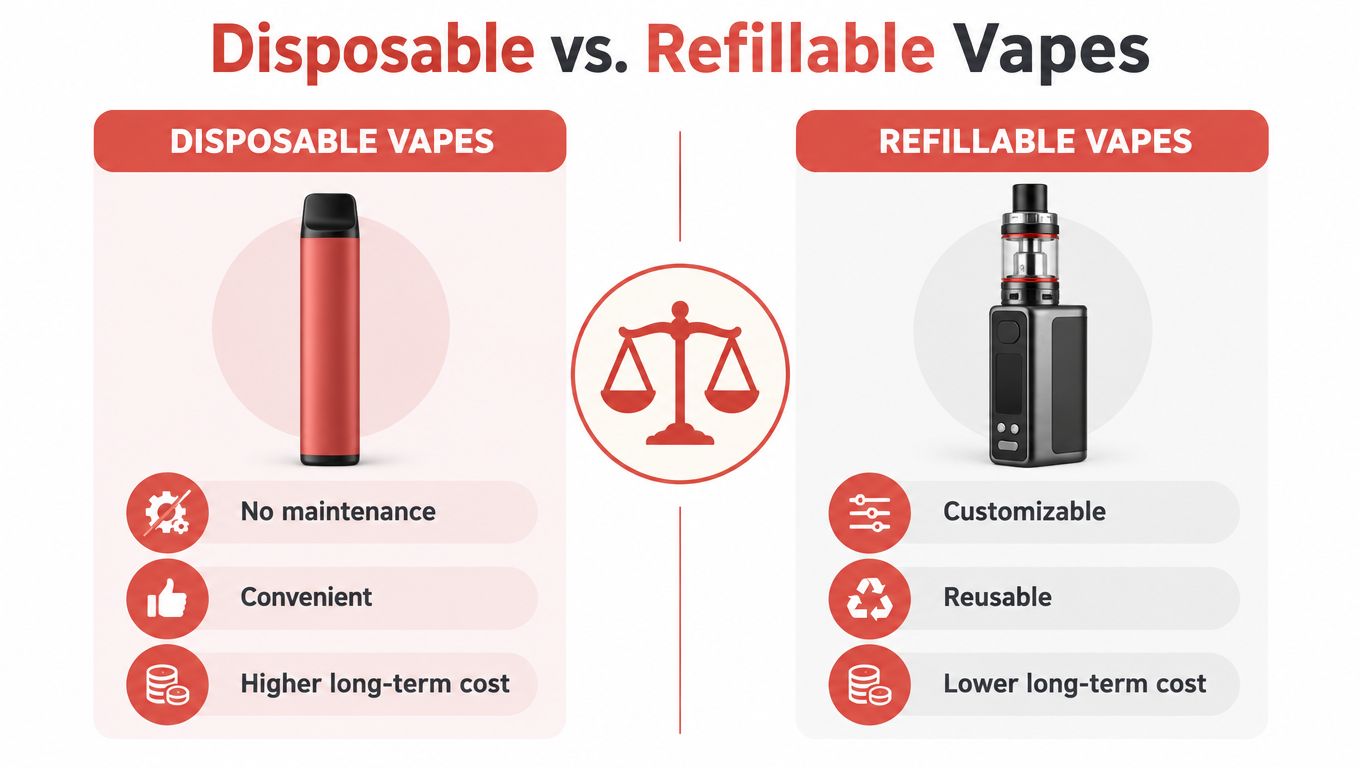
A disposable may suit an adult consumer who wants a compact, pre-filled product and doesn't want to learn voltage settings or maintain a tank. The tradeoff is limited customization. You generally can't change the coil, adjust the power precisely, or keep the battery after the liquid runs out.
A refillable system makes more sense for someone who vapes regularly and values control over airflow, temperature, or liquid choice. The separate battery can remain in service while the user replaces only the empty pod or cartridge. That design can reduce discarded electronics, although it still requires responsible handling of used components.
Neither format removes the need to check local laws, age requirements, product ingredients, and testing documentation. For cannabis and hemp-derived products, buyers should also confirm that the product is permitted where they live and that the package identifies its contents clearly.
The puff number printed on a disposable vape is an estimate, not a promise. Manufacturers typically measure puff ratings with controlled machine draws, while real users may inhale for longer periods. A longer draw uses more liquid and asks more of the battery, much like driving faster can use fuel sooner.
The practical guidance on disposable vape longevity explains why laboratory puff ratings can exceed real-world use. Draw length, airflow, coil design, and user habits all affect the result, so two cannabis or hemp vape users may get different usable life from the same product.
Battery capacity alone cannot predict how long a device will last. Read these details together:
A high-capacity battery may still run down quickly if an aggressive coil consumes power rapidly. A large reservoir may offer little benefit if the coil degrades early or the battery cannot deliver enough power.
Watch for end-of-life signs: weaker vapor, a persistent burnt taste, failed activation, or flashing without aerosol. Stop using the device if it tastes burnt, leaks, becomes unusually hot, or shows physical damage. A sealed vape contains a battery and electronics, so place it aside for appropriate disposal rather than opening or repairing it. For a fuller explanation, read our guide to how long disposable vapes last before deciding whether a device has reached the end of its usable life.
A polished appearance tells you very little about the contents of a hemp-derived vape. Adult consumers should evaluate the formulation, documentation, and hardware as separate parts of the purchase.
Start with the certificate of analysis, or COA. A useful report should identify the tested product or batch and show cannabinoid results alongside relevant contaminant screening. The report should be easy to access and consistent with the labeling on the package. If a seller provides only broad claims without batch information or testing documentation, you have less evidence to evaluate what you're buying.
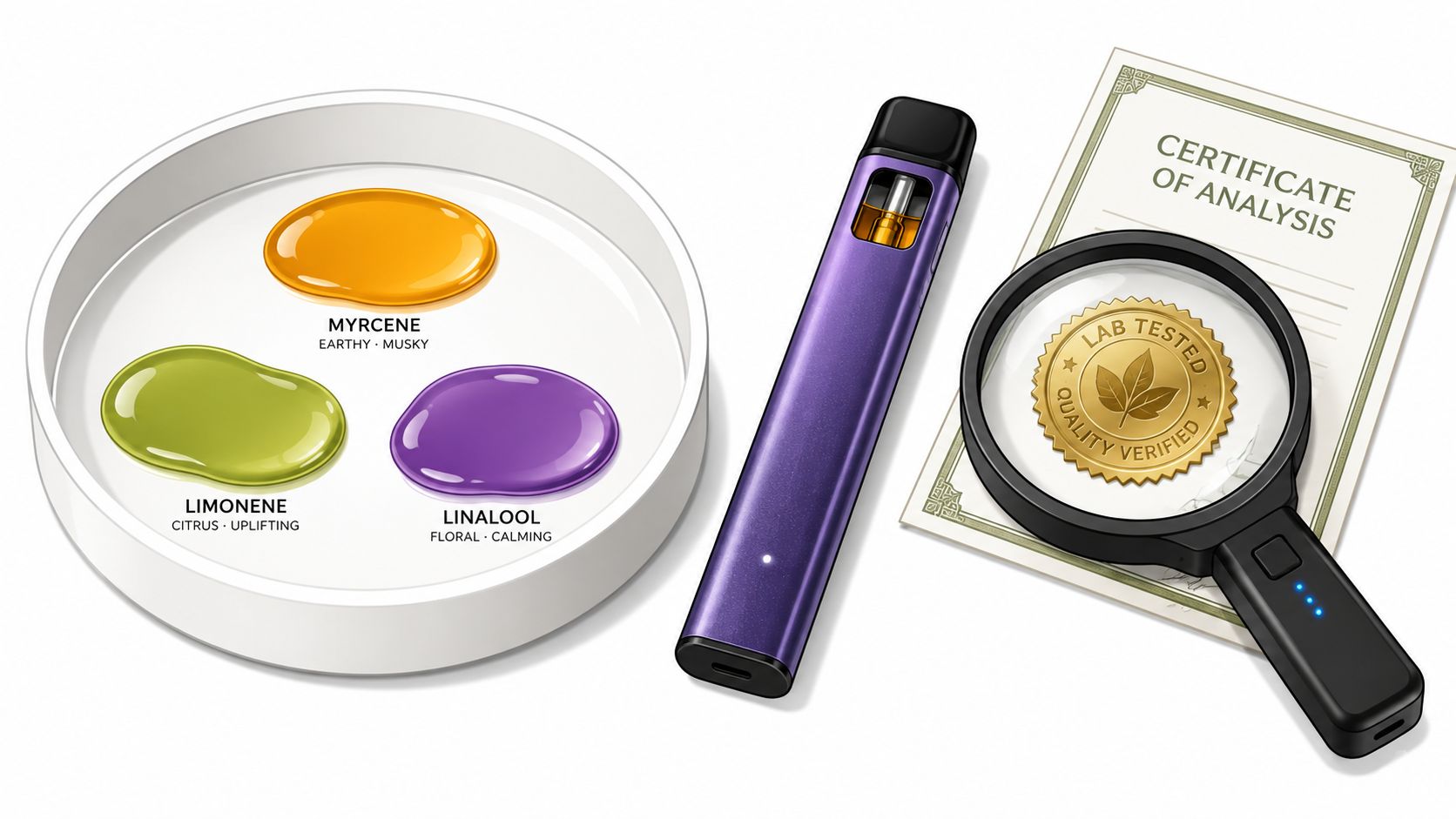
Terpenes help shape aroma and flavor, but a strain name alone doesn't prove that a product will resemble the flower or extract it references. Look for clear information about whether the profile uses cannabis-derived terpenes, botanical terpenes, or a blend. Transparency lets you compare products without treating marketing language as a laboratory result.
Hardware quality matters too. A premium formulation can still perform poorly if the coil overheats, the airflow feels restricted, or the battery and reservoir are poorly matched. Look for a sealed, undamaged device, clear labeling, a consistent mouthpiece, and instructions that explain charging if the model includes a rechargeable battery.
For adult shoppers comparing product formats, a hemp disposable vape guide can help clarify the difference between an all-in-one device and a separate cartridge system. The useful questions remain practical: What's inside, how was it tested, how is it activated, and what happens to the hardware after use?
Avoid treating “premium” as a substitute for evidence. A clean design and strong flavor may improve the experience, but they don't replace age compliance, accurate labeling, third-party testing, or responsible storage.
A used disposable vape isn't ordinary plastic rubbish. It combines a spent lithium-ion battery, electronic components, a plastic shell, and residue from the liquid inside. Treating the whole item like an empty wrapper hides the fact that it remains an electronic product after the last draw.
The Truth Initiative overview of e-cigarette waste describes disposable devices as a combination of plastic waste, electronic waste, and hazardous nicotine residue. That combination creates a disposal challenge because the device contains materials that need different handling but are sealed together.
Lithium-ion batteries can ignite or react when they're crushed, punctured, or damaged. A disposable vape may pass through collection trucks, sorting equipment, or waste facilities where pressure and friction create a problem that wouldn't exist with ordinary household packaging.
The liquid residue presents another concern. Even after the device stops producing vapor, traces may remain in the reservoir or wick. If the device breaks down in an unsuitable disposal environment, residue and metals can enter surrounding waste, soil, or water.
A disposable vape is small in your hand, but it still has the physical characteristics of electronic waste.
The environmental issue isn't limited to nicotine products. Hemp-derived and cannabis-focused all-in-one devices use the same basic combination of battery, heating element, reservoir, and casing. The contents may differ, but the end-of-life hardware still deserves careful handling.
Consumers also face inconsistent instructions. The Public Health Communication Centre briefing on disposable vapes notes the combination of sealed lithium-ion batteries, toxic metals, and persistent plastics. There isn't a standardized U.S. recycling path for every disposable vape, so local guidance matters more than assuming a universal solution.
The safest approach is to treat a used disposable vape as a small electronic device with a battery, not as an empty plastic item. Don't open the casing, crush it, puncture it, burn it, or place it loose in a recycling bin.
The legal answer can vary by location. Some jurisdictions allow certain disposable devices in household trash, while businesses and institutions may face stricter battery and electronic-waste requirements. Permission to place an item in the trash doesn't make that route environmentally preferable, so a specialist program is worth seeking.
Never pour leftover liquid down a drain. Keep the device sealed and ask the receiving facility how it wants leaking or damaged products handled.
A disposable vape is convenient because the manufacturer has already made the decisions for you. The battery, coil, airflow, and pre-filled reservoir arrive as one compact unit, which removes setup and maintenance. That simplicity also means the consumer can't easily replace one failed part or keep the battery after the liquid is gone.
The category's rapid expansion has made the format influential, but convenience doesn't erase its material footprint. A sealed device still contains a lithium-ion battery, electronics, plastic, and liquid residue. Buyers who understand that physical reality can make better decisions about product quality, usage, storage, and disposal.
For adult hemp and cannabis consumers, the evaluation process should stay practical:
Disposable vapes may continue to evolve, but the basic responsibility remains stable. Choose products with clear information, use them only where lawful and appropriate, and keep spent hardware out of ordinary recycling whenever local guidance directs you elsewhere.
Melt offers adult consumers legal hemp-derived products, including all-in-one disposable devices, with product information and testing resources to review before purchase. Visit Melt to compare available options and make a more informed choice about both the formulation and the hardware you take home.
Your cart is currently empty.