



Free Shipping All Orders Over $95
It's one of the oldest questions in cannabis culture: does coughing really get you higher?
The short answer is no, but it sure can feel that way. That intense head rush you get after a massive cough isn't a sign of more THC flooding your system. It's a physiological trick—a perfect storm of oxygen deprivation and sudden pressure changes that just happens to coincide with your hit.

To really get what's going on, you have to separate the myth from the reality. The powerful, lightheaded feeling from a harsh cough isn't from supercharged THC absorption. It's a complex physical reaction that tricks your brain into thinking the high just got stronger.
We're here to clear the smoke on this common myth. Understanding what’s actually happening in your body helps you aim for a better, more controlled experience—especially when you're enjoying premium products like Melt's THCA flower and vapes. The goal is a great high, not a hacking cough.
Let's break down the common belief versus the scientific explanation. This quick comparison gets right to the heart of the misunderstanding.
| The Common Belief (Myth) | The Physiological Reality (Fact) |
|---|---|
| A strong cough forces more THC into your lungs and bloodstream. | The "rush" is from a lack of oxygen and sudden blood pressure changes, not more cannabinoids. |
| Coughing is a sign that you took a "good" or potent hit. | A cough is your body's alarm system, signaling irritation from hot smoke or vapor. |
| The more you cough, the higher you'll get. | THC absorption happens almost instantly. Coughing afterward just adds physical stress. |
By separating the sensation from the science, you can start focusing on smoother, more efficient ways to enjoy your session.
Key Takeaway: The dizzy, lightheaded feeling from a coughing fit is a temporary state of oxygen deficiency in the brain, which many people mistakenly interpret as a more intense high.
Once you know this, you can focus on what really matters: quality inhalation. Protecting your lungs from unnecessary irritation not only feels better but also ensures you're getting the most out of your product without the discomfort. A great session is all about control and comfort, not how hard you can cough.
To really get why the old "cough to get higher" trick is a myth, you have to appreciate just how incredibly good your lungs are at their job. Your respiratory system isn't some clunky machine; it's more like a high-speed transfer station designed to get cannabinoids like THC into your bloodstream almost instantly.
Think of your lungs as being filled with millions of tiny, delicate balloons called alveoli. These aren't just empty air pockets—they're the VIP gateways to your circulatory system, wrapped in a dense web of microscopic blood vessels (capillaries). The walls of these alveoli are unbelievably thin, in many places just a single cell thick.
When you inhale smoke or vapor, THC molecules make their way down into these alveoli. The second they arrive, they don’t need to be pushed or forced through. They just effortlessly pass through those super-thin walls and get absorbed right into your bloodstream. This whole process, called gas exchange, happens in a split second.
It's like a sponge hitting water. You don't need to slam the sponge down to make it absorb the liquid; it just soaks it up instantly on contact. Your lungs do the same thing with THC, grabbing the vast majority of cannabinoids within the first few seconds you inhale.
This amazing efficiency is exactly why inhaling is one of the fastest ways to feel the effects of cannabis. The bioavailability—basically, how much of a substance actually makes it into your circulation to have an effect—is way higher when you inhale compared to something like edibles.
This brings us back to the main point: a violent cough does absolutely nothing to improve this already hyper-efficient process. Your lungs have a set capacity for absorption at any given moment. Once the THC from your hit is absorbed, coughing won't magically pull more of it into your system.
Instead of focusing on harsh, lung-busting hits, it’s much smarter to understand what actually influences your high. If you want a deeper dive into how much THC is really in each hit you take, check out our guide on calculating THC per puff. It helps make it clear that a bigger, more painful hit doesn't automatically mean a more potent one. The real mechanics of absorption are far more gentle and quick than most people think, making a smooth inhale the true key to a great session.
So, what’s actually happening inside your body when a harsh coughing fit leaves you feeling dizzy and seeing stars? It turns out, that intense sensation has a lot more to do with basic human physiology than it does with THC. That powerful “head rush” is a totally separate physical event, not a sign that you’re getting a stronger high.
A really forceful, sustained cough triggers a reaction a lot like the Valsalva maneuver—a technique you might see weightlifters use to brace themselves. When you cough that hard, you dramatically crank up the pressure inside your chest.
This sudden pressure spike gives a temporary squeeze to the major blood vessels running to and from your heart. This includes the arteries that are busy supplying your brain with oxygen. For a brief moment, blood flow to your head is significantly choked off.
The moment you finally stop hacking and take that first gasp of air, the pressure in your chest plummets. This lets your blood vessels pop back open, and your heart immediately starts pumping blood back to your brain to make up for the short-lived deficit.
This sudden surge of blood and oxygen is what creates that powerful, lightheaded feeling. It's a temporary state of oxygen deprivation followed by a massive rebound. Since this all happens seconds after you’ve inhaled, your brain easily mistakes this dizzying rush for a more intense high.
To see how your body actually processes vapor, the flowchart below breaks down the key steps from inhalation to circulation.
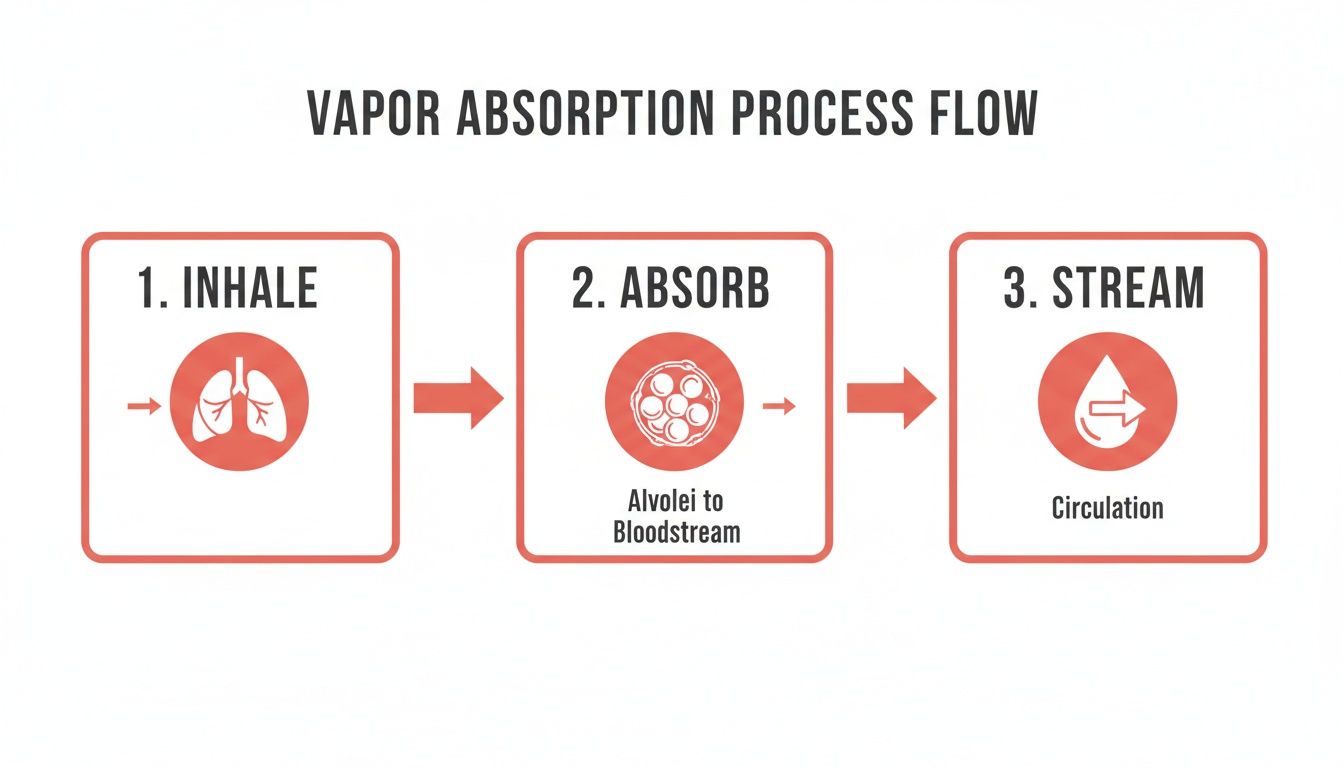
As you can see, it's a pretty streamlined process that works perfectly well without any forceful coughing involved.
The root of this whole misconception is just a case of bad timing. The head rush from the cough and the onset of your high happen at almost the exact same moment, making it incredibly easy to think one is causing the other.
The Key Insight: That dizzy feeling is a direct result of rapid changes in blood pressure and oxygen levels in the brain, not increased cannabinoid absorption. The cough is just a symptom of irritation, and the head rush is your body’s reaction to that physical stress.
At the end of the day, a good session should be smooth and comfortable. Chasing a cough for a bigger rush is totally counterproductive and just leads to an irritated throat and lungs. The temperature of your vapor also plays a massive role in how smooth your hit is. You can dive deeper into this with our guide on finding the best temperature to dab, which is packed with tips to minimize irritation.
Understanding the science helps you focus on what really matters: quality products and smarter habits for a better experience.
Let's tackle another classic piece of cannabis folklore: holding your breath to get higher. The logic seems to make sense—giving your lungs more time with the smoke or vapor must mean more THC gets absorbed, right?
But just like the coughing myth, the science tells a very different story. Your lungs are incredibly efficient, absorbing the vast majority of cannabinoids almost instantly.
So what’s really happening during those extra seconds you hold it in? It has less to do with THC and a lot more to do with oxygen. Holding your breath after a big inhale starves your brain of fresh oxygen, creating that familiar lightheaded, dizzy rush. It’s a physiological trick, not a stronger high.
This is the exact same reason so many people swear that coughing gets them higher. Both a harsh cough and a long breath-hold trigger a state of oxygen deficiency that your brain easily confuses with a more intense buzz.
The whole misunderstanding comes from the idea that your lungs need extra time to soak up all the good stuff. In reality, the transfer of cannabinoids from vapor into your bloodstream happens in a flash—we're talking just a few seconds.
Holding it in longer doesn't boost THC absorption. All you’re really doing is giving more tar and other unwanted byproducts extra time to settle into your lung tissue. You aren't getting higher, just a bigger dose of irritants.
Key Takeaway: The belief that coughing or holding your breath makes you higher is mostly about misinterpreting physical sensations. These actions create temporary lightheadedness from a lack of oxygen, not from more THC absorption.
In fact, there’s zero scientific backing for the idea that these uncomfortable side effects are beneficial. A cough is your body's inflammatory response to irritation, not some secret hack for a better experience. You can dig deeper into how cannabis smoke impacts the respiratory system by exploring official reports on the topic. Discover more insights about respiratory health on ccsa.ca.
Instead of relying on these harsh and ineffective methods, the real key is focusing on smarter inhalation techniques. Here are a few ways to get the most out of your session without putting unnecessary stress on your body:
When you connect the dots, it’s clear that both coughing and breath-holding create the same illusion. They trigger physical sensations that mimic a stronger high without actually increasing the THC absorbed from that puff. A smoother session isn't just healthier—it's also a whole lot more effective.
While that intense head rush from a big cough might feel like part of the experience, it’s really just your body waving a red flag. A harsh, persistent cough isn't a sign of a successful hit—it’s your body’s alarm system telling you something is irritating your respiratory system. Think of it as a defense mechanism, not a bonus feature.
When you inhale hot smoke or vapor, it can agitate the super-delicate lining of your throat and lungs. This triggers an inflammatory response, and that cough is your body’s way of trying to forcefully kick the irritant out and clear your airways. It’s a sign of stress, not better absorption.
Consistently coughing your lungs out isn't just uncomfortable in the moment; it points to ongoing inflammation. Your lungs are trying to protect themselves, but repeated irritation starts to take a toll. This is why aiming for a smooth hit is about more than just comfort—it’s about looking after your long-term respiratory health.
Key Insight: A harsh cough is a side effect of airway irritation, not a shortcut to a more potent high. The goal should always be to minimize discomfort and enjoy the effects responsibly.
Over time, this constant agitation can lead to more obvious symptoms. Your body might start producing more phlegm to shield the irritated tissues, which leads to that congested feeling or a chronic "smoker's cough." These are early signs that your lungs are working overtime to deal with the stress.
While smoking cannabis often causes coughing, research confirms these respiratory issues are side effects, not a way to get higher. These are just your body reacting to the heat and particulates from combustion or vaporization. You can read more about the research on coughing and cannabis here.
Some of the consequences of consistently harsh hits include:
The takeaway is simple: a smooth, comfortable session is a healthy one. Chasing a cough is counterproductive and puts unnecessary strain on your body. By choosing high-quality, clean products like those from Melt and using smarter inhalation techniques, you can avoid the irritation and just focus on the experience itself. A great high doesn't have to come at the expense of your lungs.
Okay, so we've officially busted the myth that a harsh cough gets you higher. Now let's get to what really matters: enjoying a smooth, comfortable, and effective session. The goal here is to minimize irritation, not chase it. Shifting your mindset is the first step to getting the most from your cannabis without all the discomfort.
The whole "cough to get off" idea just isn't backed by science. In fact, research consistently points to the negative respiratory effects of harsh smoke, like chronic cough and bronchitis, but finds no real link between hacking up a lung and getting more intoxicated. You can dig into the findings on cannabis and respiratory effects on pmc.ncbi.nlm.nih.gov if you're curious.
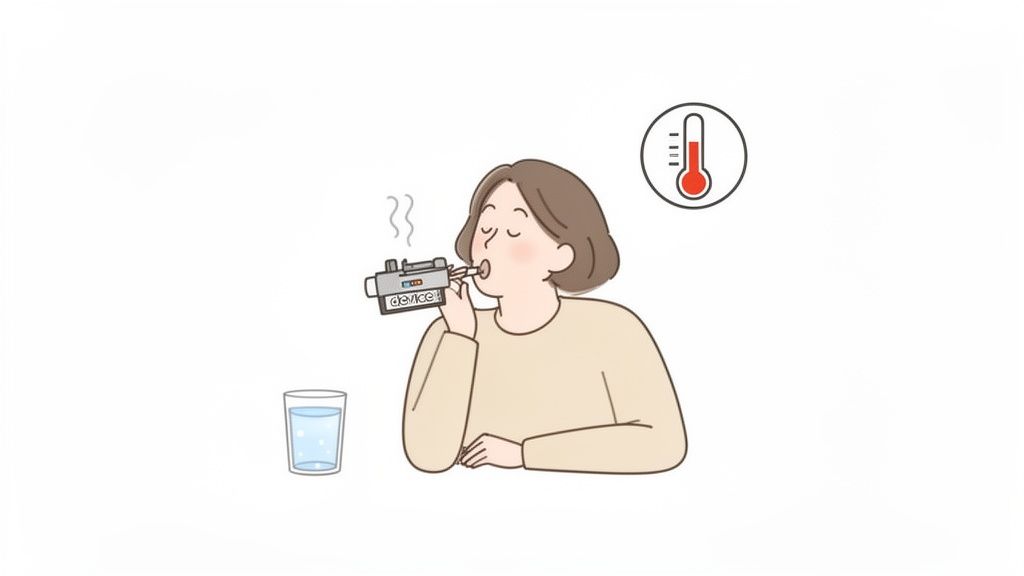
Dialing in your inhalation technique is the fastest way to a cough-free experience. Instead of taking those massive rips that feel like they're going to turn your lungs inside out, try these more controlled methods.
Pro Tip: Quality is everything. Clean, well-cured flower or a high-quality vape made with pure ingredients will always deliver a smoother experience. Low-grade products often have impurities or leftover plant matter that feels harsh, no matter what you do.
Ultimately, a pleasant session comes down to smart habits. By focusing on your technique, staying hydrated, and choosing quality products, you can leave the "coughing to get high" mentality behind. A great high shouldn't come at the expense of your comfort.
When you're navigating the world of cannabis, a few questions always seem to pop up, especially about the physical side of things. Let's tackle some of the most common ones about coughing and getting high, and set the record straight once and for all.
Nope, this is one of the biggest myths out there. A cough is just your body’s natural defense kicking in to deal with irritation from hot smoke or vapor in your throat and lungs. A truly “good” hit is smooth, flavorful, and does the job without making you uncomfortable. The real goal is efficient absorption, not putting your body through a stress test.
It usually boils down to two things: the terpenes in that specific strain and how the flower was cured. Certain terpenes can be a bit harsh on the throat. On top of that, flower that wasn't cured properly can have leftover chlorophyll and other impurities, which makes for a rougher, cough-inducing experience.
Let’s be clear: coughing does not get you higher. That dizzy, head-rush feeling is just a physiological reaction to a brief moment of oxygen deprivation and a change in blood pressure—not a sign of more THC hitting your system.
Absolutely. Vaping, especially at lower temperatures, is way gentler on the lungs compared to smoking. Since there’s no combustion, you skip inhaling all that hot, particle-filled smoke that causes most of the irritation. This makes vaping a fantastic choice if you’re looking for a smoother session.
This is another classic myth that just won't quit. The truth is, your lungs absorb almost all the cannabinoids nearly instantly when you inhale. Holding your breath longer mostly just robs your brain of oxygen, which creates that lightheaded feeling people mistake for a stronger high. All you're really doing is letting more tar settle in your lungs.
For a genuinely smooth and premium experience without the harshness, check out the expertly crafted THCA flower and vapes from Melt. Discover cleaner, more flavorful sessions at https://meltofficial.com.
Your cart is currently empty.