



Free Shipping All Orders Over $95
Finding the best cannabis strains for beginners isn't about chasing the highest numbers. It’s about starting with balanced, lower-THC options like Blue Dream or Harlequin—gentle profiles known for mild euphoria and relaxation, without the intensity that can make new users anxious.
Diving into the world of cannabis can feel like learning a new language overnight. With so many names, numbers, and technical terms floating around, it's easy to get overwhelmed.
Think of this guide as your personal translator. We're here to cut through the noise and help you find a product that’s safe, predictable, and actually enjoyable for your first time.
It's a lot like learning to cook. You wouldn't start with some wild, multi-day recipe from a Michelin-star kitchen, right? You’d begin with simple ingredients and clear instructions. When it comes to cannabis, your main "ingredients" are cannabinoids and terpenes.
How a strain will make you feel comes down to two key things: cannabinoids and terpenes. Get a handle on these, and you're already halfway to making a great choice.
Cannabinoids: These are the main active compounds in the plant. Think of them as the engine that drives the whole experience. The most famous one is THC, which is responsible for the psychoactive "high." For beginners, starting with a lower THC percentage is always the smart move. Another key player is CBD, which is non-psychoactive and known for its calming, balancing effects.
Terpenes: These are the aromatic oils that give each strain its unique smell and taste—from zesty citrus and fresh pine to earthy, floral notes. More importantly, terpenes act like the steering wheel, guiding the direction of the high. Some can make you feel relaxed and sleepy, while others are more uplifting and energizing.
By focusing on finding a balanced blend of cannabinoids and terpenes—instead of just hunting for the highest THC number—you empower yourself to choose a product that actually delivers the feeling you're looking for. This approach helps keep your first few experiences pleasant and totally in your control.
This guide is your roadmap. We’ll walk you through the science of the plant, show you how to read product labels, and explain what to look for in high-quality, lab-tested products. With this knowledge, you can skip the confusion and start your journey with confidence.
If you're new to cannabis, the first thing you'll probably notice are three big categories: Indica, Sativa, and Hybrid. For a long time, this was the go-to system for classifying everything, and honestly, it’s still a decent starting point.
The old-school thinking went something like this: Sativa strains give you an energetic, creative head high, while Indica strains deliver a relaxing, full-body stone. People even coined the term "in-da-couch" to remember Indica's famously sedative effects. Hybrids, of course, were seen as the best of both worlds.
But here's the thing: judging a strain by these labels alone is like judging a fancy meal by calling it "chicken" or "fish." It tells you a tiny piece of the story but misses the entire recipe—the spices, the herbs, and the cooking method that create the real flavor.
Modern science has shown us that a strain's effects have less to do with its genetic family tree and everything to do with its unique chemical profile. The true artists behind your experience are two types of compounds working together: cannabinoids and terpenes.
This map helps visualize how your botanical experience is really shaped by the "power" from cannabinoids and the "direction" from terpenes.
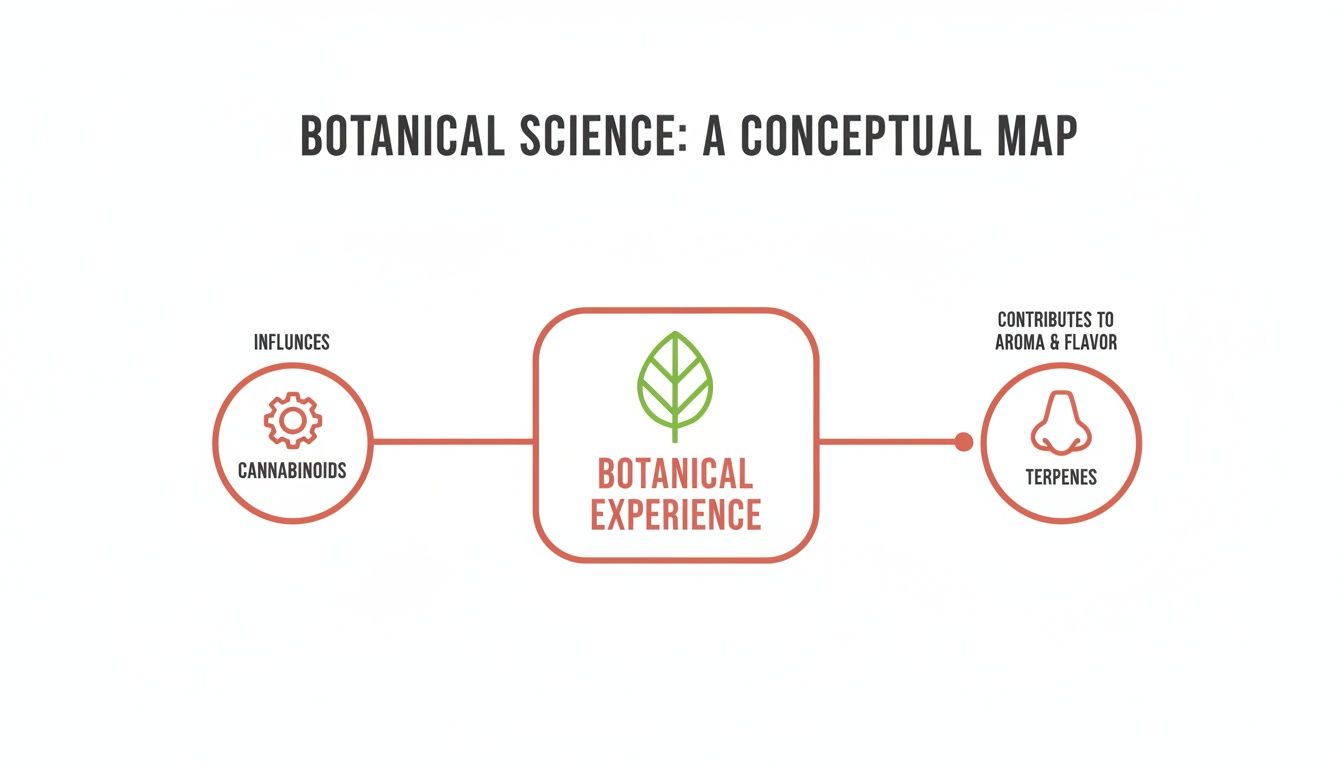
As you can see, understanding both of these elements is what will truly help you predict how a strain will make you feel, moving you far beyond those simple Indica and Sativa tags.
So, what are terpenes? They're the aromatic oils found in all sorts of plants—not just cannabis—that give them their distinct smells. That fresh pine scent in the forest, the zesty punch of a lemon, or the calming aroma of lavender? That's all terpenes.
In cannabis, they do more than just provide flavor and scent. Terpenes work alongside cannabinoids like THC to guide and fine-tune the effects you feel. Think of cannabinoids as the engine of a car and terpenes as the steering wheel.
By learning to spot just a few key terpenes, you can make way more accurate guesses about a strain's effects than by just looking at its Indica or Sativa label. This is the secret to finding the best cannabis strains for beginners.
To get you started, here’s a quick rundown of some of the most common terpenes you'll encounter.
This table simplifies common terpenes, their associated aromas, and the typical effects a beginner can expect, helping you match a profile to your desired experience.
| Terpene | Common Aroma | Typical Effect for Beginners | Found In Strains Like |
|---|---|---|---|
| Myrcene | Earthy, musky, fruity | Calming, relaxing, "couch-lock" feel | Blue Dream, Granddaddy Purple |
| Limonene | Bright citrus, lemon, orange | Uplifting, mood-boosting, stress relief | Super Lemon Haze, Durban Poison |
| Caryophyllene | Spicy, peppery, woody | Soothing, gentle body comfort | GSC, Sour Diesel |
| Linalool | Floral, lavender, sweet | Relaxing, calming, great for winding down | Do-Si-Dos, Zkittlez |
| Pinene | Fresh pine, sharp, earthy | Alertness, focus, clear-headed feel | Jack Herer, OG Kush |
Once you start paying attention to these profiles, you'll have a much clearer picture of the experience waiting for you.
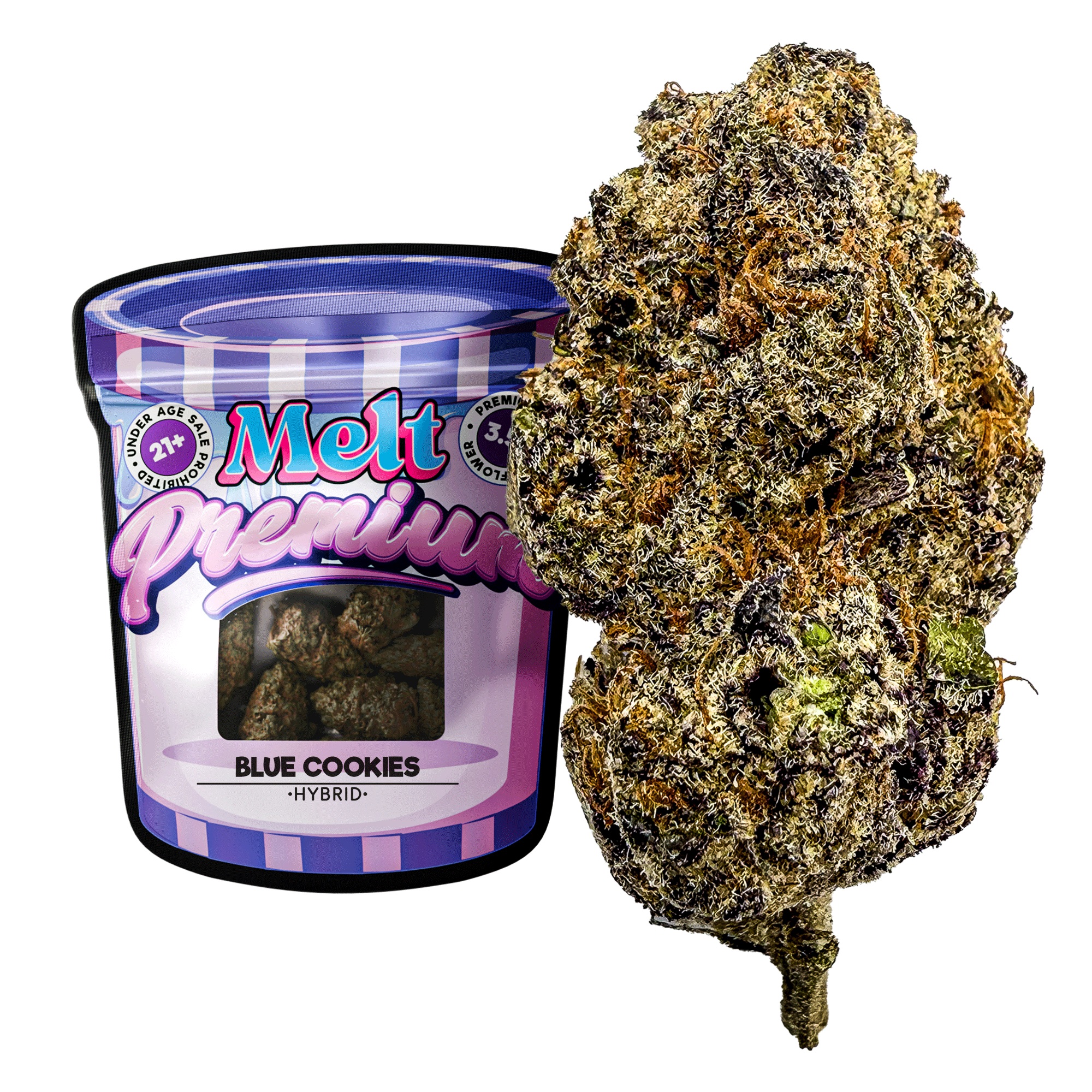
A perfect real-world example is Blue Dream. This strain consistently ranks as one of America's top sellers, holding the number one spot for the last three years. Its popularity skyrocketed after California legalized cannabis in 2016, and by 2020, it made up over 10% of all flower sales in the state. Melt's THCA flower versions perfectly capture its signature juicy, berry-like flavors and famously balanced effects, making it an ideal showcase of how a well-rounded terpene and cannabinoid profile creates a predictable, enjoyable high for anyone. You can even read more about top-selling strains to see why certain profiles are so popular with newcomers.
When you're shopping for cannabis products today, you'll constantly see two acronyms: THCA and THC. Knowing the simple difference between them is the secret to understanding how a legal, hemp-derived product can deliver a completely authentic cannabis experience, especially when buying online.
Think of Tetrahydrocannabinolic acid (THCA) as the raw, "sleeping" version of THC. In its natural state, like in a freshly harvested cannabis flower, THCA won't get you high. It’s a stable, non-psychoactive, and federally legal compound.
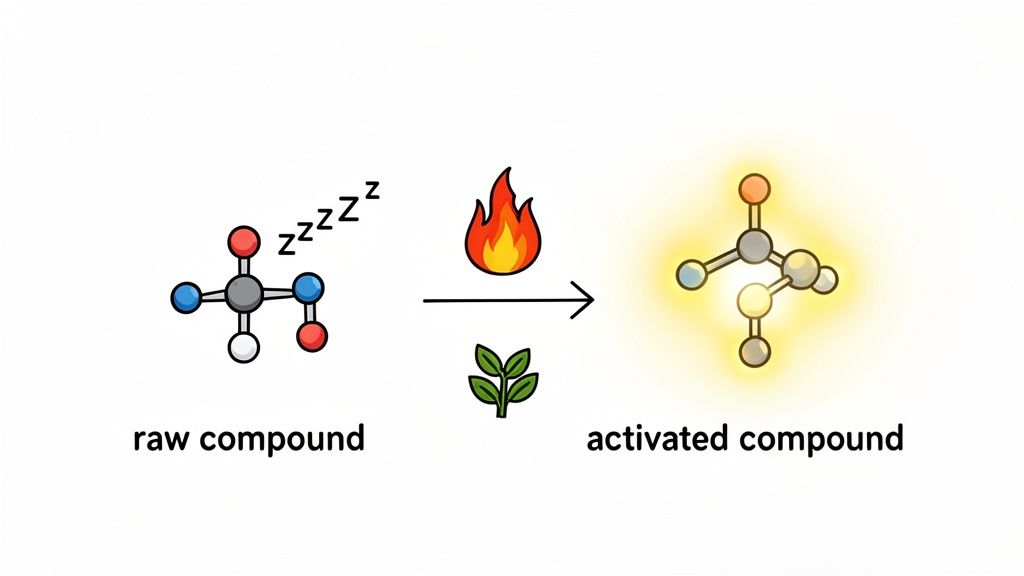
This compound just hangs out in the plant, waiting for one simple thing to wake it up: heat. The moment you light a pre-roll, use a vaporizer, or even bake with it, you're activating the THCA and transforming it.
This conversion from sleepy THCA into its famous, psychoactive sibling, Delta-9 THC, is called decarboxylation. The name sounds complicated, but the idea is dead simple. It’s like the difference between raw cookie dough and a warm, freshly baked cookie.
The dough has all the right ingredients, but it isn't quite a cookie yet. Pop it in the oven, and the heat transforms it into something new and delicious. In the same way, applying heat to THCA flower flips a switch, turning THCA molecules into THC and unlocking the effects cannabis is known for.
This is exactly why you can't just eat raw flower and expect to feel anything. The magic is in the heat. For a deeper dive, check out our guide on the key differences between THC and THCA.
Key Takeaway: THCA is the non-psychoactive "precursor" to THC. Heat from smoking, vaping, or baking converts THCA into psychoactive Delta-9 THC, which is what produces the "high."
This simple scientific distinction is what makes products like THCA flower compliant with federal law. The 2018 Farm Bill legalized hemp as long as it contains less than 0.3% Delta-9 THC by dry weight.
Because THCA flower meets this requirement in its raw, unheated form, it can be sold and shipped legally to many states. But once you get it home and apply heat, it delivers a potent experience identical to traditional cannabis.
Understanding this little bit of chemistry empowers you to shop with confidence. When you buy a product labeled "THCA flower," you aren't getting a "diet" or less effective version of cannabis. You're getting the real deal, just in its legally compliant, pre-activated state.
Here’s why this is so important for anyone looking for the best strains to start with:
At the end of the day, the difference between THCA and THC is a legal one based on the product’s state before you use it. For you, the experience is the same. You get the authentic aroma, flavor, and effects you’d expect from any top-shelf strain, all while staying on the right side of federal law.
Once you've got a handle on what separates different strains and cannabinoids, the next big question is how you actually want to use them. This choice is just as critical as picking the right profile, because it completely shapes your experience—from how fast the effects kick in to how long they stick around.
Think of it like choosing how to listen to music. Do you want headphones for an immediate, personal experience, or a speaker system that fills the room over time? Let's break down the three most common ways to get started so you can find your perfect fit.
Inhaling is the classic approach, whether it's smoking flower or using a vaporizer. For anyone just starting out, its biggest advantage is speed.
When you inhale, cannabinoids go straight from your lungs into your bloodstream. That means you’ll feel the effects almost instantly—usually within 1 to 5 minutes. This immediate feedback is gold for a newcomer. You can take a small puff, wait a few minutes to see how you feel, and then decide if you want a little more.
It gives you a level of real-time control that other methods just can't offer. It’s like slowly turning up the volume dial instead of just hitting "play" at max.
Vaping has exploded in popularity, and for good reason—especially for beginners. It’s a cleaner, more discreet way to get the same fast-acting effects as smoking.
Disposable Vapes: These all-in-one devices are convenience perfected. They come pre-filled and pre-charged, ready to go straight out of the box. No grinding, no packing, no lighters. Every puff delivers a consistent, measured dose, making it one of the easiest ways to manage your intake.
Flower Vaping: Using a dry herb vaporizer gently heats THCA flower just enough to activate it without actually burning it. This process creates a smooth vapor packed with cannabinoids and terpenes, which most people find much less harsh on the lungs than smoke.
If you want to dive deeper into the world of vaping, our guide on how to vape weed is a great next step.
Vaping is the modern, user-friendly entry point. It combines the quick onset of inhalation with a level of precision and discretion that many beginners are looking for. It's clean, efficient, and dead simple.
Edibles—like gummies, chocolates, or other treats—are a totally different ballgame. When you eat cannabis, your liver converts the THC into a much stronger compound called 11-hydroxy-THC. The result is a powerful, long-lasting, full-body effect that’s incredible for deep relaxation.
But edibles come with one huge warning for beginners: the effects are seriously delayed.
Unlike inhaling, where you feel things in minutes, edibles can take anywhere from 30 minutes to 2 full hours to kick in. This delay is where first-timers make the classic mistake. They take a dose, feel nothing after an hour, and pop another one—only to have both doses hit them like a truck later on.
Because of this, the golden rule of edibles is non-negotiable: start low and go slow. For a beginner, that means a dose of just 2.5mg to 5mg of THC.
To help you decide, here’s a quick side-by-side look at the three main methods. Think about what you value most—speed, control, or duration—and it should become clear which path is right for you.
| Method | Onset Time | Duration | Pros for Beginners | Cons for Beginners |
|---|---|---|---|---|
| Inhaling (Flower) | 1-5 minutes | 1-3 hours | Immediate effects, easy to control dose | Requires accessories, can be harsh on lungs |
| Vaping | 1-5 minutes | 1-3 hours | Fast-acting, discreet, less odor, precise dosing | Requires a device, can be potent |
| Edibles | 30-120 minutes | 4-8+ hours | Long-lasting, potent body effects, discreet | Delayed onset, easy to overconsume |
Ultimately, the best method is the one that aligns with your goals. If you want immediate feedback and total control over your experience, inhaling or vaping is a fantastic starting point. If you’re after deep, long-lasting relaxation and have the patience to wait it out, edibles could be your thing—just be sure to approach them with extreme caution.
Your first time trying cannabis should feel comfortable, positive, and totally predictable. The best way to make sure that happens is to live by the golden rule of cannabis: start low and go slow. It sounds simple, but this little mantra is your best friend for staying in control and avoiding that "oops, I overdid it" feeling.
So what does "low" actually mean? It really depends on what you're using.
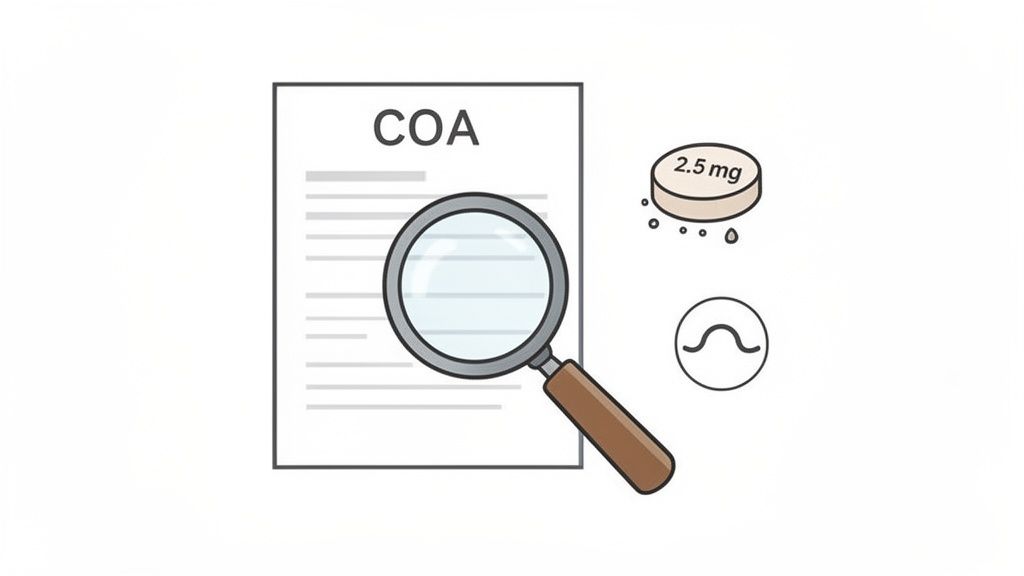
If you're trying flower or a vape for the first time, take a single, small puff. Then, just chill. Wait at least 15-20 minutes to see how it settles in before even thinking about taking another. With edibles, patience is even more critical. A great starting point is just 2.5 milligrams of THC.
Beyond smart dosing, the key to a great experience is knowing exactly what’s in your product. This is where a Certificate of Analysis (COA)—or lab report—becomes essential. Think of it as a detailed ingredient list for your cannabis, verified by an independent, third-party lab.
Any brand worth your money, like Melt, will have these COAs easy to find on their website. They might look a little intense at first with all the numbers and charts, but you only need to check a few spots to confirm you’ve got a quality product.
Here’s your cheat sheet for reading a COA:
Reading a COA is how you build real trust with a brand. It’s hard proof that they’re transparent, care about safety, and are actually selling what’s on the label.
Okay, let's walk through a real-world example. Say you’re eyeing a THCA pre-roll online. Before you click "buy," you pull up its COA.
First, you scan the cannabinoid section and confirm the Delta-9 THC is under 0.3%—check, it’s a compliant hemp product. Next, you spot it has 24% THCA, so you know it’ll be plenty potent once lit.
Then, you pop over to the terpene profile and see it’s rich in Linalool and Caryophyllene. From what you know, that combo points to a relaxing, soothing experience—perfect for unwinding. Finally, you give the safety tests a quick look and see "Pass" across the board. In just a few minutes, you’ve made a smart, safe, and confident choice.
Understanding how to dose and read a lab report takes you from being a hopeful buyer to an empowered one. You’ll know precisely how much THC is in a hit and can feel good about the quality of what you’re using, setting yourself up for a great time, every time.
Forget memorizing a laundry list of strain names. The real power comes from understanding why certain profiles work better for beginners. When you get the "why," you can walk into any dispensary or browse any online store and pick something that actually fits your goals.
Think of it like ordering coffee. You don't just ask for "coffee"—you specify if you want a bright, zesty light roast for the morning or a smooth, mellow decaf for the evening. The same idea applies here. Let's break down two go-to profiles: one for a gentle daytime lift and another for winding down at night.
If you’re looking for a smooth, happy, and clear-headed entry point, a balanced hybrid profile is your best bet. These are the "just right" sweet spot, giving you mild euphoria and a creative spark without sending you to the moon or locking you on the couch.
The magic is in the terpenes—specifically, the right combination of them.
The classic example of this profile is Blue Dream. It’s famous for a reason. It expertly weaves the gentle body relaxation from myrcene with the happy, cerebral buzz from limonene, creating an experience that’s consistently hailed as one of the best for first-timers.
When the goal is to unwind, quiet a racing mind, and sink into a restful state, an Indica-dominant profile is the move. We’re not aiming for overwhelming sedation here, but rather a soothing, full-body calm that just melts the tension away.
For this kind of vibe, you’ll want to look for a different terpene team.
A legendary strain that nails this profile is Northern Lights. This pure indica has been a trusted choice for newcomers since the 1980s, delivering deep relaxation without the intimidation factor. Its moderate THC level, usually around 16-21%, provides a profound body calm that’s perfect for sleep support.
In fact, user data shows 92% of beginners report no paranoia with Northern Lights, a huge difference from the 40% reported for some intense sativas. Melt's Southern California-grown THCA versions capture its signature earthy, pine-like terpenes, giving you that full-body melt while staying federally compliant. You can learn more about its enduring popularity and see why it’s still a top recommendation.
By focusing on terpene combos—Myrcene and Limonene for daytime, or Linalool and Caryophyllene for evening—you learn to predict an experience, not just pick a name. This is the skill that will help you make smart choices every time.
Jumping into the world of cannabis is exciting, but it's totally normal to have a few questions. Getting straight answers is the best way to feel comfortable and in control. We've tackled the most common concerns for beginners to make sure you start off on the right foot.
Think of this as your quick-reference guide for those "what if" moments, reinforcing the safety and product know-how we've already covered.
First things first: remember that the feeling is temporary and you're perfectly safe. This is sometimes called "greening out," but it always passes. Don't panic.
The best thing to do is find a quiet, comfortable spot where you can just chill. Sip some water, maybe have a light snack, and put on some calming music or a favorite movie to distract your mind. A cool pro-tip? Some people swear by smelling or chewing on a few black peppercorns. The terpene caryophyllene in them can actually help mellow out THC's more intense effects.
Yes, it is—thanks to the 2018 Farm Bill. This federal law made hemp and its derivatives legal as long as they contain no more than 0.3% Delta-9 THC by dry weight. High-quality THCA flower fits this description perfectly in its raw, unheated state, which means it's federally compliant to ship to most states.
That said, it's a good idea to know that some states have their own rules or bans on THCA products. Any reputable brand will be on top of these ever-changing laws and won't ship to states where it's prohibited. This ensures every purchase you make is fully legal and above board.
Proper storage is key to protecting the potency, flavor, and terpenes you paid for. The three biggest enemies of fresh cannabis are light, air, and extreme temperatures.
For flower, your best bet is an airtight glass jar tucked away in a cool, dark place like a cabinet or drawer. This simple step keeps those delicate terpenes from breaking down. For vapes and edibles, just make sure to store them away from direct sunlight and heat, and they'll maintain their quality just fine.
Key Takeaway: You should always assume you will fail a drug test after using THCA products. Standard drug tests are looking for THC metabolites and don't distinguish between federally legal, hemp-derived THCA and state-legal marijuana. If you're subject to any kind of drug testing, it's safest to avoid all cannabinoid products.
Ready to explore the world of high-quality, legal cannabis with total confidence? Here at Melt, we offer a curated collection of premium, lab-tested THCA flower, disposables, and edibles, all grown and crafted right here in sunny Southern California. Check out our full lineup and find the perfect beginner-friendly profile for you today at https://meltofficial.com.
Your cart is currently empty.