



Free Shipping All Orders Over $95
You're probably doing this already. You're standing in a shop or scrolling online, looking at two cannabis products that seem similar on the surface. Both have slick packaging. Both promise a clean, strong experience. One gives you a batch number, a recent lab report, and a clear explanation of where it came from. The other gives you branding and not much else.
That difference matters more than is widely appreciated.
In cannabis and hemp, supply chain transparency isn't just a business buzzword. It's how you tell the difference between a product that was tracked, tested, and handled carefully, and one that asks for your trust without earning it. If you care about safety, legality, consistency, and getting the effects you expect, transparency is one of the best filters you can use.
For consumers, it answers simple questions. What's in this? Where did it come from? Was it tested by an independent lab? Is this batch the same one shown on the website? For retailers, it answers a tougher set of questions. Can I stand behind this brand if a customer asks for proof?
A lot of people still treat transparency like a nice extra. It's not. In cannabis, it sits right next to potency, flavor, and price because it affects all three.
If a brand can't show where its flower was grown, how its extract was processed, or which lab tested the final batch, you're left guessing. And guessing is a bad way to buy something you inhale or eat.
Most shoppers aren't asking for a full compliance manual. They want enough proof to feel confident. A real lab report. A batch number that matches the package. A clear explanation of ingredients. Basic facts that should be easy to find.
When those facts are missing, people notice. A 2022 Food Industry Association report found that 65% of shoppers said they would switch from a brand they usually buy if that brand lacked transparency in its supply chain practices. That number comes from food, but the lesson carries over cleanly to cannabis, where the stakes are even more personal.
Practical rule: If a brand says “trust us” but makes you work hard to verify anything, that's not transparency.
Cannabis products can vary in potency, cannabinoid profile, terpene content, and ingredient quality. Hemp-derived products add another layer because legal status often depends on exact formulation and testing. A product can look polished and still leave key questions unanswered.
That's why transparency connects directly to compliance, not just marketing. If you want a plain-English look at the rules brands have to operate under, Melt's guide to cannabis industry compliance helps explain why documentation, labeling, and testing aren't optional behind the scenes.
Here's the short version. A transparent brand reduces uncertainty. It gives you a way to verify what's being sold instead of relying on packaging language alone. In an industry where people use products for relaxation, sleep, mood, or simple enjoyment, that level of clarity should be standard.
The simplest way to understand supply chain transparency is to borrow an example from food.
Think about a bag of coffee. A basic brand tells you the roast name and tasting notes. A transparent brand tells you which farm or region supplied the beans, when they were harvested, how they were processed, and sometimes even who imported them. You don't just know what the product is. You know its story, with enough detail to check whether that story holds up.
Cannabis should work the same way.
A major benchmark came from Nestlé's transparency work, highlighted by MIT Sloan. In that effort, Nestlé began disclosing supply chain data for key commodities, and Alexis Bateman defined two core elements of transparency as visibility, meaning collecting data from all links, and disclosure, meaning communicating that data externally, as described in MIT Sloan's discussion of supply chain transparency.
Those two words help clear up a common confusion.
| Element | Plain meaning in cannabis | What it looks like |
|---|---|---|
| Visibility | The brand knows what happened at each step | Cultivation records, processing details, batch tracking, shipping logs |
| Disclosure | The brand shares enough of that information for others to verify it | COAs, ingredient lists, batch lookup tools, sourcing explanations |
A company can have visibility without disclosure. That means it knows the facts internally but doesn't show customers much. A company can also have weak visibility and still market itself as transparent. That usually shows up as vague claims like “premium sourced” or “lab tested” without specifics.
In cannabis, visibility starts early. It can include genetics, cultivation method, harvest lot, extraction inputs, packaging date, and storage conditions. Disclosure is the customer-facing side. Can you scan a code and see the exact COA? Can you tell whether the edible contains added ingredients beyond cannabinoids and flavoring? Can a retailer verify that the vape batch on the shelf matches the test report in the file?
Transparency starts long before the label. The label is just where the customer gets invited in.
That's why supply chain transparency is more than a brand saying it cares. It's a system for collecting the right information and sharing the right parts of it clearly.
When people hear “transparency,” they often think only about lab tests. Lab tests matter a lot, but they're only one piece of the puzzle. In cannabis and hemp, real transparency rests on five connected pillars.
This is the chain of custody. It tells you how a product moved from cultivation to processing to packaging to sale.
For flower, that can mean linking a specific harvest lot to trimming, packaging, and final labeling. For vapes and edibles, it means tying the finished unit back to the oil, distillate, isolate, flavor components, and production run used to make it.
A simple analogy helps here. Think of seed-to-sale tracking like a passport with stamps. Every stop on the trip should leave a trace. If key parts of that trip are blank, you can't tell where the product has been.
A brand can say its product is clean, potent, and compliant. A third-party lab is where that claim gets checked.
For consumers, the main point isn't chemistry for its own sake. It's protection. Independent testing helps catch problems tied to potency accuracy, unwanted contaminants, and legal compliance. If you're buying an edible, you want to know the label matches the batch. If you're buying flower or a vape, you want evidence beyond marketing words.
A good COA hidden behind customer support emails isn't very useful. Batch information should be easy to access and easy to match to the product in your hand.
Look for:
At this juncture, brands separate storytelling from actual disclosure.
If a company talks about indoor craft flower, premium sun-grown material, strain-specific terpenes, or solventless methods, it should also explain what those claims mean in practice. Where was the flower grown? Was it cultivated indoors or outdoors? Was the extract derived from hemp? Were added terpenes botanical, cannabis-derived, or strain-specific blends?
Here's where the data side matters. According to Sourcemap's data governance guide, effective transparency relies on structured, SKU-level data that meets benchmarks for accuracy, completeness, and timeliness, enabling AI to perform anomaly detection and reduce manual auditing by over 80%. In plain language, structured records make it harder for inconsistencies to hide.
This pillar gets overlooked, especially by consumers, but it matters. Cannabis products are sensitive to heat, light, air, and time. Even a well-made product can degrade if it's stored or shipped badly.
For example:
What to ask: “Can this brand explain how the product was handled after it left production?”
A transparent company won't treat transport and storage like an afterthought. It will treat them as part of product quality.
A brand promise matters less than the proof attached to it. In cannabis, the strongest proof is usually simple, visible, and batch-specific.

QR codes are one of the easiest tools to get right. Scan the package, and you should land on something useful. Ideally, that means a live page with the exact batch's Certificate of Analysis, product details, and identifying information that matches the label in your hand.
A weak version of this sends you to a homepage or a generic “quality” page with no batch connection. That isn't proof. It's packaging theater.
A stronger version gives you a trail you can follow:
If COAs still feel hard to interpret, this guide on how to read a Certificate of Analysis breaks down what to look for without the lab jargon.
Some brands are also using more advanced record systems to support their claims. Blockchain gets mentioned often because it can create an immutable record of transactions and handoffs. That sounds technical, but the consumer takeaway is simple. Records become harder to alter after the fact.
That said, you don't need a brand to use blockchain for it to be transparent. You do need it to provide verifiable records that connect the product, the batch, and the test results in a way that holds together.
Good proof should survive a skeptical customer, a retailer's buyer, and a compliance audit.
For a visual walkthrough of why traceability matters, this short explainer is useful:
| Green light | Red flag |
|---|---|
| QR code opens batch-specific data | QR code opens a homepage |
| COA is recent and readable | COA is undated, generic, or hard to match |
| Package and lab report share identifiers | Numbers don't line up |
| Product page explains ingredients and format | Copy stays vague about contents |
The goal isn't perfection. The goal is verifiable consistency.
Good transparency is easiest to understand when you look at a real operating model instead of a generic slogan. Melt is a useful example because the brand's product lineup makes transparency practical, not abstract.

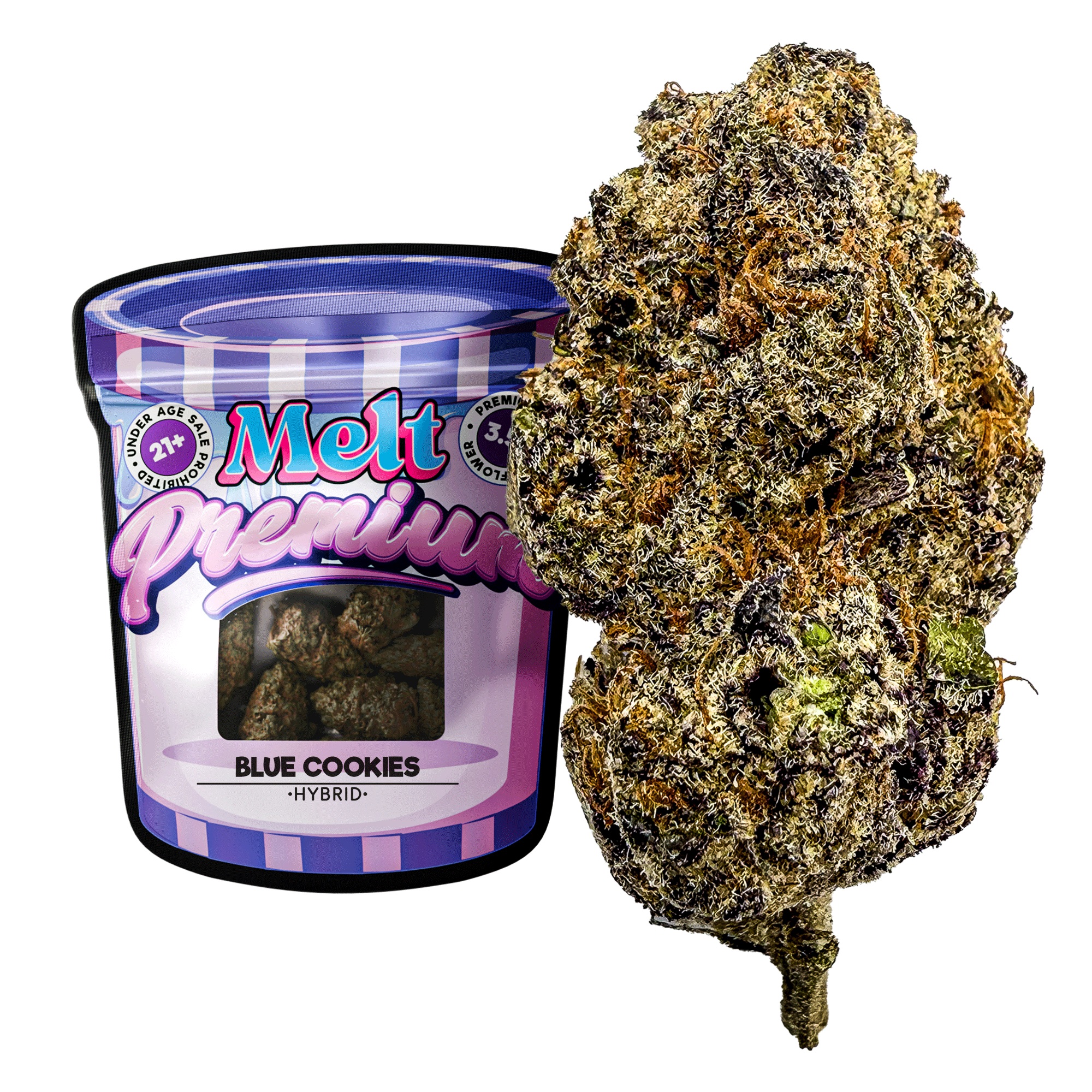
Melt focuses on legal hemp-derived cannabinoids and publishes a lineup that includes indoor craft and premium sun-grown THCA flower, AMF Blend all-in-one devices, Duo prerolls, and Melt Bites gummies. That mix matters because each format creates different transparency demands.
Flower buyers want cultivation clarity and batch-specific testing. Vape buyers want confidence around formulation and hardware-ready oil. Edible buyers need clear serving information, ingredient disclosure, and reliable potency reporting. A brand that handles multiple categories well usually has to build better internal controls, because one loose process tends to show up across the catalog.
Melt emphasizes rigorous third-party testing and transparent lab reports that customers can access through the brand's website. That's the right direction because it closes the gap between claim and verification. Instead of saying products are tested, the brand gives buyers a path to check the documentation themselves.
The company also highlights an age-gated shopping experience, legal compliance around hemp-derived products, and shipping restrictions where THCA isn't allowed. Those details matter. Transparency isn't only about where a product came from. It's also about whether the brand clearly communicates the legal boundaries around the products it sells.
A retailer or careful consumer looking at this model would want to see a few things line up:
A transparent brand doesn't just show off quality. It documents it in a way a customer can actually use.
That's what makes a brand-level example valuable. It turns “supply chain transparency” from an ideal into a daily operating habit.
You don't need to be a compliance officer to evaluate a cannabis brand well. You just need a repeatable checklist. The goal is to separate brands that can support their claims from brands that rely on design, hype, or vague language.

Not every weak-looking transparency setup comes from bad intent. Some smaller brands are dealing with what experts call the cost of invisibility. A 2024 MIT study summarized by Pivot International notes that 45% of consumers demand proof of origin, while 68% of SMEs in regulated sectors like hemp cannot afford enterprise-level solutions for full disclosure.
That creates a real gap. A small brand may not have polished dashboards or expensive traceability software. But it should still be able to do the basics well.
Use this quick decision guide:
| If the brand is small but serious | If the brand is cutting corners |
|---|---|
| Shares recent batch documents on request or online | Dodges requests or sends generic files |
| Explains cultivation or sourcing plainly | Hides behind buzzwords |
| Uses consistent batch naming and labeling | Offers records that don't match products |
| Acknowledges limits but provides proof | Makes broad claims with little support |
Ask one question: “Can I verify this specific product, from this specific batch, without chasing the company for basic proof?”
If the answer is yes, you're dealing with a brand that understands trust.
If the answer is no, move on.
The next challenge isn't just collecting more data. It's keeping disclosures current while rules keep changing.
That's where many systems break down. According to Sedex's overview of supply chain transparency, 72% of supply chain leaders say their current systems fail to update real-time compliance data, and that gap has contributed to a 30% increase in non-compliance penalties as companies struggle with what the source describes as disclosure friction.
Cannabis and hemp businesses already operate in a patchwork of requirements around testing, labeling, ingredients, and shipping. A transparency system that only works when nothing changes isn't strong enough. Brands need records that stay usable when laws, market access rules, or product restrictions shift.
That's especially important for legal hemp-derived products. Compliance isn't a one-time box to check. It's an ongoing discipline of documentation, review, and clear communication.
The future of trust belongs to brands that can update proof as fast as they update products.
Consumers play a big role here. Every time you choose a product with clear records over one with vague claims, you reward better behavior. Retailers do the same when they ask hard questions before bringing in a line.
Supply chain transparency won't make the cannabis industry perfect. It will make it easier to spot who's doing the work, who's keeping records straight, and who deserves your money.
If you want to buy from a brand that takes testing, compliance, and product transparency seriously, explore Melt. Their lineup of THCA flower, disposables, prerolls, and edibles is built around clear lab access, rigorous third-party testing, and a straightforward approach to legal hemp products.
Your cart is currently empty.